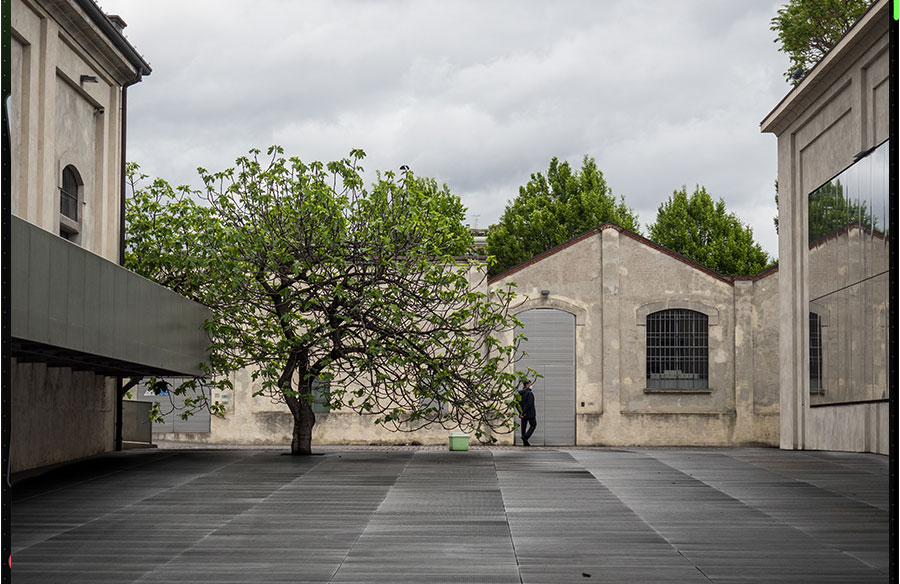
Architecture has always understood something that branding is only now rediscovering: permanence is not achieved through volume.
In a marketplace increasingly shaped by spectacle, speed, and algorithmic visibility, the most enduring architectural works remain composed. They do not compete for attention. They rely on proportion, material honesty, spatial clarity, and the confidence to leave space unfilled. Their authority comes not from excess, but from discipline.
Luxury brands face a similar tension.
As digital platforms accelerate and attention fragments, many brands respond by adding more – more campaigns, more visual signals, more content. Yet the brands that endure tend to behave less like advertisers and more like architects.
They build systems.
Restraint as Structure, Not Style
In architecture, restraint is rarely aesthetic minimalism alone. It is structural logic. A decision about what to remove is often more important than what to include. The grid, the axis, the alignment – these invisible frameworks allow the visible form to breathe.
The same principle applies to brand identity.
Luxury brands that operate with architectural discipline treat identity as a framework rather than decoration. Typography, language, imagery, motion, and spatial experience are not layered arbitrarily. They are resolved through a central organising idea – one that guides how the brand behaves across every surface.
In this sense, restraint is not reduction for its own sake. It is coherence.
Where architectural thinking informs brand strategy, identity becomes a constructed system rather than a collection of visual gestures. The process of strategic luxury branding begins to resemble the discipline of designing a building: concept first, then structure, then expression.
Designing for Permanence
Architects design with decades in mind. Materials weather. Cities evolve. Occupants change. Buildings must remain legible and dignified over time.
Luxury brands operate under similar pressures. Cultural cycles accelerate, yet true luxury depends on longevity. A brand that reinvents itself with every trend risks losing its sense of place.
Architectural thinking encourages different questions:
- What is the structural idea that underpins this identity?
- Does the system remain intact when trends fall away?
- Would this design hold its authority in ten years’ time?
When branding adopts this long view, it shifts from campaign-led expression to considered construction. The identity becomes less reactive and more foundational. Its strength lies not in constant novelty, but in sustained clarity.
The Power of Quiet Confidence
Some of the most powerful architectural spaces are defined by what they refuse to overstate. A well-proportioned room. A restrained facade. A careful transition between light and shadow. These decisions create emotional resonance without spectacle.
Luxury brands that mirror this composure communicate a similar quiet confidence. They do not need to explain themselves at length. They do not over-articulate value. They rely on consistency of tone, disciplined visual language, and editorial pacing.
In practice, this often means fewer elements, not more. A considered logotype and motif rather than an abundance of graphics. A clear hierarchy of type. Space that allows the eye to rest. Digital systems that guide rather than overwhelm.
Restraint becomes a strategic choice.
Architecture as Cultural Behavior
Architecture does not exist in isolation. It reflects social behaviour, economic priorities, and cultural values. In periods of excess, restraint can signal maturity. In moments of instability, coherence becomes reassuring.
Luxury branding operates within the same cultural field. As audiences grow more resistant to overt persuasion, brands that behave with composure and clarity begin to stand apart.
The discipline of architecture reminds us that authority is built, not announced.
Walls align. Materials are chosen. Systems interlock. Over time, coherence compounds.
For luxury brands seeking permanence rather than performance, the lesson is simple: build with the patience and precision of an architect.
Restraint is not a trend.
It is a structure.