In the architectural world, a portfolio is more than a collection of drawings; it is a visual testament to a firm’s philosophy and technical prowess. However, even the most groundbreaking designs can be undermined by poor documentation. Whether it’s a grainy site photo taken in low light or a low-resolution archival image of a heritage project, visual “noise” creates a barrier between the architect’s vision and the client’s perception. This is where the ROI of clarity becomes a tangible business advantage.
Elevating Visual Storytelling with Seamless Efficiency
For many architects, the challenge isn’t the design itself, but the legacy of its documentation. Older projects often lack the crispness required for high-definition digital displays or large-format print monographs. Utilizing an AI-powered architectural photo enhancer allows designers to bridge this gap without the steep learning curve of traditional retouching software.
The beauty of this technology lies in its streamlined, three-step workflow designed for busy professionals:
- Instant Ingest: Architects can simply upload their images by dragging them into the workspace or selecting files directly from their project folders.
- Automated Precision: Once uploaded, the AI automatically upscales the image to the desired resolution. It intelligently reconstructs missing pixels, ensuring that the intricate textures of raw concrete, brushed steel, or timber grain are sharpened with a single click.
- Ready-to-Use Assets: After a few seconds of processing, the user can download the upscaled image, now a crystal-clear asset ready for a premium portfolio or a competition entry.
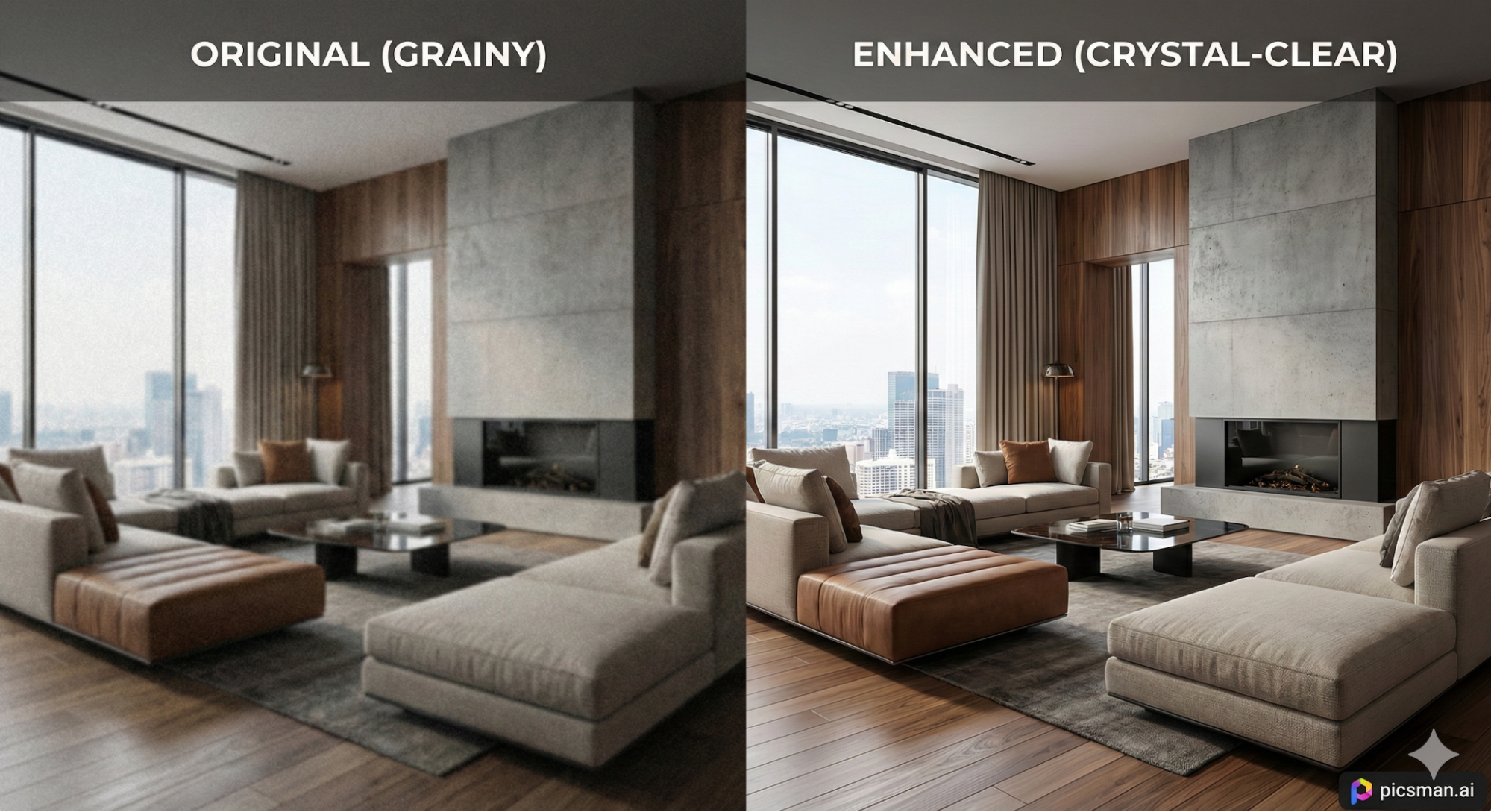 When you aim to improve image quality through this automated process, you are performing digital restoration. This removes ISO noise from interior shots—a common issue in architectural photography—and balances micro-contrast to make structural lines pop.
Beyond the Frame: Compositional Freedom
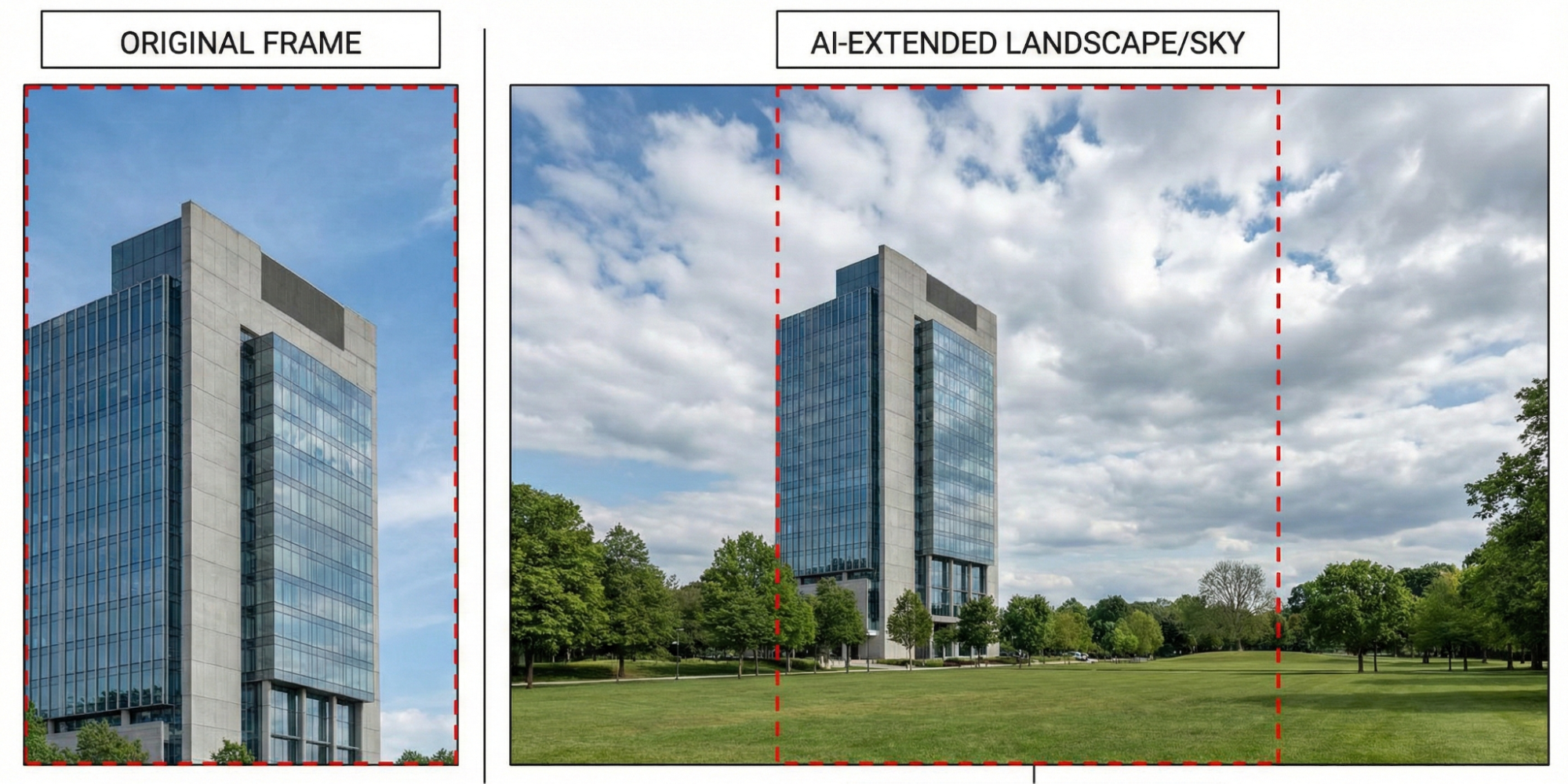
Architectural photography often suffers from restrictive framing due to site constraints. You might have a stunning shot of a skyscraper, but the tight crop leaves no “breathing room” for the surrounding context. Integrating a high-resolution image extender for designers into your workflow solves this by combining scaling with generative fill.
By using an AI Image Extender, architects can intelligently expand their canvas. The AI analyzes existing patterns—cladding, clouds, or pavement—and generates seamless extensions. This allows a standard site photo to be transformed into a cinematic wide-angle spread for a design magazine without losing any structural integrity.
 The Bottom Line
The investment in high-quality visuals yields a direct return in brand authority. In an era where “Instagrammable” architecture drives public interest and developer funding, the clarity of your imagery is your strongest marketing asset. By adopting tools to improve image quality, firms can ensure their digital archives remain future-proof, professional, and, most importantly, clear.
Don’t let low-resolution photography hold back your high-resolution ideas. A perfect portfolio doesn’t just show what you built; it shows the standard of excellence you bring to every detail.