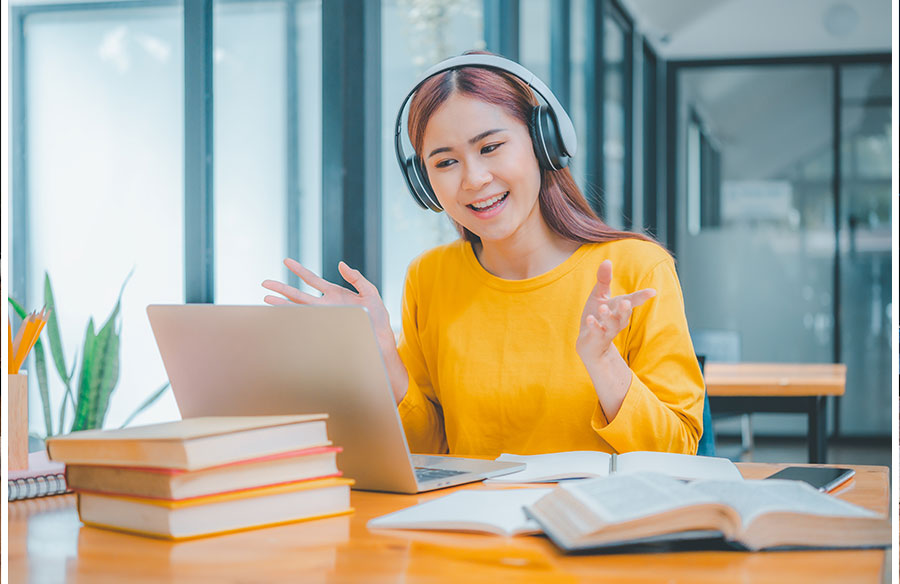
Education is changing, and it is happening faster than many people expected. Classrooms are no longer limited by walls, schedules, or even countries. At the center of this change stands self-guided online learning. This model gives learners more freedom, more responsibility, and more control than ever before. Students choose what to study, how fast to move, and how deeply to explore a topic.
The future of online education is not about teachers disappearing. It is about roles shifting. Teachers become guides, mentors, and designers of learning environments. Students become active builders of their own knowledge. This balance is reshaping online classrooms into flexible ecosystems where independent learning online is not just an option but a core skill.
What Is Self-Guided Learning in Online Classrooms?
Self-guided online learning means that students take responsibility for their progress. They choose when to study. They decide how to review material. They manage their goals and time.
In traditional classrooms, learning is mostly teacher-led. In contrast, independent learning online is student-centered. A learner can pause a video, rewatch a lesson, skip content they already understand, or dive deeper into topics that spark interest.
This model helps to:
- personalize learning paths
- improve learner autonomy
- develop self-discipline skills
It changes learning from a fixed route into a flexible journey.
Why the Future Belongs to Independent Learners
The job market is evolving. Technology moves fast. Skills become outdated quickly. People must learn continuously to stay relevant. This is why the future of online education is deeply connected to independence.
Studies show that nearly 65% of children entering primary school today will work in jobs that do not yet exist. That number alone explains why memorization is no longer enough. Learners must know how to learn.
Self-guided education supports:
- support lifelong learning
- adaptive thinking
- confidence in problem solving
These abilities stay useful even when tools and platforms change.
Digital Learning Platforms as the Foundation
Digital learning platforms are the backbone of self-guided classrooms. They host courses, assessments, videos, discussions, and progress tracking tools. But their real power lies in flexibility.
Modern platforms allow learners to:
- set personal goals
- track achievements
- customize study plans
- revisit content at any time
Adaptive Education Technology: Learning That Responds
Adaptive education technology changes how content is delivered. It adjusts based on the learner’s behavior. If a student struggles with a topic, the system offers extra explanations. If they succeed quickly, it introduces more advanced material.
Auxiliary tools like the Math AI extension for Chrome can also be helpful. For example, there’s a series of challenging problems where you can’t get the answer right. You just need a little hint, and the free Math Solver for Chrome provides it. The extension is useful for checking results, performing routine calculations, and familiarizing yourself with more complex material.
This creates a personal rhythm for each learner. Not too slow. Not too fast. Just right.
Personalized Learning Paths: One Student, One Route
No two learners are the same. Some need repetition. Some need challenges. Some learn best in the morning. Others late at night.
When platforms personalize learning paths, they respect these differences.
Personalization helps to:
- enhance student engagement
- reduce frustration
- improve learning outcomes
A student who feels seen stays involved. A student who stays involved learns more.
Flexible Study Schedules and Real-Life Balance
One of the strongest advantages of self-guided online learning is freedom of time.
Flexible study schedules allow learners to:
- study while working
- learn while caring for family
- balance education and health
This freedom supports inclusion. It opens doors for people who were once excluded from education due to time or location.
Building Learner Autonomy
Autonomy is not automatic. It grows with practice.
When students plan their tasks, manage deadlines, and monitor their progress, they improve learner autonomy naturally.
This skill transfers into real life:
- better decision making
- stronger organization
- higher confidence
Autonomy is not only academic. It is personal growth.
Enhancing Student Engagement Through Ownership
Engagement rises when students feel ownership. Instead of following commands, they make choices. Instead of waiting, they explore.
Self-guided environments enhance student engagement because learning becomes personal, not imposed.
Short tasks. Interactive tools. Real-world problems.
All of these deepen attention and curiosity.
Accessing Global Education Resources
Online classrooms erase borders. Students can now access global education resources from universities, experts, and libraries around the world.
This access means:
- broader perspectives
- higher-quality materials
- richer cultural understanding
More than 90% of top universities now provide open digital courses. Knowledge is no longer locked behind geography.
Supporting Lifelong Learning
The idea of finishing education at 22 is outdated. Modern professionals must keep learning. Skills evolve. Industries transform.
Self-guided online learning supports lifelong learning because it is:
- flexible
- affordable
- scalable
People can return to education at any age. That changes societies.
Challenges and How Technology Solves Them
Self-guided learning has risks:
- isolation
- lack of motivation
- confusion
Digital platforms respond with:
- community spaces
- progress dashboards
- reminders and feedback systems
Technology does not replace support. It organizes it.
The Role of Teachers in a Self-Guided World
Teachers become designers of experiences.They create structure. They guide reflection. They support struggling learners.
The future of online education depends on this partnership between human insight and digital tools.
Conclusion: Learning That Belongs to the Learner
The future of self-guided learning in online classrooms is not distant. It is already here.
Students are becoming active participants, not passive receivers. Technology is becoming adaptive, not rigid. Education is becoming personal, not standardized.
Self-guided online learning empowers students to:
- take control
- personalize learning paths
- develop independence
Independent learning online builds discipline, confidence, and resilience.
And the future of online education belongs to those who can learn, unlearn, and relearn with freedom and responsibility.
Education is no longer a place. It is a skill.