The Urban Privacy Challenge in Pacific Northwest Cities
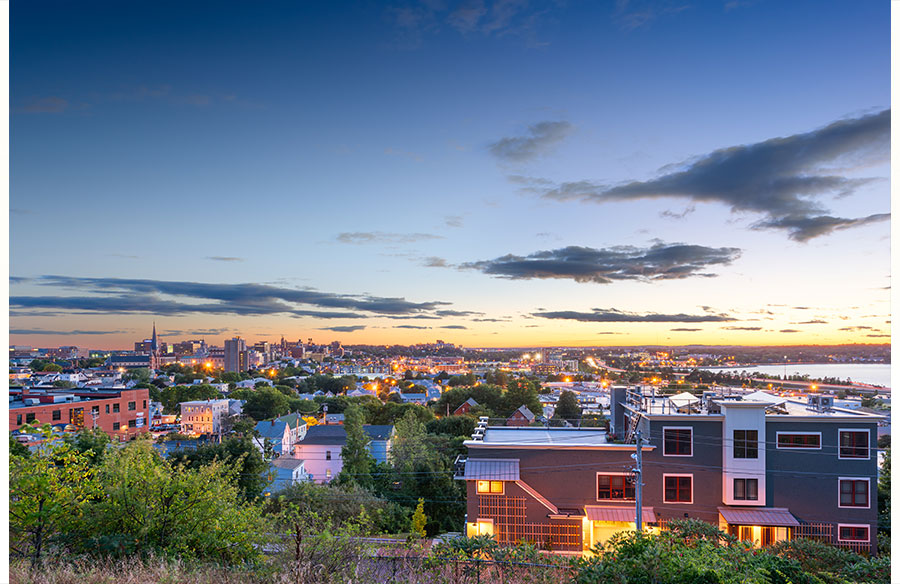
Stand on your back deck in Portland’s Hawthorne neighborhood or Seattle’s Fremont district. Your neighbor’s kitchen window sits eight feet away. You can hear their coffee grinder at 6 a.m., watch them rinse dinner plates at 7 p.m., and probably describe their backsplash tile from memory. This is life on a 5,000-square-foot Portland lot, or a Seattle backyard now sharing space with a two-story DADU that went up last summer.
Regional specialists like Cool Cat Fence report a 40% increase in privacy consultations since 2020, reflecting how urban infill is fundamentally reshaping neighborhood dynamics across Pacific Northwest cities. The ADU boom, gentle density zoning reforms, and pandemic-era backyard investments have created a new generation of privacy challenges that conventional six-foot fences simply cannot solve. What follows are five unconventional strategies, drawn from recent projects in Portland and Seattle, that go beyond the standard panel-and-post approach to create outdoor spaces that feel genuinely private without turning your yard into a fortress.
Beyond Standard Solutions: Why Traditional Privacy Fails in Dense Urban Areas
The limitations of traditional privacy fences become obvious when you actually map the geometry of dense neighborhoods. Portland’s average residential lot runs about 5,000 square feet, significantly smaller than the national single-family average of 7,000 to 10,000 square feet. House sits close to house, with side yards often measuring just three to six feet. Meanwhile, Seattle’s aggressive ADU policies have added thousands of backyard cottages since 2019, stacking new construction vertically on sites that previously held single-family homes.
Local codes in both cities typically cap fence height at six feet in side and rear yards, with front yards limited to roughly 3.5 feet. That six-foot ceiling works fine for blocking ground-level views but fails completely against elevated decks, second-story bedrooms, and the kitchen windows of adjacent three-story townhomes. Higher density demands creative thinking about privacy. Not taller walls, but smarter systems that layer materials, plants, and strategic positioning to screen what actually needs screening.
Five Unconventional Privacy Strategies for Small Urban Lots
Vertical Layering Instead of Solid Barriers
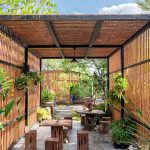
The most effective privacy fences in tight lots don’t read as fences at all. Picture this: a four-foot solid base of horizontal cedar slats topped by a two-foot lattice section threaded with evergreen clematis. Total height stays at the code-compliant six feet, but the transparency of the upper zone keeps light flowing and prevents the claustrophobic tunnel effect that plagues narrow side yards.
The plant layer is where Pacific Northwest conditions truly shine. Evergreen clematis (Clematis armandii) maintains dense foliage year-round, its fragrant white flowers appearing in late winter when most gardens look dormant. Winter jasmine offers similar coverage with bright yellow blooms against bare stems. By the time these climbers mature, you’ve effectively created an eight-foot screen without violating any property line regulations. Most municipalities regulate fence structures but not living hedges. The result feels less like a barrier and more like green walls rising naturally from your garden, the soft rustle of growth moving in the breeze adding acoustic camouflage that solid barriers simply reflect back.
Strategic Opacity Zones
Here’s where most homeowners waste money: treating every linear foot of boundary like a fortress perimeter. Walk your lot with a critical eye. Where exactly do the intrusive sightlines originate? That neighbor’s bedroom window overlooking your hot tub location demands full privacy, perhaps tongue-and-groove composite panels with a trellis extension planted with tall ornamental grasses. But the stretch facing their garage? A simple horizontal slat fence with half-inch gaps maintains airflow and neighborly connection while still defining your space.
This approach treats privacy as a resource to deploy strategically rather than uniformly. One Seattle project mapped sightlines from six different neighbor windows and discovered that solid screening was needed along just twenty-three feet of a ninety-foot perimeter. The remaining boundary used polycarbonate panels in wood frames, translucent enough to pass light, opaque enough to blur details. The installation created a sense of enclosure without the oppressive weight of continuous walls.
The Borrowed Jing Principle
Japanese garden design offers a concept worth stealing: shakkei, or borrowed景 (jing). The idea is simple but powerful: incorporate elements beyond your property into your garden’s composition. In dense neighborhoods, this means treating your neighbor’s mature Douglas fir or bigleaf maple as part of your privacy screen rather than something to block.
Position your fencing to frame greenery rather than fight it. A four-foot solid base blocks the immediate cross-views (the trash cans, the parked cars, the kitchen window), while an open upper section lets your eye travel through to that borrowed canopy. Suddenly your twenty-five-foot-wide lot feels connected to a hundred feet of green. The psychological effect is profound: you gain privacy from the intrusive stuff while maintaining access to the calming visual depth of neighboring trees. This isn’t isolation. It’s editing.
Dark stains amplify this effect beautifully. Charcoal or espresso-stained cedar recedes visually, especially in the overcast light of 150-plus rainy days per year. That charcoal-stained wood melts into shadows on a December afternoon, making the boundary feel farther away than raw lumber, which reflects light and announces its presence.
Material Hacks for Small Spaces
Horizontal slat orientation creates an illusion of width in narrow lots, a well-documented perception effect that designers from Seattle to Southern California have exploited for years. One-by-six cedar boards mounted horizontally with quarter-inch gaps emphasize the lateral dimension, making a twelve-foot-wide yard feel more generous than the same space enclosed by vertical pickets.
For a more industrial aesthetic, perforated aluminum panels with forty percent open area deliver roughly sixty percent visual privacy while maintaining the gentle movement of air and avoiding the oppressive quality of solid metal. Low maintenance and corrosion-resistant, these panels suit development projects where long-term durability outweighs initial material cost. The geometric patterns create shifting shadow-play throughout the day, turning the privacy screen into a design feature rather than a necessary evil.
Acoustic Privacy Solutions
Here’s what nobody mentions: visual barriers do not equal sound barriers. A gorgeous slatted fence may do nothing about your neighbor’s leaf blower or the bass thump from backyard gatherings. Acoustic privacy requires mass and airtightness, qualities that light, gappy structures inherently lack.
Composite tongue-and-groove panels offer more mass than individual boards and fit tighter, reducing sound transmission considerably. For serious noise problems (an adjacent street or alleyway with constant traffic), consider a double-sided fence with mass-loaded vinyl sandwiched between layers. This limp, heavy membrane dramatically reduces mid-frequency sound transmission without adding significant thickness to your fence profile.
Panel angling helps too. Faceted sections rotated ten to fifteen degrees create pockets that deflect rather than reflect noise. A fence perpendicular to the sound source acts like a mirror, bouncing everything right back. Cant those panels slightly, and you redirect sound upward and away.
Foundation matters for all these systems. In Pacific Northwest seismic zones, specify eight-inch-diameter concrete footings extending at least twenty-four inches deep, deeper for taller or wind-exposed installations. Posts set in galvanized bases rather than direct burial resist rot at the critical ground interface, a significant consideration when your materials face months of continuous moisture.
Creating Your Urban Privacy Oasis
Privacy in dense communities is not about building walls against neighbors. It’s about gaining control over when and how you engage with the life around you. The best solutions support both refuge and connection, allowing you to protect your backyard dining space from overlooking windows while still borrowing the beauty of shared trees and maintaining the neighborly character that makes walkable neighborhoods worth living in.
As Portland and Seattle continue adding more homes to existing sites, the quality of these in-between spaces will determine whether residents embrace density or resent it. The future belongs to layered plantings, calibrated opacity, and materials chosen for how they perform across years of rain and the occasional seismic tremor. Not to higher fences, but to smarter ones. Start by walking your lot with fresh eyes. Map the actual sightlines. Then build only what you need, where you need it.