Architecture is a field that is very much about space, environment, and design philosophy. For students planning to pursue a Masters Degree in architecture, the learning experience goes far beyond classrooms and studios. The university campus itself becomes a living study of architectural thought, history, innovation, and sustainability. In the UK, which is a very popular destination for architecture study, they have campuses that inspire creativity through their design, heritage, and modern vision.
Below is an assortment of top university campus designs in the UK, which have postgraduate architecture programs and which daily inspire.
1. Historic Campuses with Centuries of Architectural Heritage
Some in the UK have world-class universities that feature very old campuses, in which the buildings are hundreds of years old. In these campuses students will find stone courtyards, grand halls, arched ceilings, and very formal quadrangles. For architecture students it is a constant study in classic proportions, traditional construction techniques, and historic preservation.
Studying for a master’s in this type of setting allows students to see architectural evolution in action. Students are not just looking at theory but also at how historic buildings fit into present-day academic life. This mix of the old and the new gives students access to practical aspects of adaptive reuse and conservation design.
2. Collegiate Campuses Blending Architecture and Landscape
Many in the UK see university campuses as extensions of the natural environment. Thus, students see rivers, gardens, open lawns, and also very integrated pathways, which are a part of the campus design. Architecture students profit from the study of how man-made structures play out with the natural setting and how the academic and social community fits into that design.
In the case of a master’s in architecture, these campuses are living examples of context-based design in which the architecture is a part of and enhances its setting instead of dominating it. Also, these settings provide a great opportunity for students in urban planning, landscape architecture, and sustainability.
3. Modern and Sustainable Campus Design
In the UK it is also seen, which includes what has made great inroads into the field of modern campus design, which puts sustainability, innovation, and eco-friendliness at the fore. These campuses present energy-efficient structures, use recycled materials, have water management systems, and pay great attention to urban layout.
Architecture graduate students in these fields of study see immediate application of sustainable design in practice. Lecture theaters, studios, and student areas are at the same time elements of the learning experience that display how present-day architecture may respond to environmental issues without losing out on aesthetic appeal or functionality.
4. Iconic Post-War and Brutalist Campuses
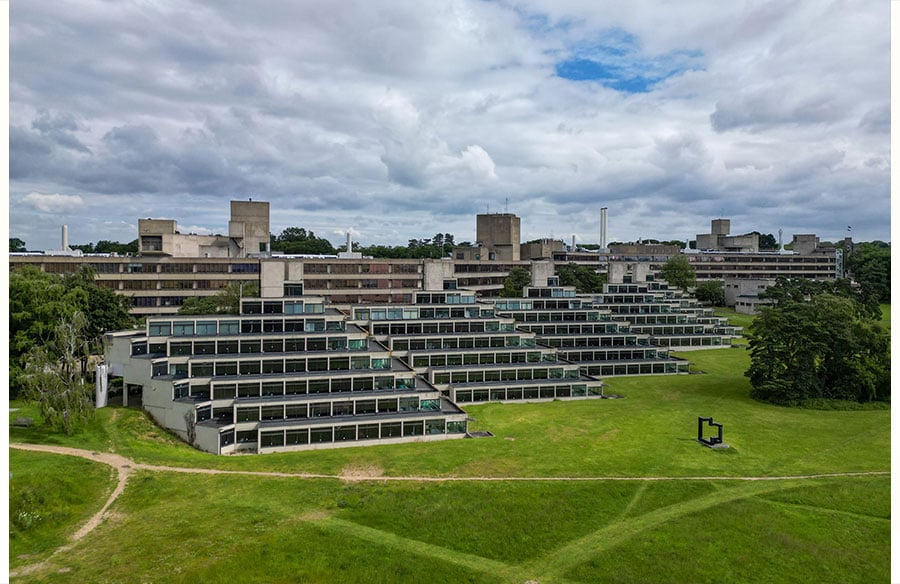
Some in the UK see some universities that really broke out with their postwar architectural styles, in particular in the case of Brutalism. These campuses featured large-scale geometric shapes, exposed concrete, and very functional design elements. Although there is a range of opinion on Brutalist architecture, it is a very important movement in architectural history.
In the pursuit of a master’s in architecture, students who choose these campuses have an in-depth study of architectural ideology, social context, and material expression. Such settings foster critical thought and debate, which in turn helps students to develop strong analytical and conceptual skills.
5. Creative and Design-Focused Campuses
The UK has a number of universities that have designed special campuses for what are termed creative fields. In these campuses students will find open-plan studios, natural light, very flexible workspaces, and state-of-the-art fabrication facilities. Also, what is seen is that architecture students profit greatly from the fact that they are surrounded by peers in design-related fields, which in turn fosters collaboration and innovation.
Studying for a master’s in that setting also gives students access to blends in digital technology with traditional model making and also encourages out-of-the-box design thinking. The campus is a playpen for modern architectural ideas, which supports creativity, adaptability, and the user-centered approach.
Why Campus Design Matters for Architecture Students
Choosing what school for an architecture degree is a decision that goes beyond which programs are ranked best or what the curriculum includes. The campus setting is a shaper of a student’s design and professional point of view. A well-thought-out campus design is a continuous source of inspiration, which also gives a look into scale, material use, space arrangement, and the experience of the user.
In the UK architecture students have the luck to study in a setting that presents a large range of architectural styles and philosophies. From traditional stone-built structures to very contemporary designs, it is all seen—this is a very enriching environment, which in turn prepares students for what they will face in the real world.
Final Thoughts
Pursuing a master’s in architecture in the UK is about more than just academic success—it is possible to see in action the many aspects of what it means to be an architect. From the diverse range of campus buildings, which tell the story of architectural history, to the green initiatives that push the boundaries of sustainability and the cutting-edge innovation that students are a part of—it is all at a student’s disposal.
In choosing a graduate program for a master’s in architecture, attention should be paid to what the school and its campus have to offer in terms of professional and academic interests. In the end, for an architect, the built and natural environment is a live design studio.