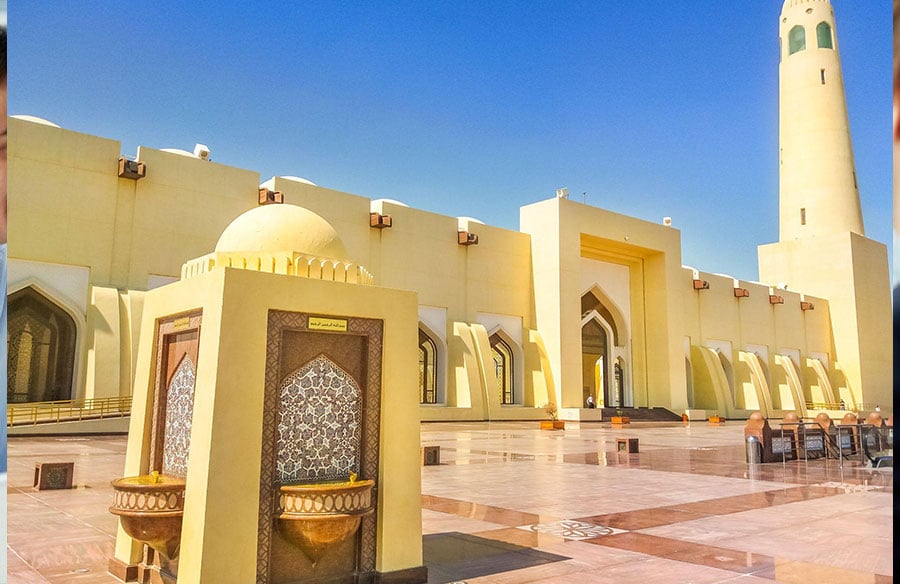
Qatar’s mosques stand as timeless testaments to the nation’s deep Islamic heritage, seamlessly weaving intricate traditional motifs with bold contemporary expressions. These sacred spaces, scattered across the peninsula’s urban landscapes and desert fringes, embody a profound fusion of spirituality, culture, and architectural innovation, captivating enthusiasts of design and history alike.
Overview of Mosques in Qatar
Qatari mosques trace their roots to humble mud-brick structures built by nomadic Bedouin communities centuries ago, evolving dramatically with the oil boom of the 20th century into monumental edifices of white marble and gleaming minarets. Influenced by Ottoman, Persian, and Andalusian styles through maritime trade routes, early designs featured flat roofs, wind-catching badgirs, and geometric mashrabiya screens for natural ventilation in the harsh desert climate. Post-independence in 1971, Wahhabi simplicity merged with global modernism, introducing vast prayer halls, LED-illuminated domes, and earthquake-resistant engineering, all while preserving core Islamic principles like qibla orientation and mihrab centrality.
Main Mosques in Qatar
Prominent among them is the Imam Abdul Wahhab Mosque in Doha, established in 2011, which can accommodate 30,000 worshippers and serves as the State Mosque for national events. Other key sites include the Education City Mosque, opened in 2012, blending minimalist aesthetics with educational symbolism, and the Katara Mosque within the cultural village, a pearl of understated elegance amid artistic hubs. These landmarks not only anchor daily prayers but also host interfaith dialogues and community festivals, reinforcing their pivotal role in public life.
The grand Mosques of Qatar
Imam Abdul Wahhab Mosque
As Qatar’s largest mosque, the Imam Abdul Wahhab Mosque is named after the 18th-century reformer Muhammad ibn Abd al-Wahhab and spans 25,000 square meters in Doha’s Airport Road district. Its pristine white facade evoking purity and expanse. Completed in 2011 by architect Ahmed M. Al-Rayes, it features a colossal central dome clad in Turkish marble, flanked by seven minarets symbolizing the seven verses of the Quran’s opening chapter. Inside, the prayer hall boasts intricate muqarnas vaulting that diffuses light through alabaster panels, accommodating 7,000 in the main space alone during peak times like Eid. Air-conditioned floors with automated wudu stations exemplify modern comfort, while calligraphy friezes in Thuluth script narrate prophetic traditions, making it a spiritual epicenter for Qatar’s 2.8 million residents.
Education City Mosque
Nestled in Education City’s verdant campus, this mosque designed by Antonio Citterio Patricia Viel and Partners in 2012 reimagines sacred geometry for a knowledge-driven era. Its facade employs parametric stone screens inspired by traditional Islamic latticework, filtering harsh sunlight into ethereal patterns across caramel-hued interiors. Seating 1,200, the structure integrates subtle ramps for accessibility and photovoltaic elements on auxiliary buildings, aligning faith with sustainability goals. Symbolizing Qatar Foundation’s ethos, it hosts lectures on Islamic scholarship post-prayers, bridging devotion and academia in a space where 100 arches evoke the hundred names of Allah.
Unique and beautiful Mosques in Qatar
Sheikh Abdulla Bin Zaid Al-Mahmoud Mosque
Located in Doha’s Al Wakrah district, this mosque honors a former Prime Minister with its 2019 design by local firm Arep, featuring a luminous dome sheathed in gold-leafed glass that shimmers at dusk. Octagonal prayer halls draw from Fatimid precedents, with walls clad in Portuguese azulejos depicting floral arabesques, while recessed LED strips mimic flickering mashals. Its modest 500-person capacity belies intimate details like handwoven Sadu textiles in the mihrab, fostering a haven for reflection amid suburban bustle.
The Katara Mosque
Within the vibrant Katara Cultural Village, the Katara Mosque emerges as a serene architectural poem, its Ottoman Revival silhouette capped by a petite bulbous dome and slender pencil minaret. Built in 2011 as part of the village’s masterplan by architect Rasem Badran, it employs Omani limestone for a tactile warmth, with interiors boasting Syrian woodwork in star-patterned ceilings. For a complete visitor’s guide to this hub of art and heritage, including the mosque’s role in cultural events, explore the Katara Cultural Village guide. Seating 300, it doubles as a gallery for Quranic calligraphy exhibits, encapsulating Katara’s mission to revive Qatari traditions through design.
Zekreet Mosque
Perched on Zekreet’s rugged northwestern coast amid gypsum dunes, this abandoned 19th-century mosque, often called the “Desert Mosque“, captures raw, minimalist beauty in its skeletal adobe arches eroded by wind. No formal architect, its organic form with crumbling mihrab niches echoes pre-oil Bedouin worship sites, where natural rock alignments once guided qibla. Photographers flock here for its haunting interplay of light and shadow, symbolizing impermanence and resilience, though restoration debates swirl to preserve this unadorned relic against coastal erosion.
Beyond its most famous landmarks, Qatar is home to noteworthy mosques that reflect a careful balance between tradition and contemporary design. The Msheireb Mosque, located in Msheireb Downtown Doha, is a prominent example of modern Qatari religious architecture. Designed with sustainability in mind, it incorporates passive design strategies, extensive use of natural light, and energy-efficient systems, earning international sustainability certification. Its architecture reinterprets local building traditions while responding to the dense urban context of central Doha.
Qatar Mosques: A blend of tradition and modernity
Qatari mosques increasingly combine established Islamic architectural principles with modern construction methods and materials. The Imam Muhammad ibn Abd al-Wahhab Mosque, the country’s largest mosque, exemplifies this approach through its monumental scale, restrained ornamentation, and contemporary structural solutions expressed within a traditional aesthetic framework. Similarly, the Education City Mosque stands out as a modern landmark, distinguished by its symbolic design, twin minarets, and integration within a university campus that promotes learning and cultural exchange.
Beyond their religious function, many mosques in Qatar serve as important social and cultural centers. Sites such as Katara host religious and cultural activities, while major mosques broadcast sermons nationwide and welcome visitors through guided tours and public events, including open iftars attended by residents and expatriates alike. In this way, mosques contribute to social cohesion and intercultural dialogue, aligning with the cultural and social development goals outlined in Qatar National Vision 2030.
As Qatar continues to adapt to environmental and societal challenges, mosques are increasingly conceived as resilient community anchors. Through thoughtful design, efficient resource use, and expanded public roles, they illustrate how Islamic religious architecture in Qatar evolves while maintaining continuity with its spiritual and cultural heritage.