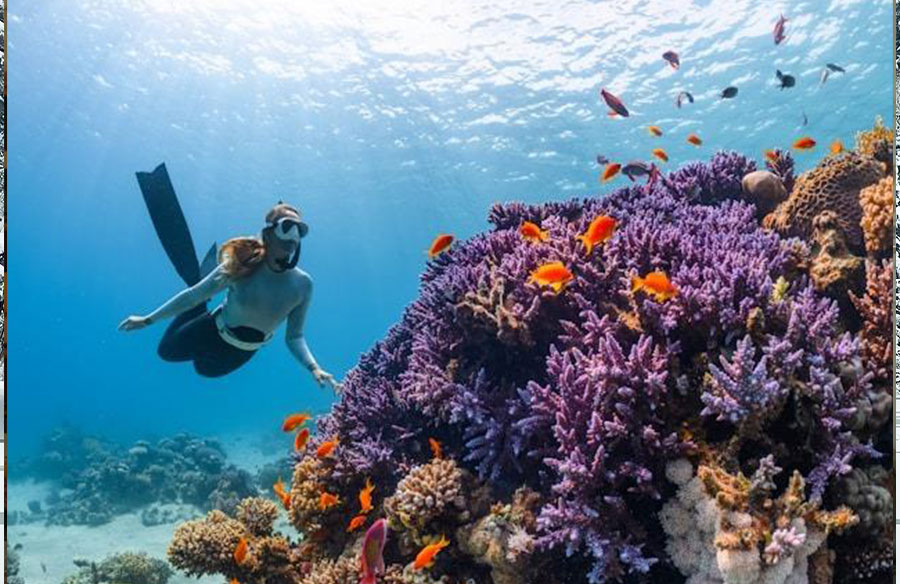
There’s nothing quite like it on the face of the Earth. Stretching more than 2,300 kilometers along Australia’s northeast coast, the Great Barrier Reef is one of our natural masterpieces. Instead of a single reef, this majestic wonder is actually 3,000 separate reefs, 900 islands, and is home to more than 9,000 different species. Designated a UNESCO World Heritage Site in 1981, the Great Barrier Reef is a sight to behold.
Location & Geographical Context
The reef runs parallel to the Queensland coastline, protected by the continental shelf and shaped by warm currents flowing in from the Pacific. Its structure is anything but simple. Outer reefs are like mini mountains battered by the Pacific, while inner reefs are more sedate, with gentle lagoons. Much of this geography is the result of geological processes that have been ongoing for millions of years. As sea levels rose and fell, ancient limestone plateaus became new homes for coral colonies. It’s a spectacular sight and an excellent place for underwater photography, so don’t forget to pack your waterproof camera.
Outstanding Universal Value
UNESCO recognizes the Great Barrier Reef under natural criteria (vii), (viii), (ix), and (x), reflecting its exceptional beauty, geological history, ecological processes, and biodiversity. Quite simply, there are few places on the planet with the same level of thriving life.
This is a habitat for over 1,500 species of fish, 400 kinds of coral, and one-third of the planet’s soft coral varieties. Six of the world’s seven marine turtle species feed or nest here, while humpback whales migrate along its length each year. Even the reef’s microscopic residents—plankton and zooxanthellae—shape its health, coloring coral structures with neon greens and electric blues.
Conservation Challenges
But it’s at risk. The Great Barrier Reef, like many other parts of the world, is feeling the brunt of climate change. Rising ocean temperatures trigger mass bleaching events—moments when corals lose their symbiotic algae and fade toward white. Reefs can technically recover, but repeated bleaching events mean slower growth, a higher likelihood of disease, and a greater chance that they won’t be able to bounce back. Add to that the declining water quality around the reef, coastal development, and intensifying storms, and you’ve got a toxic mix that has placed the Great Barrier Reef under threat.
Several programs combating the situation are underway, including closed-off sanctuaries, reef restoration, sustainable tourism, improved water management, and global climate commitments, all of which play a role in addressing the issue. But we play a part, too. In the water, simply touching the coral can harm it, while the chemicals in the sunscreen we wear also damage it.
A Living Classroom for Responsible Exploration
For those looking to learn about the wonders of marine biology, welcome to the best classroom the planet has to offer. Snorkelers drift above coral gardens, while divers explore drop-offs where sharks glide. If you want to take underwater photos, this is the place to do it, with thousands of species to choose from and the enchanting world of Finding Nemo and The Little Mermaid that we humanoids rarely get to see properly. It’s a jaw-dropping location for learning and a place to explore that you’ll never forget.
A Legacy Worth Preserving
The Great Barrier Reef is in a league of its own—a one-of-a-kind. Nothing else in the marine world comes anywhere near, which places extra emphasis on efforts to protect this fragile ecosystem that offers so much. However, the truth is that since the 1950s, global coral-reef cover has dropped by about 50% due to pollution, rising sea temperatures, and human interference. This is one of the world’s greatest natural wonders, but we should not take it for granted. Visit it, yes. Explore it, yes—but preserve it and leave it for the next generation to witness as well.