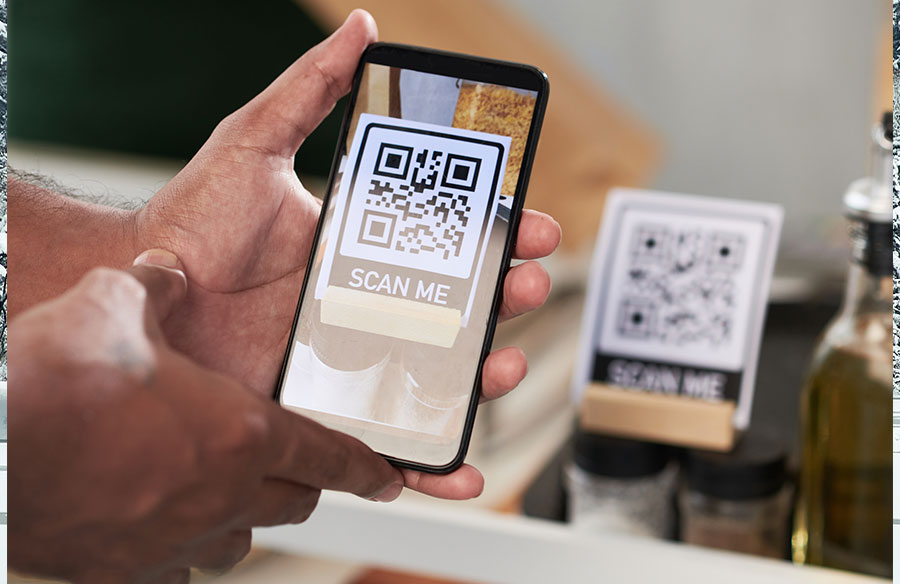
Architecture has always been about more than buildings alone. It shapes how people move, how they feel, how they interact with space and with each other. Today, that experience is no longer purely physical. Digital layers are quietly merging with brick, concrete, glass and steel and one of the most unassuming tools enabling this shift is the QR code.
Once considered a purely functional shortcut to a website, QR codes are now evolving into smart QR solutions that connect physical environments with living, updateable digital content. In architecture, urban planning and exhibition design, this small square is becoming an invisible interface between space and information.
Not as a gimmick.
But as a new design layer.
From Static Space to Interactive Environment
Traditionally, architecture communicates through form, material, light, scale and movement. Information was fixed: a plaque on a wall, a printed map, a static sign. Once installed, it stayed the same for years.
QR technology changes that logic completely.
A single scan can now reveal:
- the story behind a building,
- construction details and material sourcing,
- sustainability performance,
- historical transformations,
- future renovation plans.
The physical structure remains unchanged.
The narrative around it becomes fluid.
This is where architecture begins to behave like a digital product: continuously updated, context-aware and interactive.
QR Codes as a Tool for Architectural Storytelling
Architecture always tells a story, whether intentional or not. With QR codes, designers can finally control and expand that story without altering the physical form.
In practice, QR layers are already used to:
- explain design concepts in competitions and exhibitions,
- guide visitors through cultural spaces,
- present adaptive reuse projects with before-and-after narratives,
- share parametric design logic,
- show BIM models and construction phases.
For students and young architects especially, this creates a powerful educational layer on top of the built environment itself.
Urban Spaces That Respond, Not Just Exist
Cities are becoming platforms rather than static systems.
In smart city contexts, QR technology enables:
- access to real-time transport data,
- public service information,
- environmental monitoring,
- wayfinding systems that adapt to crowd flow,
- community feedback channels.
Instead of relying solely on screens or apps, QR codes embed digital access directly into the urban fabric. The street becomes a user interface. The building becomes a data gateway.
Exhibition Design and the End of Physical Limits
Museums, galleries and temporary installations face a constant limitation: space. Labels compete with artworks. Printed explanations interrupt the visual flow.
QR-based systems resolve this tension elegantly.
They allow designers to:
- keep physical space clean and minimal,
- shift deep content to mobile layers,
- offer multilingual experiences without clutter,
- update exhibitions without reprinting materials,
- extend the experience beyond the visit itself.
The exhibition no longer ends at the exit. It continues on the visitor’s device.
Sustainability, Transparency and the Digital Twin
Sustainable architecture increasingly depends on transparency. Clients, users and cities want to know:
- where materials come from,
- how energy is used,
- how buildings perform over time.
QR codes can act as public-facing portals to the digital twin of a building. One scan can reveal:
- life-cycle data,
- carbon footprint metrics,
- energy dashboards,
- maintenance schedules,
- circular construction plans.
In this way, sustainability becomes not only a technical feature, but a visible, accessible narrative.
Why Dynamic QR Matters for Design
The real architectural shift is not the QR itself it’s the fact that it can now be dynamic.
Using a Dynamic QR Code Generator, architects, curators and city planners can:
- update information without altering physical structures,
- adapt content to different phases of a project,
- maintain relevance long after construction is complete,
- layer new narratives onto existing spaces.
This is particularly powerful in:
- adaptive reuse projects,
- heritage buildings,
- long-term urban developments,
- public infrastructure.
The building may be permanent. The story is not.
Architecture as Interface
We are entering a phase where architecture is no longer just shelter, symbol or structure it is becoming an interface.
Walls communicate.
Streets inform.
Objects connect.
QR codes are not the final form of that interface, but they are one of the most accessible, democratic ways to activate it today. They require no special hardware, no apps, no training. Just a camera and curiosity.
And that accessibility matters. Because the future of urban experience should not be locked behind exclusive technology. It should be open, legible and shared.
A New Discipline Between Physical and Digital
As architecture moves closer to product design, UX and digital systems, a new hybrid discipline is emerging:
- spatial interaction design,
- architectural interfaces,
- experiential wayfinding,
- narrative environments.
QR technology sits quietly at the center of this shift. Not as a visual statement, but as connective tissue between space and information.
Conclusion
QR codes may look simple. But in the context of architecture and urban design, they introduce something profound: the ability for space to speak, evolve and respond over time.
They allow buildings to explain themselves.
Cities to communicate with their inhabitants.
Design to remain alive after construction is finished.
In the future, architecture will not only be something we walk through.
It will be something we interact with.
And sometimes, all that interaction begins with a single scan.