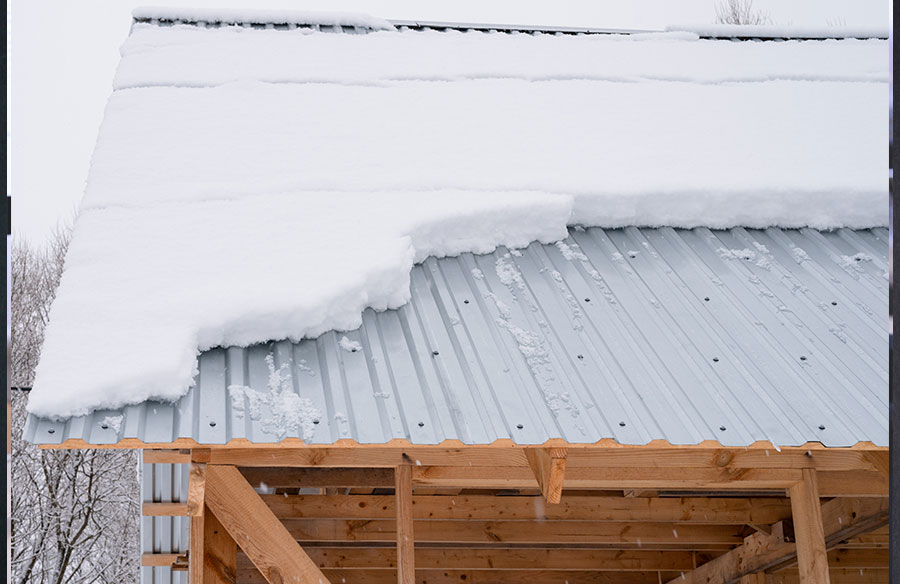
Ohio roofs experience constant freezing and thawing that stress every layer of a roofing system. When moisture seeps into seams or fastener points, it expands during freezing and contracts when temperatures rise. This repeated motion weakens adhesives, dislodges granules, and fractures rigid materials. Maintaining low moisture absorption, stable flexibility, and adequate impact strength are key performance priorities.
Polymer-modified asphalt shingles, heavy-gauge metal panels, and rated impact laminates each provide different balances of flexibility, bonding strength, and weather resistance. Comparing installation methods, flashing approaches, fastener placement, and ventilation capacity allows a clear understanding of how each roofing assembly withstands winter conditions and long-term thermal cycling across Ohio’s variable climate zones.
Temperature-Driven Stress Points
Materials that stay flexible and absorb little moisture perform best during freeze-thaw cycles. Water entering small gaps expands when frozen and contracts as it warms, stressing seams and adhesives. This movement can loosen granules or cause small surface cracks. Test data on moisture and granule retention show which materials stay durable. Flexibility and impact ratings reveal how well they resist cracking from temperature changes.
Adequate attic ventilation limits humidity and reduces condensation that accelerates surface wear. Fastener systems with clips or slotted holes allow controlled thermal movement. When repeated freeze-thaw exposure reduces surface cohesion or flexibility below rated specifications, a roof replacement becomes a standard restoration measure that renews full system performance and restores designed thermal movement capacity.
Asphalt Shingle Performance
Asphalt shingles are widely selected for Ohio homes due to affordability, product range, and installation efficiency. Cold-weather reliability depends on binder formulation, mat reinforcement, and adhesive strength. Polymer-modified asphalt maintains flexibility during freezing conditions and reduces cracking along ridges and nail lines. Secure sealing adhesives preserve continuous surface integrity under thermal expansion.
Manufacturer data outlining low-temperature pliability and bond retention provide reliable comparison points. Nail spacing, fastener depth, and placement uniformity directly affect shingle stability during wind loading and temperature cycling. Ongoing evaluation of seal adhesion and granule retention across product lines verifies structural durability through multiple freeze-thaw seasons and supports effective long-term performance tracking.
Metal Roofing Durability
Metal panels resist freeze-thaw damage because they absorb very little moisture. Using panels with the right thickness prevents cracking when temperature changes cause expansion and contraction. Standing seam systems with engineered clips let panels move slightly, reducing stress at attachment points. Durable coatings and factory-applied finishes protect against corrosion from snow, salt, and ice while maintaining surface grip.
Proper fastener placement and clip spacing spread loads evenly and prevent cracking or bending at weak spots. Choosing the correct panel gauge, fastening method, and coating type provides long-term protection during Ohio’s winters. Reliable installation details and verified material ratings improve strength and extend service life in harsh freeze-thaw conditions.
Impact-Rated Material Strength
Impact-rated roofing materials are tested to withstand fracture when temperatures cause surface stiffening. Laboratory classifications such as UL 2218 define performance under controlled impact loads from hail or debris. Laminated constructions using fiberglass reinforcement distribute force evenly to reduce localized cracking. Continuous edge bonding and sealed overlaps maintain coverage when ice forms and melts.
Reinforced starter courses, specialized underlayments, and compatible fasteners maintain consistent strength across transitions. Reviewing documented impact performance and accessory compatibility confirms uniform resilience throughout the roof system. Materials combining high impact ratings with verified low-temperature flexibility maintain long-term resistance to cracking and delamination through Ohio’s recurrent freeze-thaw cycles.
Material Fit for Ohio Homes
Selecting materials suited to roof geometry and environmental exposure minimizes cracking and sealant fatigue. Products listing thermal expansion data and clip spacing recommendations allow proper planning for wide panels and long spans. South-facing and wind-exposed roof slopes require coatings with enhanced ultraviolet and expansion resistance.
Durable assemblies include continuous ice-and-water shields along eaves and valleys, supported by reinforced underlayments that block moisture migration. Snow guards or retention systems control snow movement and prevent overload at lower roof sections. Scheduled inspection, recoating, and refastening maintain full performance through seasonal variation. Confirming manufacturer data and installation standards supports compliance and consistent strength in Ohio’s freeze-thaw environment.
Freeze-thaw exposure demands roofing systems with proven resistance to moisture infiltration, impact stress, and dimensional change. Polymer-modified asphalt shingles, properly gauged metal panels, and impact-rated laminates perform reliably when paired with compatible fasteners and underlayments. Verified flexibility, absorption, and impact test data provide objective selection criteria for cold climates. Balanced attic ventilation and continuous ice-and-water shielding reduce condensation and adhesive fatigue. Reviewing manufacturer documentation and installation guidelines supports accurate component matching. Consistent inspection, recoating, and fastening maintenance sustain long-term structural stability and performance through recurring temperature variations and winter moisture cycles.