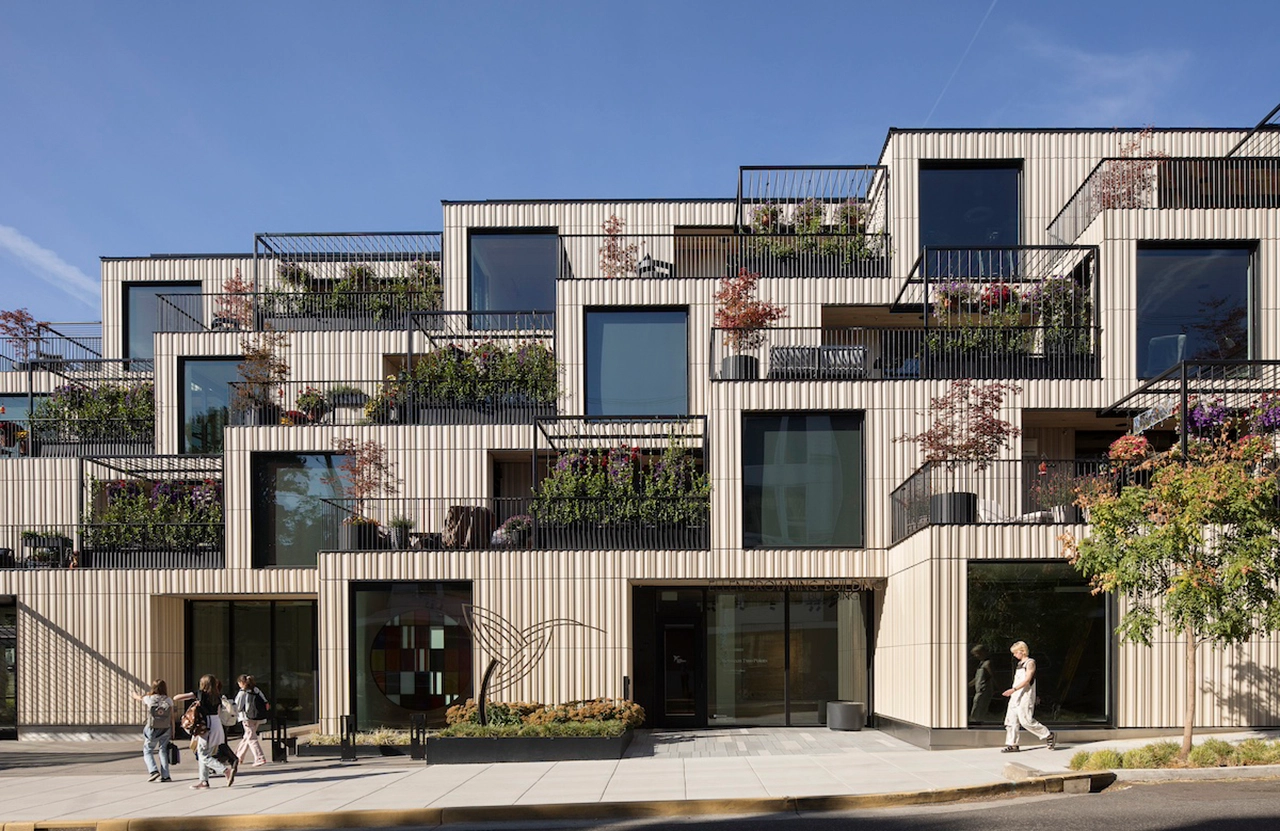
The Ellen Browning Building emerged from a simple but powerful idea: a group of longtime friends imagined a way to stay connected through the later chapters of their lives. Co-housing—rooted in shared spaces and a strong sense of community—offered the ideal framework.
Project Name: Ellen Browning Building
Studio Name: Hacker Architects
Location: Portland, Oregon
Photography: Jeremy Bittermann
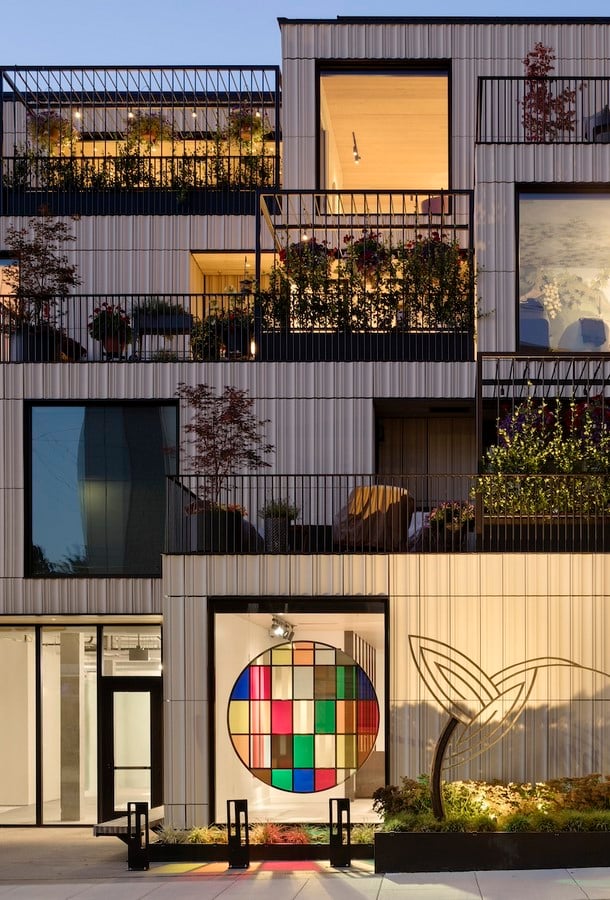
By developing their own mixed-use residential building, they could weave together independence, urban vitality, and the comfort of familiar relationships. Their chosen site sits along Southeast Portland’s lively Division Street, a walkable neighborhood rich in amenities and healthcare options—an intentional aging-in-place strategy.
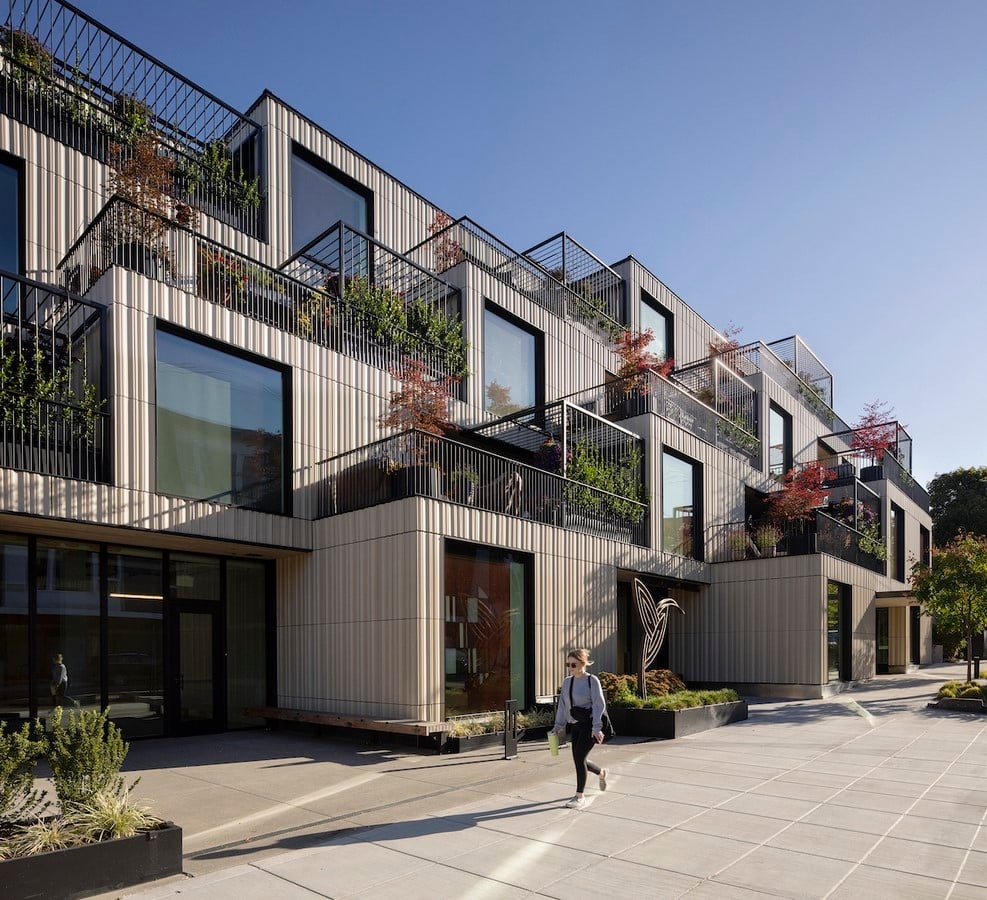
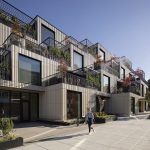
Rather than maximize unit count, the 34,000-square-foot development prioritizes the quality of the urban experience for both residents and neighbors. The building includes ten thoughtfully designed residences shaped by the site’s programmatic and contextual influences. Single-level flats occupy the second and third floors, ranging from 1,000 to 4,000 square feet, while ground-level apartments accommodate guests or future on-site caretakers. Street-facing retail spaces and an art gallery animate the sidewalk and reflect the group’s shared commitment to contributing to the neighborhood’s cultural and commercial life.
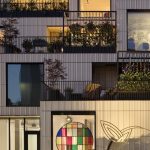
Clad in fluted, off-white terra cotta, the building becomes a canvas for shifting daylight, its textured façade capturing color and shadow throughout the day. Terraced patios soften the overall massing and introduce layers of greenery, functioning as vertical front yards where residents can connect with friends and enjoy the urban setting. Structurally, the building combines a post-tensioned concrete frame with a CLT and wood-beam top floor. Prefabrication—both the CLT and the terra cotta cladding—reduced on-site work, shortening construction time and lowering costs. Additional materials include thermally efficient fiberglass windows, metal trellises and guardrails, and Ipe decking. A small below-grade garage provides discreet parking.
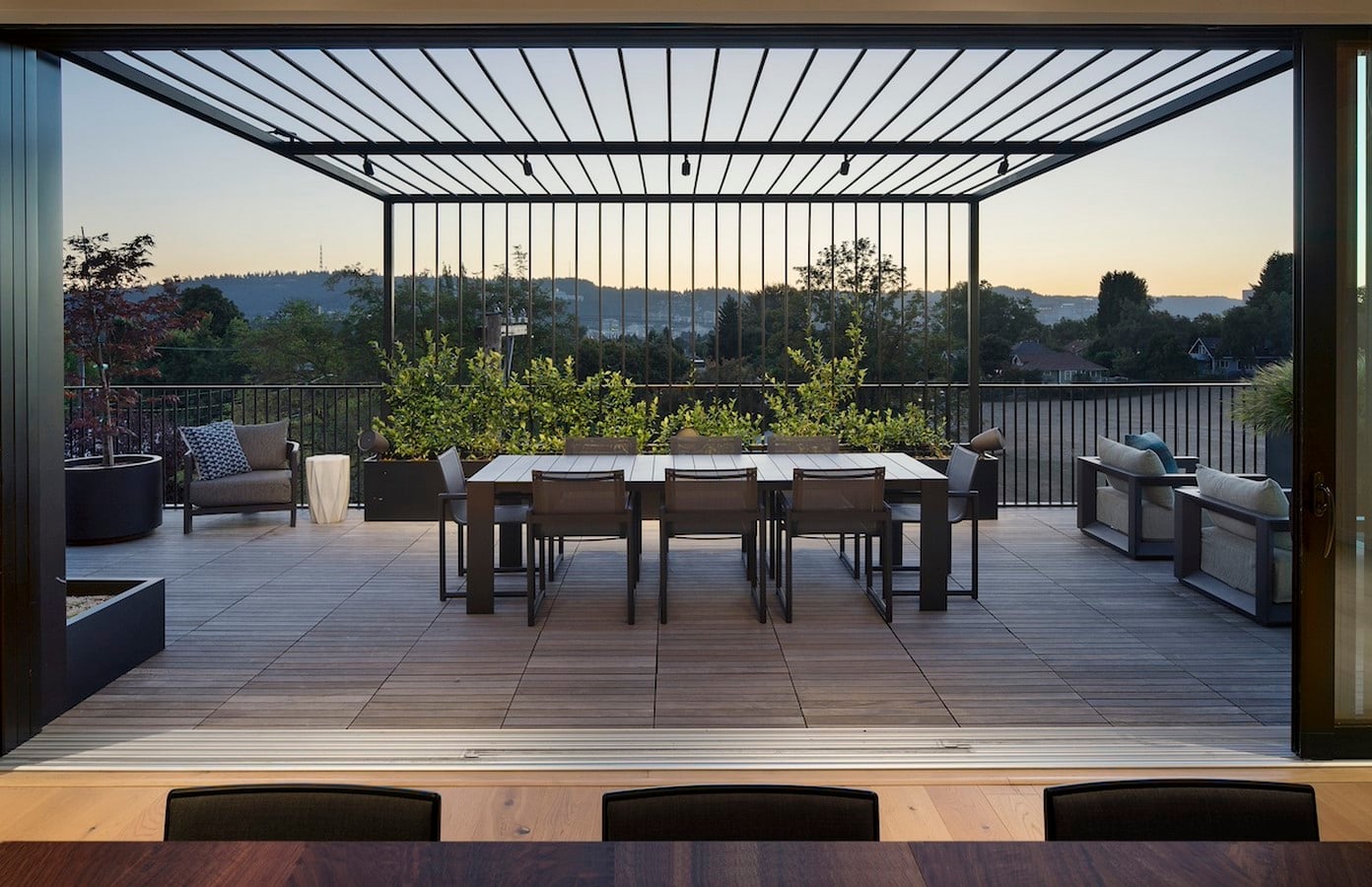
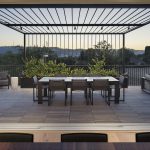
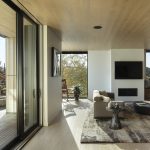
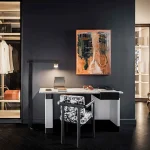
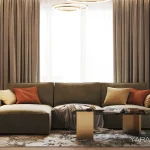
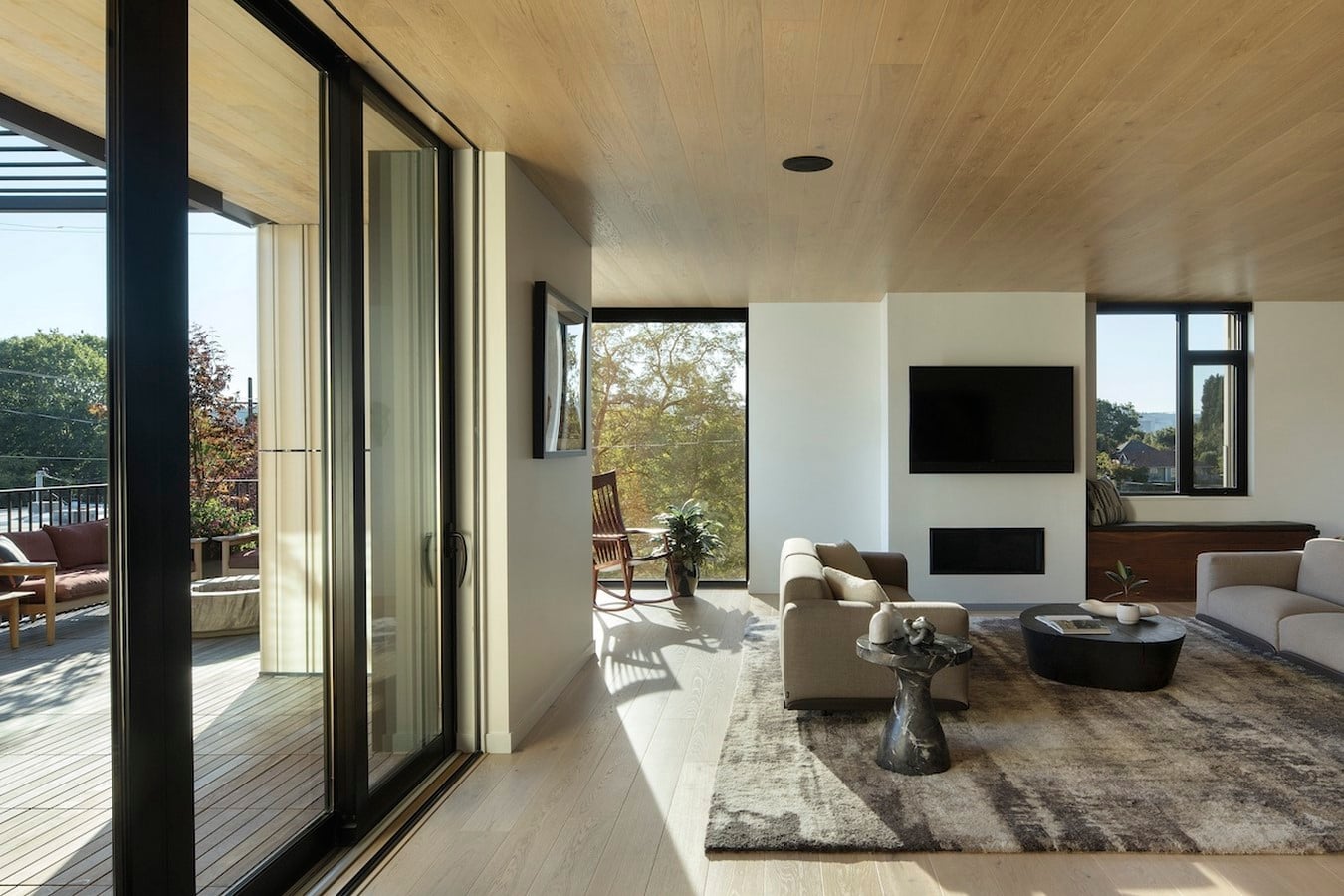
Interiors are defined by a restrained palette of minimally finished materials—white oak floors and ceilings with simple gypsum board walls. Residents selected from a curated set of kitchen and casework templates, while furnishings remain personal to each owner. Art is present throughout shared spaces, including a custom chandelier, a digital media wall, and outdoor sculpture. Terraces are framed by a grid of painted steel rods designed to support star jasmine, which will eventually drape parts of the building in greenery. The fourth floor is dedicated to communal amenities, offering a generous mix of indoor and outdoor spaces for cooking, dining, games, crafts, reading, swimming, and movies—ensuring residents can find privacy or company as they choose.
By creating their own building, this group of friends has secured a future in which their relationships—and their extended social network—can continue to thrive. In a time of growing social isolation, the project stands as a model of social sustainability, demonstrating how architecture can support community, connection, and well-being for its residents and for the neighborhood around it.