Commercial HVAC design for multi-storey buildings comes with its own set of challenges that need smart solutions. These buildings use a lot of energy for cooling, and this becomes even more apparent during Australian summer peaks. For businesses seeking professional commercial air conditioning Brisbane solutions and beyond, understanding these complexities is essential. Upper floors get warmer than lower ones because heat naturally rises, a fact that makes our job more challenging.
The energy usage of air conditioning systems in commercial spaces exceeds the combined power needs of lighting and office equipment. Commercial HVAC systems are far more complex than their single-storey counterparts. A careful design process maps out ductwork, plans system placement, and figures out the capacity needed for smooth operation. The simple principles of commercial HVAC design become crucial when tackling multi-storey challenges.
A well-designed commercial HVAC system does more than provide comfort; it boosts workplace productivity. Research shows that poor ventilation leads to tired workers, headaches, and more sick days. A properly designed HVAC system can improve your company’s performance. This piece explores ways to create expandable commercial HVAC systems that adapt to your building’s evolving needs, like adding office space or changing how areas are used.
Understanding the Needs of Multi-Storey Buildings
HVAC systems in multi-storey buildings need a sophisticated approach that goes beyond just scaling up home solutions. These buildings create unique environmental challenges that affect occupant comfort, energy efficiency, and system performance.
Why HVAC design is more complex in tall buildings
The stack effect is one of the most important challenges in tall building design. During winter, this natural phenomenon can create pressure differences of up to 0.4 inches of water column per 100 feet of height. Air moves upward through lift shafts, stairwells, and other vertical passages because of this pressure differential. This makes temperature control really tough.
Wind forces become more powerful as buildings get taller, just like sails catching a breeze. These external pressures can help or hurt ventilation efforts based on wind direction and strength. Upper floors usually experience higher temperatures as heat naturally rises through the building.
Moving air across many floors adds another layer of complexity. Each floor creates its own microclimate with unique temperature and humidity patterns. Commercial HVAC design must address these variations instead of treating the building as one big zone.
Key factors: occupancy, usage, and building height
Occupancy patterns are a big deal as they mean that HVAC requirements change throughout the day. People generate quite a bit of heat, about 230 Btuh sensible heat and 200 Btuh latent heat per person in residential settings. Commercial environments see varying occupancy levels throughout the day, so HVAC systems must adapt.
Building usage determines the right system setup. To name just one example, an office building needs different HVAC solutions than a mixed-use complex. The size, layout, and floor count also directly shape system capacity requirements.
Server rooms, kitchens, or manufacturing spaces often need custom solutions to handle heat generation, humidity, and air quality. These different requirements call for a zoned approach to commercial HVAC system design.
How commercial HVAC design basics apply differently
Regular buildings make mechanical equipment placement pretty simple. Multi-storey structures need strategic placement to work efficiently. The core team recommends placing major mechanical rooms every 20-25 floors for the best performance.
Ductwork planning becomes crucial in tall buildings. Vertical shafts must work well with the overall building design to maintain structural integrity. Longer duct runs lead to increased friction losses, which affects the system’s efficiency.
Tall building HVAC ductwork design must account for pressure differences between floors, unlike conventional designs. These variations need careful balancing to maintain consistent airflow throughout the structure.
Choosing the Right HVAC System
Choosing the right HVAC system for multi-storey commercial buildings means finding the sweet spot between efficiency, cost, and functionality that tall structures need. Building requirements must be clear before you make the vital decision between centralised and decentralised systems.
Centralised vs decentralised systems
Centralised systems work from one location to serve multiple spaces. They typically use chilled water as a cooling medium and need extensive ductwork for distribution. These systems give better comfort control, save more energy, and manage loads better. The downside? They cost more to install and need complex operation and maintenance.
Decentralised systems serve individual or small spaces from nearby locations. They cost less upfront, install easily, need no ductwork, control zones independently, and take up less mechanical room space. Multi-tenant buildings benefit greatly from individual metering in decentralised systems. In spite of that, the equipment lasts only about 10 years, makes more noise, and uses more energy.
When to use VRF, multi-split, or rooftop units
VRF systems have gained popularity in multi-storey buildings. The technology adjusts refrigerant flow to each indoor unit based on load requirements and provides exact temperature control. Building owners can save up to 40% on energy costs compared to traditional HVAC systems. These systems excel at cooling and heating different areas of a commercial building simultaneously.
Multi-split systems shine when you want different temperatures in multiple spaces or have limited outdoor installation space. They connect multiple indoor units to one outdoor unit, which helps preserve the building’s exterior look.
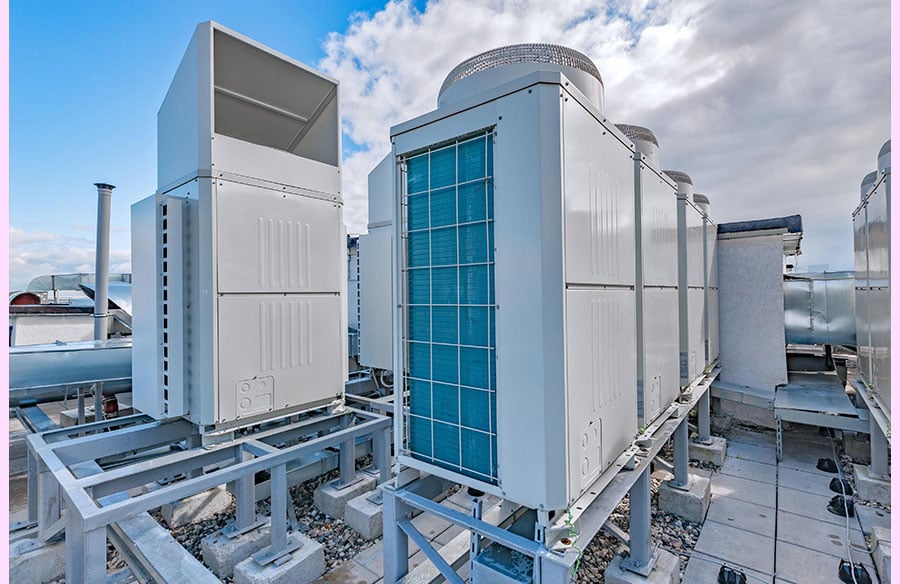
Rooftop units work best in buildings up to eight storeys tall. They free up valuable indoor space whilst optimising climate control throughout large buildings. The system mixes fresh outside air with return air, filters it, conditions it, and sends it back into the building.
How commercial HVAC design software helps in selection
Commercial HVAC design software makes selection easier through load calculation, system validation, and performance simulation. Tools like LATS help designers make smart choices for each project by calculating exact heating and cooling loads based on building specifics.
These programmes let engineers set up zoning, building orientation, materials, and usage conditions to size systems correctly from day one. Engineers can simulate airflow and pick the best models whilst analysing pressure loss to match components perfectly.
Quality design software cuts down manual work, speeds up design time, reduces errors, and creates simplified processes.
Designing the Layout and Ductwork
The foundations of efficient commercial HVAC systems in multi-storey buildings depend on proper layout and ductwork design. Multi-storey buildings bring special challenges. Building managers need thoughtful planning to ensure the best performance across all floors.
Zoning strategies for floor-by-floor control
Tall buildings need effective zones that work with the building’s structure and use. Floor-based zoning makes each level its own zone. This simple approach prevents temperature differences between upper and lower levels and makes control easier in vertical structures. Heat naturally moves upward through buildings, making this method work really well.
Function-based zoning creates areas based on how spaces are used. This gives different air flows to spaces like boardrooms, server rooms, or open-plan offices. The system works better because it responds to how much each space is used and how much heat it generates. Sensor-integrated zoning uses motion and temperature sensors that automatically adjust based on up-to-the-minute occupancy data.
Vertical ductwork planning and shaft placement
High-rise buildings use vertical ducts to move air from central HVAC units to each floor. Horizontal ducts then spread air throughout each level. Placing mechanical rooms is vital. Experts say you should put major mechanical rooms every 20-25 floors for the best results.
Vertical shafts should not be next to stairs, electrical closets, and lifts. Vertical duct shafts work better when they’re rectangular rather than square. The best ratio is between 2:1 and 4:1.
Airflow balancing and pressure considerations
Getting air distribution right across multiple floors is tough. Different floors have different numbers of people, sunlight exposure, and wind pressure effects. You need to check the HVAC system, measure airflow and pressure at key points, and adjust dampers and fans to fix any problems.
Managing pressure in tall buildings works like conducting an orchestra. Everything must work together perfectly to keep conditions comfortable. Temperature changes create different pressures through the stack effect. This means you need constant monitoring and adjustments for proper ventilation.
Noise control in commercial HVAC ductwork design
HVAC system noise can hurt comfort and productivity in commercial spaces. Good ductwork design helps solve this problem. You should avoid sharp bends and sudden duct size changes. Using larger ducts where possible helps. Adding turning vanes in elbows and flexible duct connectors reduces vibrations.
Sound attenuators and silencers placed strategically in the HVAC system can cut noise levels significantly. Duct silencers in main supply and return air ducts work best for mid to high-frequency noise. Acoustic louvres help reduce noise from outdoor equipment.
Installation, Testing, and Maintenance
The implementation phase brings a perfectly designed commercial HVAC system to life. This phase needs careful attention during installation, testing, and maintenance procedures.
Step-by-step installation process
Site preparation kicks off proper installation by creating equipment access and strengthening structural supports where needed. Smart scheduling helps minimise disruptions and coordinates work with other building trades. Technicians must position and secure units based on design specifications whilst keeping proper ventilation clearance. The next step involves ductwork installation with appropriate sealing and insulation to prevent energy waste.
System testing and calibration essentials
The testing phase evaluates airflow, temperature, pressure, and humidity at the system outlet. Chilled mirror hygrometers in inlet and outlet ducts deliver precise dew-point measurements, particularly during quick temperature shifts. The air balancing process requires damper adjustments, register settings, and fan speed modifications to create even distribution across all floors.
Routine maintenance for long-term performance
A well-maintained HVAC system can last five years longer than average. Australian standards recommend monthly inspections for large commercial systems. The maintenance checklist has filter replacements, coil cleaning, refrigerant checks, and control calibration.
Using smart sensors for predictive maintenance
Smart sensors track vital parameters like temperature, humidity, airflow, pressure, and equipment vibrations. These devices send data to cloud platforms where AI algorithms spot patterns and detect potential issues early. This proactive strategy cuts downtime, prevents costly emergency repairs, and reduces energy use by up to 30%.
Conclusion
HVAC system design for multi-storey commercial buildings comes with unique challenges that need careful planning. Heat naturally rises through buildings and creates temperature variations. These variations need strategic zoning and proper airflow management to work effectively.
Picking the right system is a vital decision point for any commercial building project. Centralised systems offer better efficiency whilst decentralised options give simplified installation benefits. Each approach needs to match specific building requirements. VRF systems have proven to be particularly effective and provide up to 40% energy savings. They also give the flexibility needed in commercial spaces of all sizes.
Ductwork design and layout need precise attention, especially for vertical shaft placement and pressure balancing. Smart zoning strategies help control temperatures precisely whilst saving energy. These strategies can be floor-based, function-based, or use integrated sensors. The design phase must include noise control measures rather than adding them later.
System performance depends heavily on installation quality, testing procedures, and maintenance routines. Smart sensor technology combined with regular inspections helps avoid getting pricey breakdowns and extends equipment life. This detailed approach will give a comfortable, productive environment with efficient energy use on every floor.
HVAC systems in multi-storey commercial buildings do more than just control temperature. A well-engineered system creates the perfect balance between comfort, efficiency, and adaptability. These guidelines help create HVAC solutions that work efficiently now and adapt to future building needs.