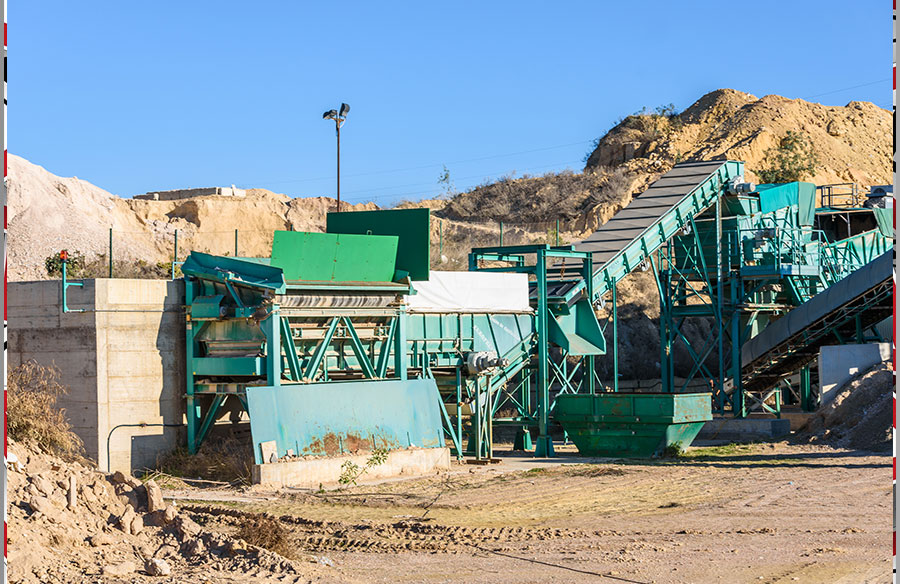
In the world of aggregate production, efficiency and precision play a major role in delivering high-quality materials for industries like construction, quarrying, and mining. While the process might seem straightforward from the outside, it actually involves several types of machinery working together in harmony. Among the most important pieces of equipment are aggregate crushers, screeners, and washers. Each performs a distinct task, yet all contribute to creating clean, uniform, and usable aggregates.
Understanding Aggregate Crushers and Why They’re Used
Aggregate crushers are the first machines in the process of turning large rocks or boulders into smaller, workable pieces. They use mechanical pressure to break down raw material into specific sizes suitable for construction or industrial use. Crushers come in different types, such as jaw crushers, cone crushers, impact crushers, and gyratory crushers, each designed to handle specific materials and output requirements.
A jaw crusher, for instance, uses a fixed and a moving plate to compress material, making it ideal for primary crushing. Cone crushers, on the other hand, use a rotating spindle to crush stones between a mantle and a concave surface, providing a more precise secondary or tertiary crush. Impact crushers rely on high-speed collision to break down softer or medium-hard materials, often used when producing smaller, more uniform aggregates.
Crushers are essential for reducing bulk material into manageable sizes. In quarrying and mining, they form the foundation of the entire production line, preparing the feedstock for the next stages of screening and washing. Without effective crushing, the rest of the operation cannot function efficiently.
The Role of Aggregate Screeners for Modern Industries
Once the material has been crushed, it needs to be sorted. This is where screeners come into play. Aggregate screeners separate crushed material into different size fractions using vibrating screens fitted with mesh decks of various sizes. The screening process is crucial for producing materials that meet specific project requirements, such as gravel for roads, sand for concrete, or ballast for railways.
Modern screeners use precise vibration patterns to move material across the screen deck, allowing smaller particles to fall through while larger pieces stay on top. This process not only helps in achieving size uniformity but also reduces waste by returning oversized material back to the crusher for further processing.
In quarrying, screeners help operators maintain consistent product quality, which is essential for meeting standards in construction projects. They also help increase efficiency by allowing simultaneous sorting of multiple material grades. For example, one screening plant can produce fine sand, medium gravel, and coarse aggregate at the same time.
How Aggregate Washers Improve Product Quality
After crushing and screening, aggregate materials often need washing to remove impurities such as dust, clay, and silt. Aggregate washers perform this function using water and agitation to clean the material, resulting in a higher-quality end product. This step is particularly important in industries like concrete production, where unwanted particles can weaken the mix or affect binding.
There are two main types of aggregate washers: log washers and screw (or spiral) washers. Log washers use rotating paddles to scrub materials with high clay content, while screw washers use a continuous spiral motion to move and clean smaller aggregates. In both cases, the goal is the same: to produce clean, consistent material ready for use or further processing.
Washed aggregates are highly valued for their improved performance. Clean sand and gravel, for example, are easier to mix and bond in concrete, resulting in stronger, more reliable structures. Similarly, washed stone is often preferred for decorative landscaping and drainage applications where appearance and cleanliness matter.
Combining Aggregate Crushers, Screeners, and Washers in One System
While each machine has a unique function, the true efficiency of aggregate production comes from integrating crushers, screeners, and washers into a single, streamlined system. When combined, these machines create a continuous production line that can process raw material from start to finish with minimal manual handling.
The process begins with a crusher breaking down large rocks into smaller fragments. These fragments are then transferred to a screener, which separates them into different size categories. Finally, the appropriate fractions are passed through a washer to remove unwanted dust and debris, resulting in clean, uniform aggregates that meet industry specifications.
This integrated approach has several advantages. It reduces downtime, improves material flow, and increases output efficiency. By automating the transfer between machines, operators can maintain a steady pace of production while reducing labour costs and the risk of contamination. It also allows for better quality control, as the entire process is monitored and adjusted in real time.
For businesses in mining, quarrying, and construction, having a combined crushing, screening, and washing plant can be a game-changer. It simplifies operations, shortens production times, and produces high-quality aggregates suitable for everything from road building to large-scale industrial projects.
Final Thoughts
Crushers, screeners, and washers may each perform distinct tasks, but they are at their most effective when working together. Crushers break material down, screeners separate it into usable sizes, and washers clean it for final use. Together, they form the backbone of modern aggregate production.
For companies in the minerals, quarrying, and construction sectors, investing in an integrated system is not just about improving productivity, but about producing consistent, dependable materials that meet every project’s demands.