When it comes to choosing materials for furniture, you’ve likely come across both particle board and medium-density fiberboard (MDF). While they may seem similar, they have key differences that can impact your decision depending on your needs. Both are engineered wood products, but they are made from different materials and processes, which leads to variations in durability, appearance, and cost.
This article breaks down the differences between particle board and MDF, explores their uses, and helps you decide which is right for your project.
What Is Particle Board?
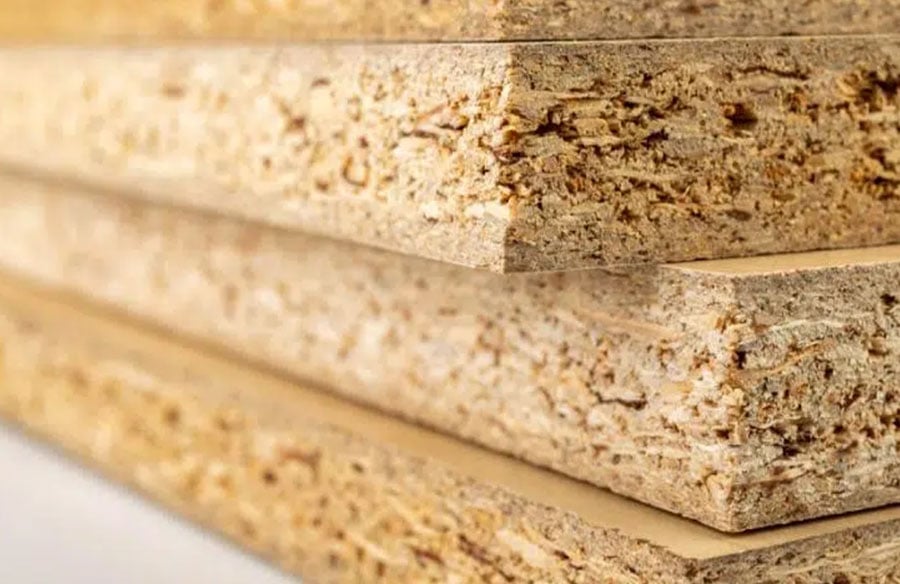
Particle board is often seen as the “budget option” in the world of engineered wood, but it’s more than just a low-cost material. Made by compressing small wood particles, sawdust, and resin into a solid sheet, particle board is essentially a by-product of the wood manufacturing process. This process makes particle board an eco-friendly option since it uses wood scraps that would otherwise go to waste.
While particle board is lighter and more affordable, it has a high porosity due to its low density. This can be problematic for long-term durability, especially when exposed to moisture. Water absorption can cause particle board to swell and lose structural integrity. To combat this, many manufacturers treat particle board with melamine or laminate coatings, which act as moisture barriers. These coatings extend the life of the material but still don’t make it waterproof.
Common Uses of Particle Board
- Budget furniture, such as bookshelves and side tables
- Cabinets and drawer boxes
- Kitchen or bathroom furniture (when cost is a major consideration)
What Is MDF?
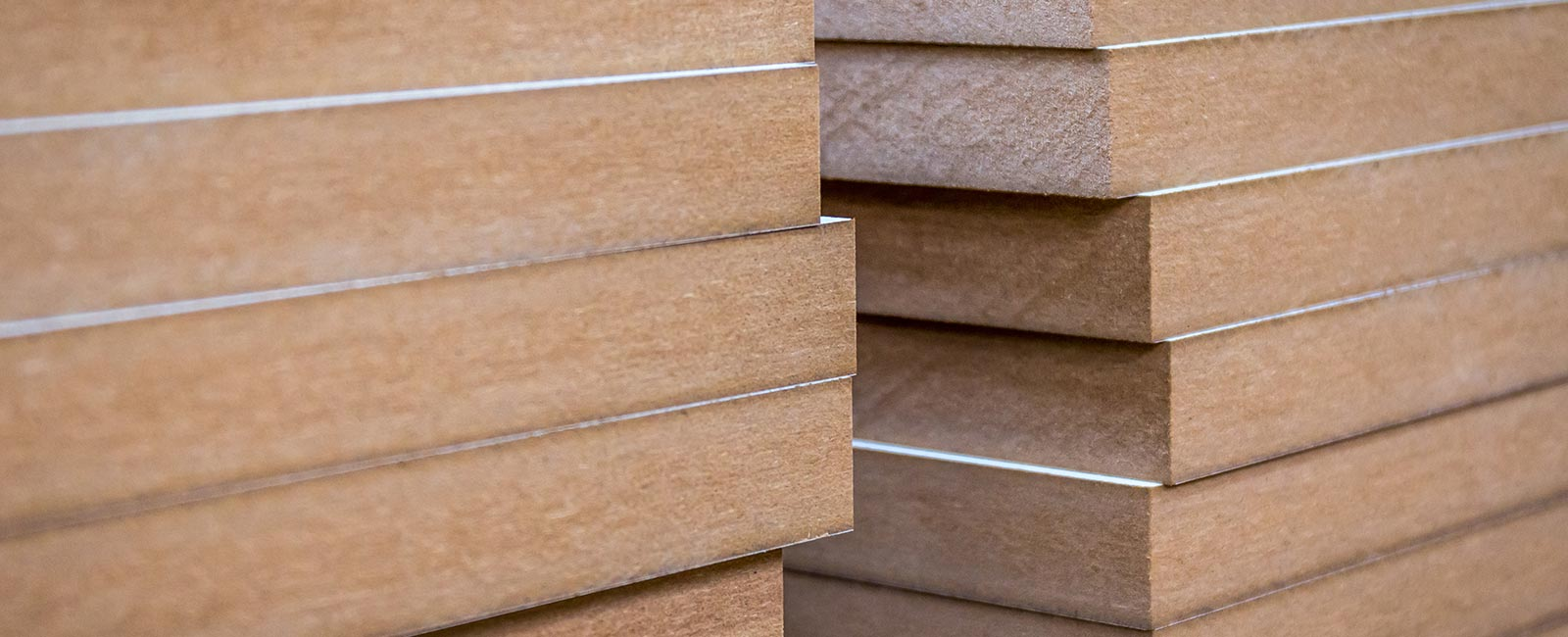
MDF, or medium-density fiberboard, is made by breaking down wood fibers into fine particles, which are then mixed with wax and resin. This mixture is heated and pressed to form a smooth, dense board. MDF is heavier and denser than particle board, and it’s known for its fine surface, making it ideal for painting or veneering.
Unlike particle board, MDF doesn’t have the coarse texture of wood chips. Its smoothness allows for more precise cuts and better finishes, which is why it’s often used in custom furniture and intricate designs. MDF is also more durable and resistant to warping than particle board, making it a better choice for items that will undergo regular wear and tear.
Tribesigns furniture frequently uses MDF (Medium‑Density Fiberboard) in their furniture. As one article states: “our Tribesigns shoe racks and console tables use premium thickened MDF for a flawless finish and enhanced durability.”
 Common Uses of MDF
- High-end cabinetry and custom furniture
- Molding, trim, and paneling
- Wall panels, doors, and partitions
- Projects requiring a smooth surface for paint or veneer
Particle Board vs MDF: Key Differences
While particle board and MDF may seem similar, their composition, performance, and intended uses vary significantly. Below is a breakdown of their key differences from a technical perspective:
| Feature | Particle Board | MDF |
| Composition | Compressed wood particles with resin | Fine wood fibers mixed with wax and resin |
| Density | Low-density, lightweight | High-density, heavy and dense |
| Surface Texture | Rough, uneven finish | Smooth, ideal for veneer or paint |
| Durability | Less durable, susceptible to water damage | More durable, resists warping but still moisture-sensitive |
| Cost | Low cost | More expensive due to manufacturing process |
| Sustainability | Often uses wood waste material | Uses high-quality wood fibers, often from sustainable sources |
| Workability | Easy to cut, but edges can fray easily | Ideal for fine, detailed cuts and precision work |
| Environmental Impact | More eco-friendly as it uses wood waste | Can be made from recycled materials, but more energy-intensive to produce |
Strength vs. Aesthetics:
While particle board is often chosen for its affordability, it lacks the structural integrity and fine finish that MDF offers. MDF is better for intricate designs or furniture that requires precision and a polished appearance. For example, the smooth surface of MDF makes it perfect for painted finishes, and it’s often chosen for bespoke furniture pieces where appearance is a priority. On the other hand, particle board’s uneven surface makes it better suited for utility pieces that won’t be seen up close.
Moisture Resistance
One of the most important factors to consider when choosing between these two materials is their resistance to moisture. Particle board, being more porous, absorbs moisture much more readily than MDF, which can lead to swelling, warping, and weakening. MDF can withstand moisture better, especially if it’s treated with a moisture-resistant coating, but it is still not completely waterproof. In high-moisture environments like bathrooms, MDF may be a better option than particle board, but both materials should be used with caution unless properly sealed.
Environmental and Sustainability Concerns
Both particle board and MDF can be considered environmentally friendly compared to solid wood, as they utilize wood waste or recycled fibers. However, the production of MDF is more energy-intensive and often involves chemicals like urea-formaldehyde in the resin. This is something to consider if you are aiming for a more eco-conscious material. Some MDF products are now available with low-VOC (volatile organic compound) resins, which reduce environmental impact and indoor air pollution.
Long-Term Durabilit
When it comes to longevity, MDF typically outperforms particle board in everyday wear. Its dense structure resists warping and cracking, especially in dry conditions. Particle board, while fine for lower-cost projects, often starts to degrade over time, particularly in humid conditions. For example, kitchen cabinets made from particle board may show signs of wear much sooner than MDF counterparts. If you want your furniture to last for many years, MDF is the more reliable option.
Conclusion
In high-end cabinetry, MDF is the go-to material for several reasons. For instance, custom kitchen cabinets are often made from MDF due to its smooth surface and durability. When it’s painted or veneered, MDF provides a sleek, sophisticated look that can hold up to years of daily use. Particle board, though cheaper, doesn’t offer the same level of finish or long-term durability, which is why it’s often used in budget kitchens where cost is a primary concern.
If you’re building custom furniture, or if you’re working on a project where fine detailing and durability matter, MDF is the right choice. However, for temporary or inexpensive items, such as basic shelving units or small storage pieces, particle board can still be a viable option.