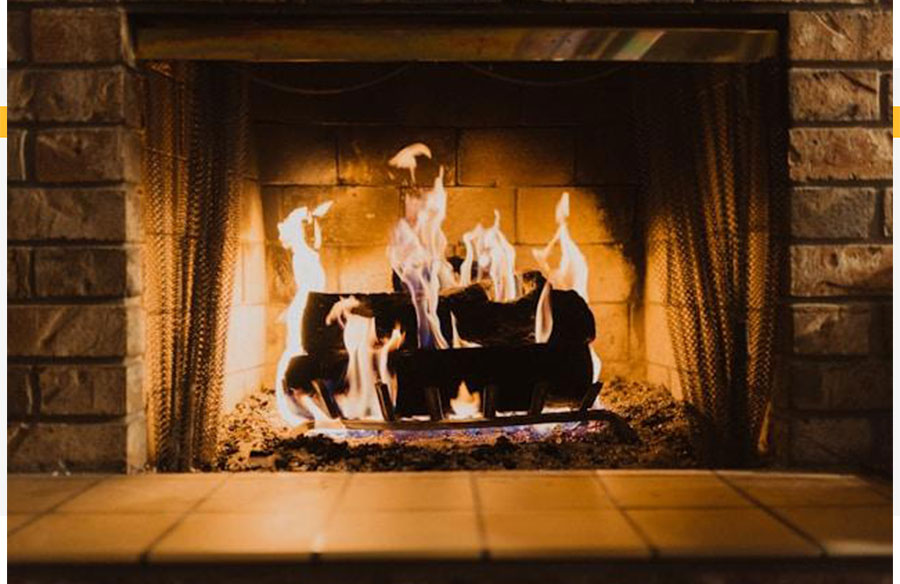
A significant share of residential heating still relies on fossil fuels such as natural gas, oil, and propane, despite growing use of cleaner alternatives. And we’re paying the price. Using fossil fuels for energy is dangerous because they release greenhouse gases that contribute to climate change. The best-known heat-trapping gases are carbon dioxide, methane, and nitrous oxide, but others, present in smaller quantities in the atmosphere, may have a more devastating effect. Our Earth maintains its temperature through the right balance of naturally occurring greenhouse gases, but when we add too many, the planet warms and the climate changes.
Through the sweep of time, biomass was the fuel of choice for producing thermal energy, aka heat, since it was the most readily available source for use. Whether for space heating, cooking, or manufacturing, we have turned to biomass materials available from agriculture, plantation, and forest areas to meet our energy demands. In the UK, firewood is still widely used to warm up living spaces inside homes as a result of its favorable pricing, its role as a sustainable and renewable energy source, and the distinct and cozy ambiance it provides. Unfortunately, the general public doesn’t fully understand how to use biomass in a way that is environmentally responsible.
Traditional Firewood Produces Excessive Smoke, Soot, And Poor Efficiency
Achieving net-zero emissions by 2050 to avoid the worst, deadliest impacts of climate change is technically and economically possible, but it’s a formidable challenge that calls for a rapid, full-scale transformation of the world’s energy infrastructure. It’s best to start gradually, taking one step at a time. Heating is a promising target. Although there isn’t a single solution that will suit every home, counting on traditional firewood is increasingly recognized as unsustainable due to its impact on air quality, deforestation, and carbon emissions. Cut logs or branches from trees may be convenient, but they come with serious compromises for households and the environment.
Smoke is a by-product of wood combustion that consists of more than 100 distinct chemicals and compounds, including particulates, carbon monoxide, and VOCs (volatile organic compounds). Cutting down a tree and immediately throwing it in the fire isn’t a good idea. The wood has high moisture content, producing thick smoke and insufficient heat. The firewood must be stored for at least two years until it’s dry enough to deliver peak thermal output. Wood burning produces soot, also known as black carbon, which is the second-largest contributor to global warming after carbon dioxide. Firewood burns quickly and unevenly, releasing a lot of energy as smoke rather than usable heat.
Kiln Dried Logs in the Context of Sustainable Heating
Can firewood be sustainable? Firewood comes from trees, trees can regenerate after being cut down (but not all of them), or they can be planted by humans, and if the quantity of firewood harvested remains below the quantity that regenerates, the practice can be considered sustainable. Kiln dried logs, mainly when sourced from responsibly managed forests, burn cleaner because they have a lower moisture content, resulting in greater efficiency and higher heat output. Users buy wood from multiple sources, including premium kiln dried logs from Buy Firewood Direct, which stand out for their consistency and performance.
Wood drying is a relatively complex process, encompassing a wide range of conditions, equipment, and operational practices. Kiln drying reduces weight, enhances strength, and increases resistance to biological deterioration by eliminating the environment fungi and insects need to survive and reproduce. It takes place in a closed chamber where airflow, temperature, and humidity can be controlled so that the moisture content can be reduced to a target point while maintaining structural integrity. As a rule, firewood takes between one and two weeks to dry. Conventional and dehumidification kilns are the most widely used, while vacuum and solar kilns serve specialized applications.
Exploring The Applications Of Wood Fuel Beyond Domestic Fireplaces
The UK has a significant amount of woodland, which has been increasing in area, though the proportion is still comparatively low when measured against Europe. Effective management guarantees a steady supply of wood from forestry, all while protecting nature for the future. Kiln drying produces the best quality firewood because the controlled environment allows for a more precise and rapid drying process. Despite the aesthetic appeal of open fireplaces, wood is better used in an efficient wood stove or boiler, providing more heat, less pollution, and greater safety. An open fireplace operates at only 10% to 30% efficiency.
Modern stoves and boilers have an efficiency in excess of 80%, which means they’re designed to maximize heat transfer into the home, hence optimizing energy utilization and contributing to sustainable heating practices. Their enclosed configuration, coupled with adjustable air vents, facilitates slower combustion at higher temperatures with optimal burning efficiency. Unprocessed logs (roundwood) take much longer to dry than cut or split firewood because the bark naturally protects the tree from losing water; even after cutting, it slows evaporation by covering most of the log’s surface. Homeowners can use roundwood, but it’s not the preferred option.
Insulation Provides Resistance To Heat Flow
Well-insulated homes equipped with efficient heating systems maintain a comfortable, warm environment that can lower utility bills and minimize the overall carbon footprint. A building’s energy efficiency is closely dependent on the quality of its thermal insulation. Insulation acts as a barrier between the space we try to heat and the outside, so the more effective this barrier is at retaining warmth, the greater the energy savings achieved. Though the walls are often the first element associated with insulation, other critical components also require careful consideration. Very good insulation through insulating wadding above the ceiling and the incorporation of an air cushion beneath the roof ensures the best outcome.
Concluding Remarks
Thermal energy represents the most efficient use of biomass when compared to electricity generation or transportation fuel, particularly when using kiln dried logs that ensure cleaner combustion and higher heat output. Opt for kiln dried logs from sustainably managed woodlands.