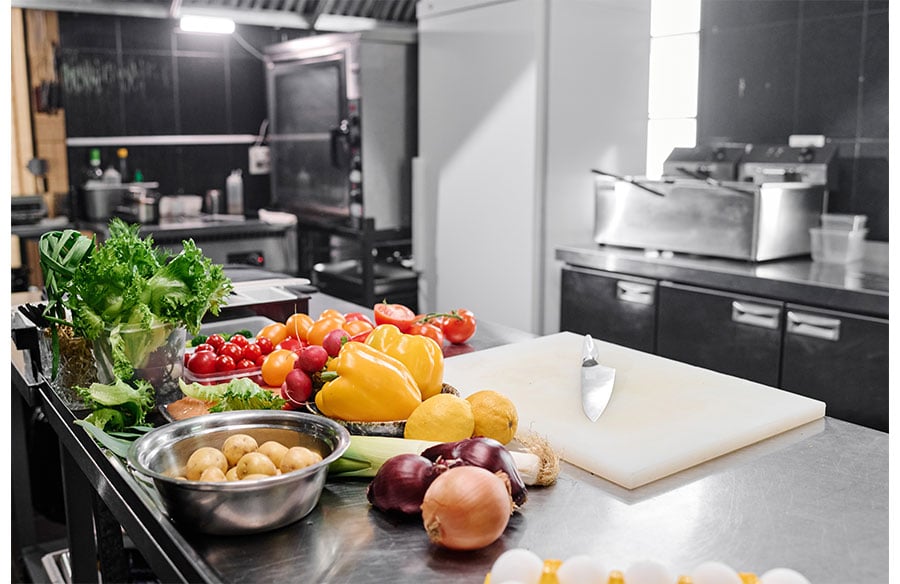
People often call the kitchen the “heart of the home,” but for people who love to cook and host, it needs to be more than just a pretty place to work. It needs to be a very efficient, high-performing space. More and more, modern foodies are looking beyond typical home design and taking cues from the durability and efficiency of professional, commercial kitchens.
You can make your home kitchen more durable, efficient, and quick by borrowing some ideas from restaurant design. This redesign isn’t about giving up style; it’s about adding strong, useful features that professional chefs use every day.
Part 1: Rethinking how things work and the surfaces they work on
Flow is very important in commercial kitchens. Every part, from the prep area to the cleaning area, is set up so that there is as little movement as possible and as much work as possible.
The Strength of a Zone-Based Layout:
Instead of sticking to the standard “kitchen triangle” (sink, stove, fridge), businesses use a zone-based layout with separate areas for prep, cooking, and plating/service. By clearly marking these separate areas, many people can work at the same time without getting in each other’s way. This makes it perfect for big family gatherings or cooking sessions with friends.
Stainless Steel Rules:
There is a reason why stainless steel is the best material for commercial kitchens. It doesn’t have any holes in it, is antibacterial, can handle heat, and is very strong. Adding stainless steel countertops, backsplashes, or prep tables to your home gives it a modern look and provides a clean, durable work surface that can handle hot pots and tough cleaning without fail. Commercial-grade quartz or special food-safe laminates can also be just as strong and come in a wider range of colors.
Part 2: Buying appliances that are professional-grade
The cooking power that is available in a business setting makes a big difference in performance. Full commercial ranges aren’t allowed in homes because they need special venting and fuel, but many pro-style residential appliances give you the best of both worlds.
Cooking at a high level:
Look for ranges with burners that have a lot of BTUs (British Thermal Units), which can be as high as 18,000 BTUs or more. This lets you boil things quickly, sear things strongly, and control the heat like a real restaurant. Convection ovens and steam ovens are also becoming more common in home kitchens. These ovens are often used in commercial kitchens to get consistent, even results. They make baking and roasting much better.
The Benefit of Having Separate Refrigerators:
Instead of a single large refrigerator for the home, think about adding smaller, specialized refrigeration units. Drawers made for cold storage in the prep area or a separate freezer space reduce foot traffic and keep ingredients exactly where they are needed, just like walk-in coolers and reach-in commercial units do.
Part 3: Engineered Sinks and Better Hygiene
Half of the work in any kitchen is cleaning up, and commercial designs are great at quick, heavy-duty cleaning. The two-basin, extra-deep sink design is necessary for handling big pots and a lot of prep work.
When choosing fixtures for this busy area, make sure they are strong and easy to use. For example, a flexible, high-arc Nero Tapware pull-down spring mixer faucet works like a pre-rinse sprayer in a restaurant, giving you the best reach and water pressure for quick cleaning. Nero Tapware has stylish but sturdy options that will make your sink area both a design feature and a workhorse. For the sink basins themselves, look for materials that are safe for food and easy to clean. Also, having a separate food-waste disposal system or a special prep sink makes the cooking process even easier.
Section 4: Best ventilation and organized storage
Businesses need strong infrastructure to deal with heat, grease, and steam. It is very important to bring this level of air management into your home to keep the air clean and healthy.
Ventilation for Businesses:
When using professional-style appliances, you must have a high-powered, externally-vented extraction hood. To get rid of cooking byproducts, look for hoods that have a high CFM (Cubic Feet per Minute) rating. The noise level is also important to think about, since modern home models balance power with quieter operation.
Storage that is easy to see and get to:
Commercial chefs need to have everything close at hand, which is why they use open wire shelving or pot racks. Adding open shelving or magnetic knife strips to your prep area not only makes it look more professional, but it also cuts down on the time you spend looking through drawers, which makes things more efficient and makes it easier to keep track of your inventory.
In conclusion
Changing things in your commercial kitchen, like the layout, the surfaces, the ranges, and the fixtures, can change the way you cook. For example, Nero Tapware is a high-quality fixture. You can make a dedicated kitchen space that is ready for anything, from hosting a big party to making dinner on a weeknight, by focusing on utility, resilience, and flow. This change turns the kitchen from a passive room into an active, powerful tool for any serious home cook.