For decades, outdoor design has revolved around a single principle — sheltering people from the sun. But in an era defined by record temperatures and renewed appreciation for livable outdoor spaces, shade alone is no longer enough. The next evolution of outdoor comfort isn’t just about blocking light; it’s about controlling climate.
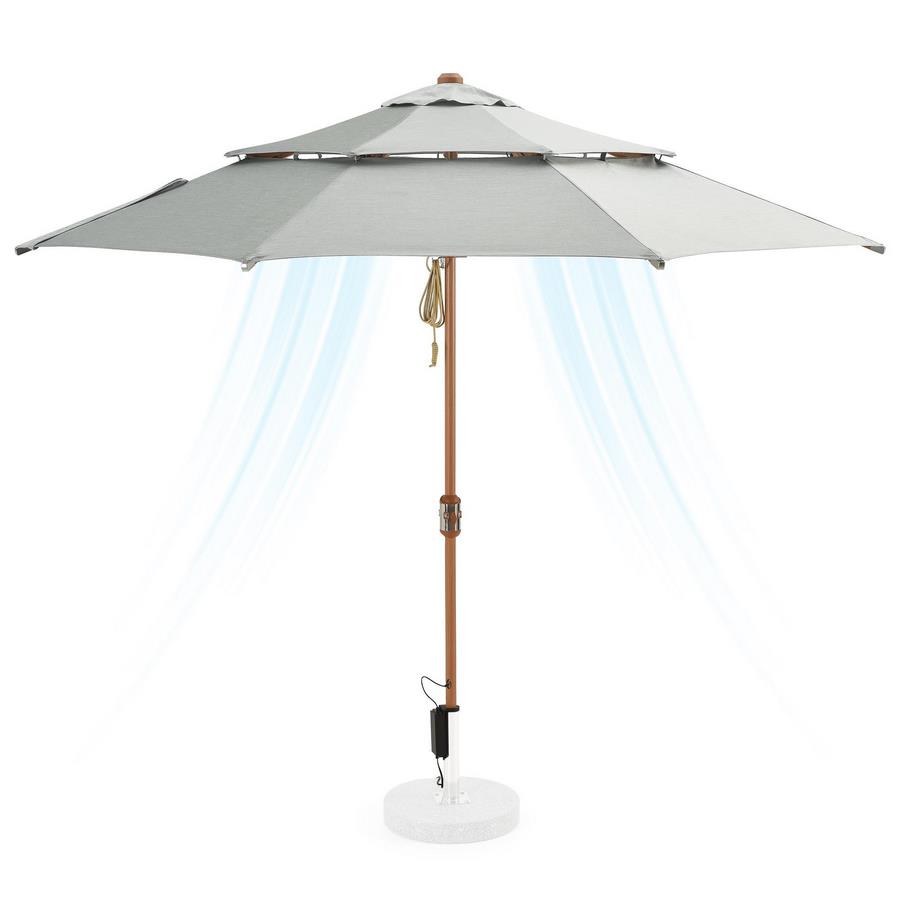
This idea is what inspired Ryan Dickerson and Tony Lee, co-founders of Alizé Umbrella, to rethink one of the most familiar products in outdoor living. Their creation integrates quiet, energy-efficient fans directly into the umbrella’s frame — transforming a static object into a dynamic micro-climate system. The result is a design that redefines how people experience the outdoors.
Design for Comfort in a Warming World
As architects and designers explore ways to make outdoor areas more usable, comfort has become an increasingly technical problem. Heat, humidity, and air stagnation limit how long people can spend outside — whether at home, in restaurants, or in resorts. Alizé Umbrella responds to this challenge by combining passive shading with active cooling airflow.
Unlike traditional misters or portable fans that disrupt visual harmony, Alizé’s system is built into the structure itself. The brushless DC fans circulate air evenly beneath the canopy, reducing radiant heat while maintaining a natural, quiet breeze. It’s a subtle yet significant design shift — one that merges function, sustainability, and aesthetic restraint.
The Collaboration Behind the Concept
Ryan Dickerson’s background is as unconventional as the product itself. A former professional sailor with experience servicing high-rise cooling systems in New York, he’s spent much of his life studying how air moves. Tony Lee, Chairman of Sintai Furniture Group, brings decades of expertise in precision manufacturing and outdoor furniture engineering.
Their collaboration bridges two worlds: Dickerson’s inventive mindset and Lee’s deep manufacturing know-how. Together, they challenged long-held assumptions about what an umbrella could be. Every component — from the canopy angles to the fan geometry — was designed with both airflow efficiency and visual simplicity in mind.
Technology That Disappears into Design
Integrating mechanical systems into a refined aesthetic was the project’s defining challenge. “The technology had to serve the design, not dominate it,” says Dickerson. The fans are nearly invisible from most angles, tucked seamlessly into the ribs of the frame. The controls are intuitive, with three speed settings and an optional power converter that adapts to multiple global standards.
The self-locking fan blades add a crucial safety and functional feature: when the system is off, the fans lock into place, maintaining the umbrella’s sleek silhouette. This ensures durability in variable wind conditions and reinforces the minimalist design language Alizé is known for.
Beyond Shade: Redefining Outdoor Architecture
Alizé Umbrella represents more than a product innovation — it points to a larger movement in climate-responsive design. As outdoor spaces become extensions of interior living, architects are looking for solutions that harmonize with both environments.
From boutique hotels in warm climates to private patios in urban settings, design-integrated comfort technology is quickly becoming a defining expectation. By merging cooling and shading into a single architectural element, Alizé bridges aesthetics with environmental performance — something traditionally achieved only through large-scale building systems.
A Sustainable Step Forward
Every detail of the Alizé Umbrella was developed with longevity in mind. The structure uses marine-grade aluminum with a wood-grain finish, stainless hardware, and UV-resistant Olefin fabric, ensuring that form and function endure over time. The low-voltage DC fans consume minimal power, making them both efficient and environmentally responsible.
This combination of durability and sustainability reflects a broader shift in the design industry — toward products that deliver long-term value without compromising visual quality.
Toward a More Comfortable Future
As architects and designers continue to integrate climate awareness into built environments, the Alizé Umbrella serves as a tangible example of innovation at the human scale. It’s a reminder that meaningful design often begins not with reinvention of spaces, but with rethinking the objects within them.
By engineering the breeze itself, Ryan Dickerson and Tony Lee have opened a new conversation in outdoor design — one that values beauty, performance, and comfort in equal measure.
Learn more about the innovation behind Alizé Umbrella at alizeumbrella.com.
About the Author
Ryan Dickerson is the co-founder and inventor behind Alizé Umbrella, a design-driven company redefining outdoor comfort through innovation and engineering. With a background spanning professional sailing and mechanical systems, Ryan combines real-world problem solving with a passion for refined design. His work focuses on creating sustainable, performance-driven products that elevate how people experience outdoor living.
About Alizé Umbrella
Alizé Umbrella is an innovative outdoor design brand co-founded by Ryan Dickerson and Tony Lee, dedicated to redefining shade through technology and craftsmanship. The company’s patented fan-integrated umbrella system combines elegant design with powerful airflow, creating a new standard for comfort and performance in outdoor living. Built from marine-grade materials and engineered for sustainability, Alizé products are designed to elevate both residential and commercial environments worldwide.