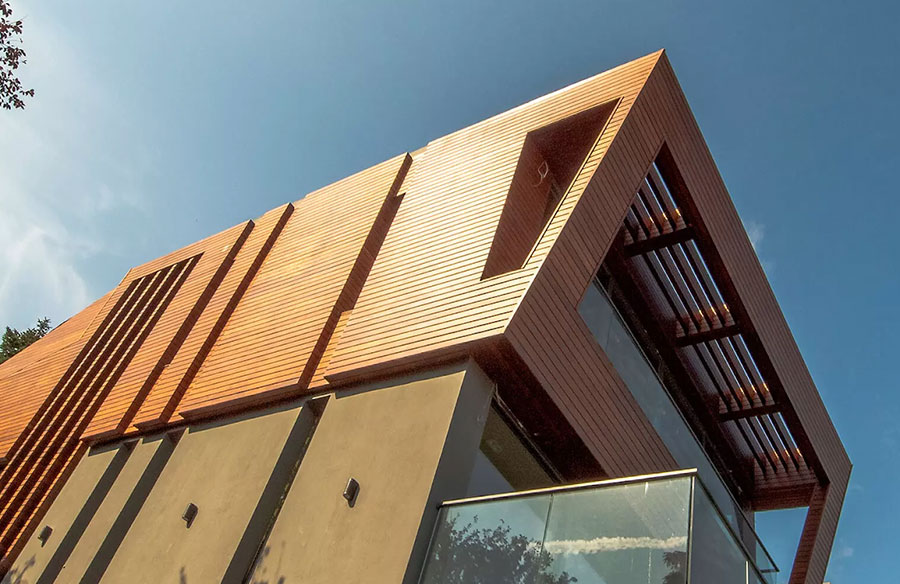
As the global architecture community continues to prioritise sustainability and performance, timber has re-emerged as one of the most versatile and environmentally responsible building materials. Among engineered wood products, ThermoWood cladding has gained international recognition for its ability to balance natural beauty with exceptional durability. For architects designing in climates that demand both efficiency and aesthetics, ThermoWood offers a sustainable and technically advanced façade solution.
Understanding the Thermal Modification Process
ThermoWood is produced through a precisely controlled heat and steam treatment, where timber is heated to approximately 200°C in an oxygen-free environment. This process changes the chemical composition of the wood’s cell walls, reducing its ability to absorb water. The result is a product that is dimensionally stable, resistant to decay, and completely free from chemical additives. The transformation enhances both the performance and appearance of softwoods such as Nordic pine and spruce, making them suitable alternatives to tropical hardwoods in façade applications.
Architectural and Design Benefits
From contemporary façades to heritage restorations, ThermoWood cladding enables design flexibility without compromising environmental performance. Its stability allows for precision in rainscreen systems, vertical or horizontal layouts, and fine joint detailing. The tactile surface and warm tonal range complement modern glass, steel, and stone structures, helping architects achieve natural balance in material palettes. Sustainable timber façade systems.
Environmental Performance
The environmental profile of ThermoWood cladding is central to its appeal. Sourced from sustainably managed forests and typically FSC or PEFC certified, it supports responsible forestry and traceable supply chains. The modification process uses heat and water only, producing zero chemical emissions and minimal waste. Its production requires significantly less energy than aluminium or fibre-cement façades, making it ideal for low-carbon construction. The material’s long service life and recyclability further enhance its sustainability credentials.
Architectural Applications
ThermoWood cladding has been used in a wide range of projects — from residential developments to cultural and educational facilities. Its ability to maintain dimensional stability under varying humidity levels makes it ideal for façades, soffits, and external shading elements. Designers also specify ThermoWood for modular buildings and prefabricated systems due to its lightweight structure and consistent quality. The material’s aesthetic qualities support both contemporary minimalism and vernacular architecture, bridging the gap between natural authenticity and modern performance.
Fire Safety and Compliance
ThermoWood can be factory-treated to achieve Euroclass B-s1,d0 fire performance, meeting the stringent requirements of the UK Building Regulations. This classification exceeds the older national Class 0 rating and ensures low smoke emission with no flaming droplets. Combined with correct cavity detailing, non-combustible battens, and certified fixings, these systems deliver both design freedom and safety assurance in line with RIBA sustainability standards.
Conclusion
ThermoWood represents the evolution of timber in modern architecture — a material that aligns structural performance with environmental ethics. Its combination of low carbon footprint, durability, and timeless appearance makes it a cornerstone of responsible design. For architects and developers exploring high-performance cladding systems, Timber Cladding Specialists provides expert guidance and supply of ThermoWood Cladding tailored to the demands of sustainable construction.