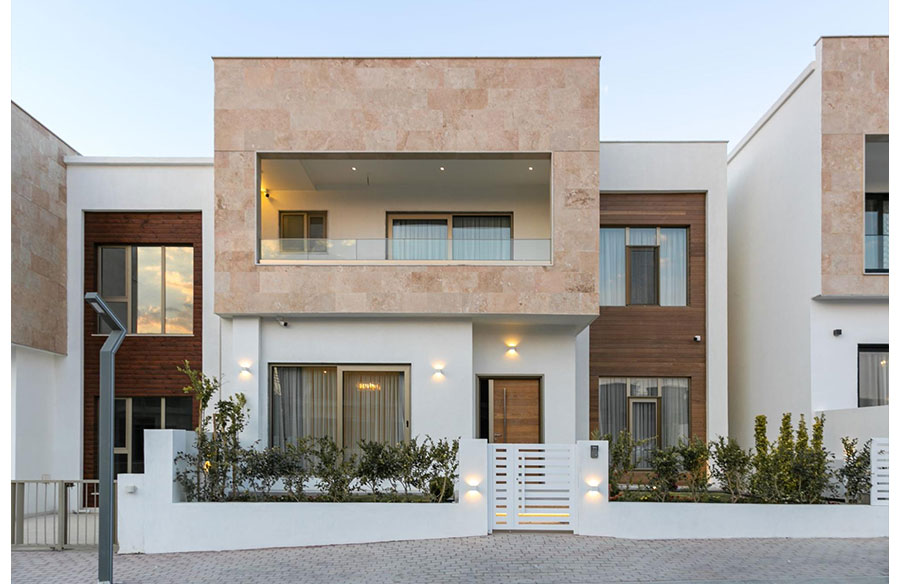
Depth adds visual intrigue to residential architecture, making homes look and feel more sophisticated. While architects are trained to create depth within a home’s structure, homeowners can achieve architectural depth through simple design techniques. In this article, we’ll explore eight ways to add depth to a home, from creating faux recesses and projections to layering greenery with blade fencing. Let’s jump in.
1. Play with Recesses and Projections
Creating depth in a home’s exterior is simpler than you think. It all begins with the building’s form. Depth can be introduced with recesses and projections that play with light and shadow. Recessed windows, deep-set doors and alcoves create natural shadows, which in turn create a dimensional balance that can bring a simple wall to life. Projections, like awnings or balconies, provide visual interest and offer privacy. But if your home doesn’t already feature these elements, don’t worry. You can easily achieve the same look with what you have!
Painting a section of your wall a darker colour can visually mimic a recess, while a small projection like a planter box beneath a window can create a subtle shape. Window awnings or a floating pergola above the entryway can create a sense of depth in the home. The key is to focus on making small shadow lines that make flat walls feel layered.
2. Use Contrasting Materials and Textures
Mixing materials and textures is a savvy way to give your home more character. In fact, texture is one of the most cost-effective ways to add depth to a home without making extreme structural changes. Rough, textured surfaces, like stone or timber, catch light beautifully throughout the day, creating a rich complexity. Contrasting these with smooth materials, like metal or concrete, can create an even more striking look. Choose materials with consistent colour undertones for a cohesive palette that prevents your home from becoming visually chaotic.
3. Incorporate Vertical and Horizontal Lines
Architectural lines guide the eye and build dimension. Vertical lines from floating aluminium battens or tall windows draw attention upward, making a building feel taller and more structured. On the other hand, horizontal elements, like wide eaves or low garden walls, stretch the appearance of a home, causing it to appear grounded and more expansive. Combining the two is a refined architectural strategy that creates visual harmony by balancing the home’s structure and softness.
4. Frame Views and Sightlines
Creating spatial depth gives the impression that your property is much larger than it actually is. Aim to draw the eye toward a focal point, whether that’s a gorgeous view beyond your home, a majestic tree in the front yard or even just your own front door. You can do this with elements like arched trellises or a pathway leading in a straight line toward the focal point. Landscaping can also extend perspective when intentionally arranged to guide the gaze and trick the eye.
5. Experiment with Lighting
After the sun sets, the lighting around your home can add depth instantly. There are several different types of lighting you can experiment with layering. Ambient lighting, or general lighting, is meant to provide overall illumination to allow movement around the outdoor space. Task lighting provides a concentrated beam of light to assist with tasks like reading on the porch or grilling on the patio. Accent lighting draws attention to the details, perhaps accentuating a fountain or area in the garden. Each can play a role in adding depth to a home. However, you should avoid uniform brightness; variation creates more shadow and naturally adds depth.
6. Introduce Layered Landscaping
Landscaping is an often overlooked, but incredibly effective, way to turn your property into a multidimensional space. Front yard gardens can be designed in layers to enhance the depth created by architectural elements. Layer low ground covers, mid-height flowers and bushes, and tall trees to create a gradient. You can blend your landscaping with hardscape features, such as blade fencing or feature walls, that contrast the natural plants and create interest, particularly on flat plots of land. For added depth, choose different foliage textures (think matte stems, glossy leaves, flowering blooms and sharp succulents) to play with light reflection.
7. Play with Colour Depth
Paint is another simple tool for adding depth to a home. Variety in both colour and tone can influence your perception of a property’s depth as much as structure can. Mid and dark tones on recessed elements accentuate shadows, while lighter shades on projections exaggerate space. Opt for natural colour palettes, which work best for blending with shadows and light while still maintaining a timeless appeal. However, don’t shy away from using bold colours if it suits your style. Statements like a bright red door or cheerful blue wall can make a huge difference in catching the eye and adding perceived depth.
8. Incorporate Transparency and Reflection
Glass, screens and mirrors add a sense of depth, making spaces feel larger without taking up physical space. These transparent and reflective surfaces allow light to shine through and bounce around the property, extending sightlines and softening boundaries. When paired with solid materials like blade fencing, see-through elements create contrast and balance. Overall, these surfaces create openness while adding layers of visual interest.
Key Takeaways
Adding depth can make a huge difference in the appearance of a residential property, and it doesn’t have to be complicated. Each tip here packs a punch, but they have the biggest impact when combined. Remember:
- Play with existing or faux recesses and projections to add depth through natural light and shadow.
- Use contrasting materials and textures, allowing light to reflect differently off surfaces throughout the day.
- Incorporate vertical and horizontal lines that make homes appear more elongated and expansive.
- Frame views and sightlines to guide the gaze toward key focal points on and beyond the property.
- Experiment with ambient, task and accent lighting, layering varied brightnesses for a multidimensional look.
- Introduce layered landscaping by planting ground cover, mid-height greenery and tall trees for a natural gradient.
- Play with colour to add depth, using mid and dark tones to accentuate shadows and light shades to capture the light.
- Incorporate transparent and reflective surfaces to bounce light around the property and extend sightlines.