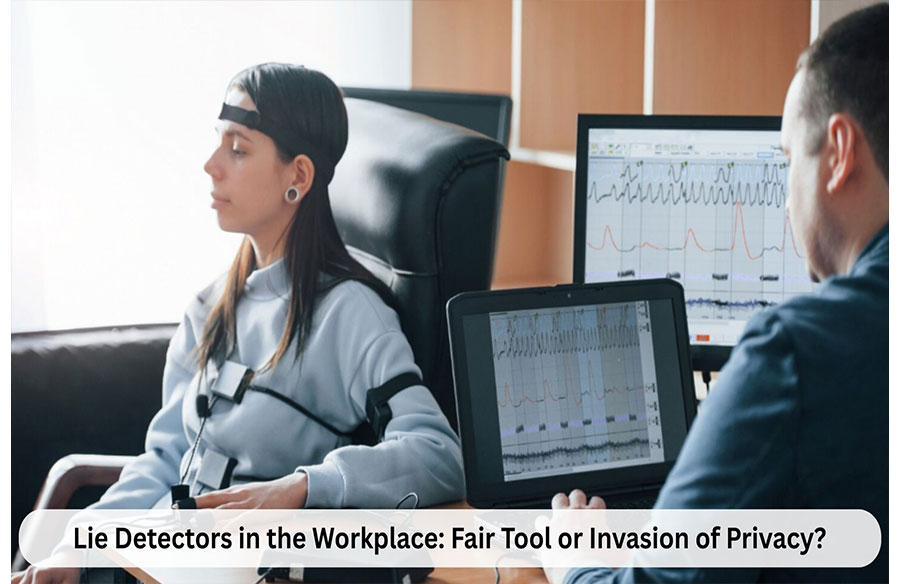
The Employee Polygraph Protection Act of 1988 (EPPA) prohibits most private sector employers in the United States from subjecting their staff to mandatory lie detector tests. According to EPPA, employees can freely decline to undergo polygraph exams without facing undue discrimination.
But despite these restrictions, lie detector tests continue to be administered in various workplaces. Understanding the legal and ethical implications of polygraphing employees is critical before scheduling these evaluations.
In this post, we assess whether workplace polygraphs are a fair investigation tool or a flagrant infringement of employees’ right to privacy.
Types of Workplace Polygraph Tests
There are three types of lie detector tests that employers can request, namely;
1. Pre-Employment Exam
As the name implies, pre-employment lie detector tests are administered to job applicants. They primarily serve as background check tools, helping recruiters assess the suitability of each candidate.
Typically, an applicant would have their credentials thoroughly reviewed by an interview panel. They’re then asked to submit to a polygraph test to verify their claims.
Pre-employment polygraphs often entail broad-spectrum questions touching on a job applicant’s:
- Academic achievements and work experience
- Family and social background
- Criminal history, including previous professional misconduct
- Credit history
- History of illegal drug use
2. Specific Loss Exam
Specific Loss Exam is a type of lie detector test focused on particular workplace incidents, such as thefts. It’s also called the Specific Issue Polygraph.
Recent surveys point to a high prevalence of employee theft across the United States. By requesting the suspects to take a specific issue polygraph, employers can narrow down to the actual culprits and possibly recover their stolen property.
Other common use cases of specific loss exams include investigating;
- Embezzlement
- Vandalism
- Corporate espionage
Specific loss exam is more targeted than pre-employment polygraphs. It’s also resource-efficient, as questions must be restricted to the specific incident.
Examiners cannot query the suspects on unrelated losses. Employees (under EPPA) can only be tested regarding financial losses to the employer.
But outside the United States, except for Ontario in Canada, the laws governing specific loss polygraphs are more flexible.
3. Periodic Polygraph Exams
Periodic Polygraph Exams, also called Personnel Evaluation Exams, are conducted during the course of employment to validate employees’ ongoing honesty. The tests are common in national security sectors.
For instance, the Department of Defense (DoD) may conduct a periodic polygraph exam to ensure its employees uphold their loyalty pledge to the United States. The tests can help to sniff out spies and other dishonest actors within the DoD’s ranks.
Many organizations require periodic polygraph exams annually or twice a year. However, some may schedule these tests randomly to catch dishonest employees unawares.
 Are Workplace Polygraphs Fair?
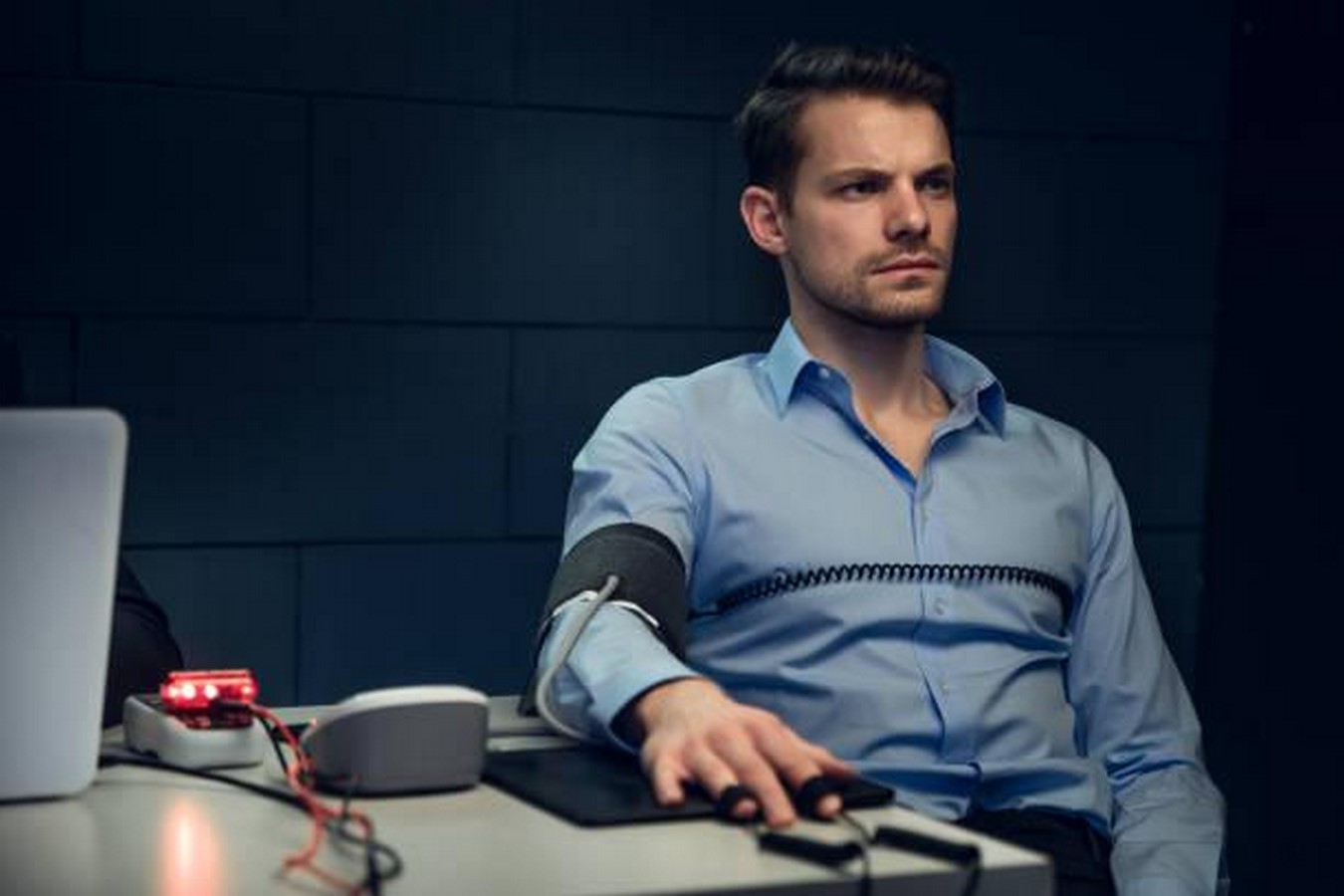
Workplace polygraph exams are usually not a first resort. Instead, they’re requested to corroborate or impeach the evidence already collected by other investigative techniques. That’s especially true for specific loss and periodic polygraph exams.
Since polygraphs provide secondary proof, we cannot merely dismiss them as unfair. After all, the suspects would still undergo intense scrutiny, one way or another.
Secondly, innocent individuals don’t need to worry about undergoing a polygraph test. Research suggests that humans are hard-wired to tell the truth rather than engage in deception. That means an honest examinee will likely pass a polygraph test, even if they go into the exam a bit jittery.
It’s also worth noting that the EPPA Act exempts federal agencies and certain sectors, such as the pharmaceutical companies and alarm service providers. Employers in these industries may argue that workplace polygraphs are a fair investigative tool just based on EPPA’s exemptions.
Most importantly, the polygraph technique is based on the theory that lying arouses the autonomic nervous system (ANS). An overactive ANS causes a spike in involuntary physiological activities, such as respiration, perspiration, and blood pressure.
Note that these biological functions are difficult to manipulate. Provided that an experienced polygrapher conducts a lie detector test, an examinee cannot argue that they unfairly failed the evaluation.
 Addressing Ethical Concerns
To conduct fair lie detector tests, examiners must commit to addressing the following ethical concerns;
a) Wilful Participation
Polygraph exams must be voluntary for the findings to be legally binding.
Reasonable evidence of coercion is sufficient grounds to invalidate the tests, even if an examiner followed all other standard procedures.
b) Following Approved Question Designs
Examiners must not ask potentially self-incriminating questions. Each question should be objectively framed, with the sole objective of getting to the truth.
Besides, polygraph examiners should avoid control questions that probe deep into an examinee’s areas of personal emotions. An examinee may argue their right to privacy was infringed upon if a question required them to share highly sensitive details.
c) Upholding Constitutional Provisions
Some polygraph opponents assert that the technique may violate certain constitutional rights, including the Fourth Amendment’s protection from unreasonable searches.
Lie detector tests typically don’t require pat-downs or anything like that. However, the fact that some questions may unjustifiably delve into an examinee’s personal thoughts means they may be construed as an ‘unreasonable search.’
 The Bottom Line
Polygraphs in the workplace remain a fiercely divisive topic. Many opponents hold that subjecting employees to lie detector tests infringes upon their rights to privacy.
However, polygraph exams can make a significant difference where other conventional investigation techniques have hit a snag. Findings from lie detector tests can solidify or impeach other pieces of evidence, expediting workplace investigations.
The only condition for conducting a legally defensible polygraph test is to have it administered by a professional examiner with an in-depth understanding of standard regulatory procedures.