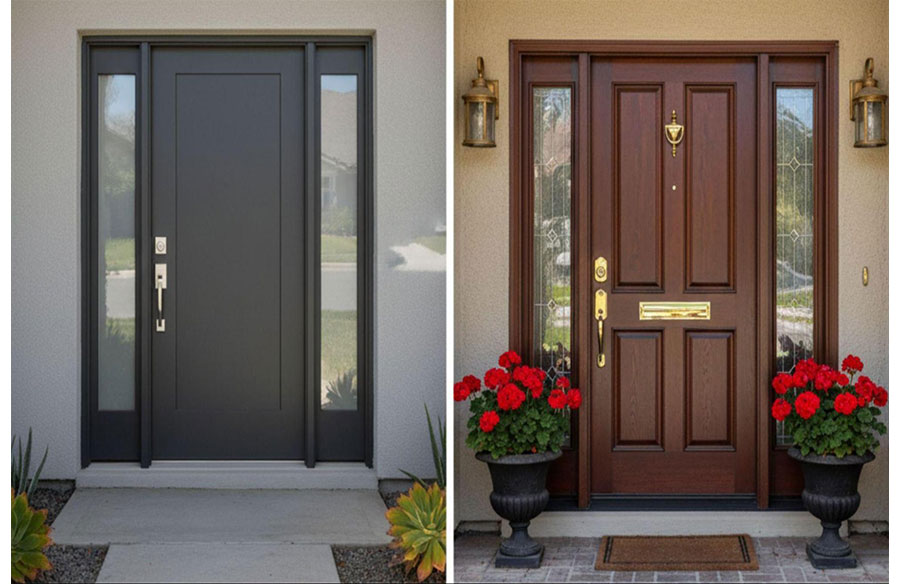
A clear, practical answer up front: for most homeowners, a fiberglass door is the smarter long‑term choice because it pairs low maintenance, strong thermal performance, and excellent weather resistance with convincing wood‑look options. If you want a ready example of a low‑maintenance wood‑look entry, check this 3/4‑lite fiberglass door: fiberglass door.
What a fiberglass door is and why it matters?
Fiberglass doors are composite assemblies: a molded fiberglass skin covers an insulating foam core and internal reinforcement where hardware mounts. Manufacturers texture the skin to mimic wood grain or leave it smooth for paintable finishes. This layered build separates functions: a weather‑resistant outer skin, thermal insulation in the core, and structural reinforcement for locks and hinges. That separation is the reason fiberglass performs differently than solid wood in real‑world use. Front doors must resist weather, thermal shifts, and wear. A material engineered for those roles typically requires less upkeep and sustains performance longer than an untreated natural material.
How fiberglass compares to wood: durability?
Wood is hygroscopic: it absorbs and releases moisture. That causes swelling, shrinking, and eventual warping or rot unless constantly sealed and maintained. Fiberglass does not absorb moisture, so it holds shape through humidity swings and coastal conditions. Under everyday use fiberglass resists dents and scuffs better than many softwoods and comparable painted steel options. Severe blunt force can crack a fiberglass skin, but that’s uncommon in typical residential use. Wood can be sanded, carved, and refinished repeatedly, which is an advantage for restorations or bespoke entries. Fiberglass trades that ultimate refinishability for predictable dimensional stability and lower long‑term maintenance.
Weather resistance and climate performance
Fiberglass doors excel in wet and coastal climates because the skin prevents moisture intrusion and the core resists thermal bridging. That reduces rot, swelling, and seal failures that commonly afflict exterior wood doors. In hot, sunny exposures choose a factory UV‑stable finish; high‑quality fiberglass finishes retain color and gloss far longer than paint on wood. For cold climates, the insulating foam core preserves interior temperature and reduces condensation risk at the door surface. Overall, fiberglass delivers more consistent performance across varied climates, making it a reliable choice when weather exposure is a primary concern.
Energy efficiency and saving on bills
A fiberglass door with a high‑density polyurethane core typically offers better R‑value than a similar solid wood slab. That translates to less heat transfer through the door and lower HVAC load. Energy performance depends on the whole assembly: insulated glass, tight weatherstripping, properly sealed sill pans, and correct installation matter as much as the slab. Look for NFRC or ENERGY STAR labeled units when efficiency is a priority. Over multiple seasons the thermal stability of fiberglass can lead to measurable savings, especially in homes with older, drafty doors.
Appearance and design flexibility
Modern fiberglass tooling reproduces wood grain and panel detail very convincingly. Factory stain and texturing create visual depth similar to hardwood. If you want the warmth of wood with minimal upkeep, fiberglass closes the look gap substantially. Fiberglass also offers smooth, paint‑ready surfaces for contemporary palettes and bold colors. While wood allows custom carving and evolving patina, fiberglass gives consistent repeatable results across multiple units and finishes. For many homeowners the visual difference is subtle, but the maintenance and longevity tradeoffs are significant.
Security and structural strength
Material alone does not determine security. Frame quality, reinforcement, lockset type, and installation are the primary security drivers. A fiberglass slab with reinforced lock blocks installed in a solid jamb and paired with a high‑grade deadbolt or multi‑point lock is very secure. For scenarios demanding maximum forced‑entry resistance, steel or very thick hardwood set in reinforced framing may offer slightly higher brute force resistance. That said, fiberglass with reinforced framing is a strong middle ground that balances security and performance. Always prioritize proper jamb reinforcement, long‑throw bolts, and a secure strike plate over relying solely on slab material for safety.
Cost: upfront versus lifecycle value
Fiberglass doors range from economical slab units to premium factory‑finished pre‑hung assemblies with decorative glass and impact ratings. Solid hardwood doors—especially custom or exotic species, often cost more up front. Factor maintenance into the lifetime cost: wood requires periodic sanding, staining or repainting, and occasional repairs for rot or insect damage. Fiberglass needs minimal upkeep, so its total cost of ownership is frequently lower in challenging climates. For budget planning, include slab cost, pre‑hung frame, hardware, insulated glass packages, and professional installation. Skimping on installation is a common false economy that reduces performance and may void warranties.
Maintenance: how much work will you do?
Fiberglass maintenance is straightforward: wash with mild soap and water occasionally, inspect and replace weatherstripping as needed, and touch up paint only when necessary. Factory finishes are engineered for UV and wear resistance. Wood doors require more intensive care: periodic refinishing, vigilant inspection for surface breaches, and immediate resealing after damage to prevent moisture infiltration. That upkeep is ongoing and can be costly over decades. If low maintenance and predictable performance are priorities, fiberglass clearly reduces the time and expense homeowners spend on door care.
When wood is the right choice?
Choose solid wood when authenticity, craft, and the ability to refinish or carve the door in the future are nonnegotiable. Period restorations, hand‑crafted entries, or homeowners who value the changing character of natural wood will still prefer timber. Wood can be repaired on site for scratches and can be altered to create unique, heirloom features. Those benefits come at the price of regular maintenance and vulnerability in wet or salt‑air environments. Weigh aesthetic and emotional value against the practical commitment of upkeep before selecting wood for an exterior entry.
Common pitfalls and what to avoid
Low‑quality fiberglass doors can delaminate, fade, or lack structural reinforcement—risking poor long‑term performance. Always check face skin thickness, core type, and warranty terms. Poor installation ruins performance faster than any material. Air leaks around the frame, missing sill pans, and misaligned strikes lead to drafts, water intrusion, and mechanical failures that neither fiberglass nor wood can hide. Select reputable manufacturers, confirm warranty coverage, and hire experienced installers to avoid these common mistakes.
Buying checklist: what to inspect before you buy?
- Core type: High‑density polyurethane foam is preferred for R‑value and stability.
- Reinforcement: engineered lock blocks and solid stiles where hardware mounts.
- Face: sufficiently thick fiberglass skin with convincing wood‑grain tooling or smooth finish.
- Finish warranty: UV resistance and clarity on what voids coverage.
- Glass package: Low‑E insulated glass and laminated or impact options if needed.
- Certification: NFRC or ENERGY STAR labels for whole‑unit performance where applicable.
- Hardware: corrosion‑resistant finishes for coastal areas and multi‑point locking for extra security.
Installation essentials and common mistakes
Confirm the opening is plumb, level, and square before beginning. Use a sill pan and continuous flashing to prevent water infiltration at the threshold. Shimming and anchoring must preserve the jamb’s square geometry; misaligned installation causes binding and reduces seal effectiveness. Use long screws through the jamb into framing where heavy hardware is attached. After installation, check operation across seasons and adjust as needed to accommodate settling or frame movement.
Coastal and extreme weather considerations
For coastal homes, select impact‑rated glass, corrosion‑resistant hardware, and UV‑stable finishes. Salt air accelerates corrosion; hardware and fasteners matter as much as the slab. In hurricane zones, follow local codes for wind and impact ratings and consider multi‑point locking systems that improve both weather tightness and security. Fiberglass typically outperforms wood in these environments because it resists rot and dimensional changes driven by humidity and salt.
Case studies: homeowner experiences
Owners who replaced warped wooden doors with fiberglass commonly report reduced drafts, fewer callbacks for sticking, and better thermal comfort. Many choose fiberglass for south‑ or west‑facing entries exposed to intense sun. Conversely, some homeowners who invested in low‑end fiberglass units experienced fading or delamination over many years, an outcome tied to product quality rather than material class. The consistent lesson: invest in a reputable model and professional install to realize fiberglass’s advantages.
Practical buying path and timeline
- Define priorities: appearance, low maintenance, or thermal performance.
- Shortlist three models and request NFRC/ENERGY STAR data and finish warranty documents.
- Get two or more written installation quotes that include jamb and sill work.
- Schedule install in a dry season and plan a post‑install inspection after 90 days to check seasonal settlement.
- Keep warranty and product documentation in a safe place for future reference.
Quick decision guide
- If you want low maintenance, consistent performance, and energy savings: choose fiberglass.
- If you want authentic wood grain, bespoke carving, and refinishing options and you accept regular upkeep: choose wood.
- If security is the top priority, pick a slab and frame combination with reinforced jambs and high‑grade hardware regardless of material.
Conclusion
For most modern homeowners a quality fiberglass door delivers the best balance of durability, thermal efficiency, and low maintenance while offering convincing wood‑look options. Prioritize proven core construction, reinforced hardware areas, and professional installation to realize the full benefits. To explore models, compare specs, and request assistance installing the right front door for your home, visit Knockety.
Frequently Asked Questions (FAQs)
- Are fiberglass doors more energy efficient than wood?
Yes. Fiberglass doors with high‑density foam cores usually provide higher insulating value than comparable solid wood slabs, especially when combined with insulated glass and proper weatherstripping.
- Can fiberglass doors convincingly mimic real wood?
Modern fiberglass tooling and factory stains produce very convincing wood‑grain finishes. From a few feet away most visitors will not notice the difference unless inspected closely.
- How long do fiberglass doors last compared to wood?
High‑quality fiberglass doors commonly last decades with minimal upkeep. Their dimensional stability and resistance to rot often give them a longer effective service life in wet or variable climates.
- Can I repair a cracked fiberglass door?
Minor surface scratches and scuffs are repairable. Deep cracks or structural damage typically need professional epoxy repairs or panel replacement. Repairs are possible but are generally more complex than sanding and refinishing wood.
- Is fiberglass a good choice for coastal homes?
Yes. Fiberglass resists moisture and rot better than wood. For coastal use choose corrosion‑resistant hardware and consider impact‑rated glass where storms are common.