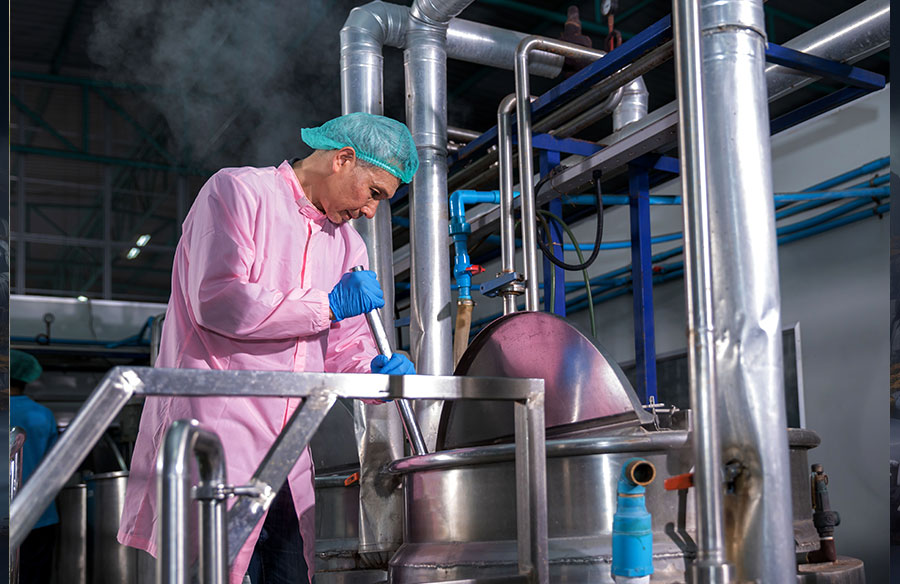
Food manufacturers face a hidden danger in their compressed air systems. Clean-looking air often contains dangerous contaminants that go unnoticed. Tests show compressed air at 100 psig has 8 times more bacteria and contaminants than atmospheric air. This isn’t just a theory – a Fortune 500 company learned this the hard way in 2001. They faced a Class II recall when their compressed air system’s contamination led to 142,000 contaminated cases and $2 million in lost potential profits.
Most food production facilities don’t realise these risks until it’s too late. Air compressors concentrate dust particles, hydrocarbons and humidity from the environment. This creates ideal conditions for contamination. Ensuring compressed air quality testing meets industry standards has become crucial for safety compliance. This piece covers the key compressed air testing parameters you need to watch, the right testing equipment, and testing guidelines that line up with standards like ISO 8573-1:2010 Purity Class 1:3:0 – the highest standard for food and beverage applications.
Understanding the Risks of Compressed Air in Food Production
Air becomes a contamination vehicle the moment it enters a compression system. Everyday contaminants in compressed air systems reach dangerous levels that put food products at risk. The concentration of contaminants rises substantially as standard atmospheric air goes through compression, which creates conditions that can compromise food safety.
How contaminants enter compressed air systems
The contamination process starts at the intake point as ambient air filled with dust, microorganisms, and moisture flows into the compressor. The air in a typical industrial setting contains more than 140 million dirt particles per cubic metre. Over 80% of these particles are smaller than 2 µm, making them too tiny for standard intake filters to catch. The atmospheric air also has between 0.05 mg/m³ and 0.5 mg/m³ of oil vapour that comes from vehicle exhaust and industrial processes.
The compression process adds more contaminants to the mix. Oil-lubricated compressors release oil aerosols and vapours through worn seals, O-rings, and the compression mechanism. The distribution system introduces extra contamination through:
- Pipe scale and rust from iron piping
- Metal shavings from installation or maintenance
- Leaks that create suction points and pull in atmospheric contaminants
- Dead ends and drops where water collects
Industry experts note that “drops and dead ends in the distribution piping can trap water and create an environment for microbial growth”.
Types of contamination: microbial, oil, water, particles
Microbial contamination poses what might be the biggest health risk. A compressor with 300 scfm capacity pulls in 100,000 to 1 million bacteria every hour. These microorganisms love the warm, moist environment inside compressed air systems and can form biofilms that are very hard to remove.
Water contamination happens as moisture in intake air turns to liquid during compression. A single 100 kW air compressor running for an 8-hour shift produces about 85 litres of water at the time it draws air at 20°C with 60% relative humidity. This moisture creates perfect conditions for microbial growth and causes system-wide corrosion.
Oil contamination flows from both internal and external sources. Even “oil-free” systems aren’t safe since they still pull in hydrocarbon vapours from the atmosphere. Too much oil creates a nutrient-rich environment that microorganisms love.
Particle contamination consists of dust, rust, pipe scale, and metal fragments. Most of these particles can bypass filtration systems since more than 80% are smaller than 2 µm.
Impact on food safety and product quality
Food products face substantial safety and quality risks from direct contact with compressed air contaminants. The risks remain high even with indirect contact.
The collateral damage can be severe – ranging from lost production batches to recalls or lawsuits. A German case from 1997 showed how mineral oil ended up in vacuum-wrapped sausages because of poor compressed air filtration.
Oil contamination creates particular problems for food products by affecting their taste, smell, and looks. Water contamination speeds up product spoilage and lets harmful microorganisms thrive.
Regular compressed air testing helps identify contamination issues before they affect food safety. Four major organisations – ISO, BCAS, BRC, and SQF – have labelled compressed air as a Critical Control Point that needs monitoring. This makes detailed compressed air quality testing a key part of food safety management systems.
Where and How Compressed Air Interacts with Food
Compressed air powers many critical operations in food production facilities. This invisible utility touches products in ways you might not notice right away. Food safety depends on thorough compressed air testing to stop contamination.
Direct vs indirect contact points
Food products interact with compressed air through direct and indirect contact points. Direct contact happens when air physically touches food products – like in pneumatic conveying that moves materials through pipelines using compressed air. On top of that, it happens during bagging operations, sparging (mixing liquids), drying processes, and through air knives used in food processing.
Indirect contact occurs when compressed air touches surfaces that later touch food. You’ll find obvious contact points on working surfaces like counters and conveyors. The challenge lies in tracking where compressed air interacts with food, packaging, or equipment since it leaves no visible trace.
Common applications: drying, mixing, packaging
Food manufacturing of all sizes relies on compressed air as a vital utility:
- Processing and preparation: Machinery powered by compressed air sorts, cuts, and shapes food products. It also helps with peeling and preparing raw food stocks.
- Mixing and ingredient handling: Compressed air pushes flavours to mix with uncultured yoghurt and provides oxygen during culturing. It also pushes fillings into pie crusts and stuffed pastries.
- Packaging and preservation: Air compressors run pneumatic actuators, sealers, and labelling equipment for automated packaging. The system also creates nitrogen used to preserve food in cans and storage facilities.
- Cleaning and quality control: High-pressure air cleans bottles, packaging, and moulding equipment before filling. Air knives powered by compressed air remove water or particles from product surfaces before packaging.
Invisible contamination risks
Compressed air quality testing must tackle subtle contamination risks, even though compressed air remains essential to operations. Problems often stay hidden until they become serious issues.
Oil mist forms at high temperatures and you don’t deal very well with it. Food products risk direct contact with oil contaminants – consumers might notice this problem first. These invisible threats continue throughout production without proper compressed air testing equipment.
Microbes thrive in the warm, dark, moist environment inside compressed air systems. Drying the air doesn’t always kill microbes – they might just become dormant. These dormant spores start growing again when they touch food and find moisture.
Ready-to-eat (RTE) foods face high risks from compressed air contamination. Few barriers exist to eliminate hazards once microbial contamination occurs in later processing stages. The contamination stays with the food until it reaches consumers.
Regular compressed air testing guidelines have become vital and with good reason too. Contaminants from ambient air can travel through the entire system and end up in food products without proper testing protocols. This can lead to recalls that get pricey, batch rejections, and damage your brand’s reputation.
Compressed Air Testing Guidelines and Standards
Food manufacturing facilities must follow strict industry standards that govern compressed air quality requirements. These guidelines are crucial because failing to meet them puts product safety at risk and may lead to failed compliance audits.
Overview of SQF, ISO 8573-1, and GFSI requirements
The Safe Quality Food (SQF) Code identifies compressed air as a potential contamination source in food production. SQF Module 11.5.7 states that “Compressed air can be a source of chemical and microbiological contamination”. Companies must manage to keep their compressed air systems pure through regular monitoring to ensure food safety.
ISO 8573-1 stands as the international standard to classify compressed air purity. This standard helps food manufacturers, compressed air system suppliers, and testing labs speak the same language about air quality requirements. The framework defines purity classes for three main contaminants:
- Particles (solid contaminants)
- Water (moisture content)
- Oil (aerosols and vapours)
The British Compressed Air Society (BCAS) suggests that compressed air in direct or indirect contact with food should meet or exceed ISO 8573-1:2010 [1:2:1] purity class. This classification sets high standards for each type of contaminant.
Global Food Safety Initiative (GFSI) schemes, including BRC, PrimusGFS, and others, follow similar guidelines. These schemes differ from SQF and BCAS as they don’t set specific air quality limits. Instead, they require manufacturers to ensure compressed air won’t contaminate the final product.
Key compressed air testing parameters to monitor
Compressed air at 100 psig contains eight times more bacteria and contaminants than atmospheric air. This fact makes a complete monitoring approach essential. Testing must cover four main contaminant categories:
- Particles: These include dirt, rust, pipe scale, and solid particulates that might contaminate products.
- Water: Both liquid water and water vapour create perfect conditions for microbial growth.
- Oil: Liquid oil, oil aerosols, and oil vapour could transfer to food products.
- Microbiological contaminants: Bacteria and fungi thrive in compressed air systems.
ISO 8573-1 doesn’t cover microbial contamination. That’s why additional testing under ISO 8573-7 gives a full picture of safety assurance.
How often should testing be done?
Risk assessment and regulatory requirements determine testing frequency. SQF Edition 9 requires air quality tests “at least once a year”. More frequent testing offers better protection.
BCAS Food & Beverage Best Practise Guideline 102 suggests testing compressed air systems twice yearly. The guidelines also call for extra tests “whenever maintenance work or any activity that may affect the air quality is performed on the compressed air system”.
Quarterly testing helps facilities track trends throughout the year. This approach lets companies monitor air quality by outlet or product line while taking seasonal changes and maintenance into account.
Each facility’s specific risk profile and product requirements shape their testing schedule. Whatever the frequency, staff must record and document all measurements to show compliance.
Choosing the Right Compressed Air Testing Equipment
The right testing equipment creates the foundation for effective compressed air monitoring in food production. Proper tools help detect potential contaminants that could risk product safety.
Types of testing tools and their uses
Different technologies help measure various contaminant types in compressed air systems:
Simple colour-changing moisture indicators that move from blue to pink with rising humidity levels can detect moisture. Sophisticated chilled mirror technology provides precise dew point measurements. These chilled mirror devices work well but need regular cleaning. They also require trained operators and periodic adjustments.
Oil content measurement works best with gas chromatography. This method stands out as the only way to ensure compliance with strict air quality requirements. The analytical chemistry process tests air purity with great precision.
Laser-based optical systems handle particle counting of air samples. The sampling process becomes crucial when you want high air quality (ISO 8573-1 class 1).
Sterile air filters and microbial test units
Parker Balston’s Compressed Air Microbial Test Unit (CAMTU) gives you a quick way to run microbiological tests. This light device needs no power and samples take just 20 seconds. The unit’s special agar plate design creates better air dispersion through improved flow paths. This helps capture more microbes.
Potato dextrose agar works best to detect yeast and mould. This becomes extra important when testing compressed air at packaging points because yeast and mould spores can affect product shelf life by a lot.
Sterile air filtration systems use membrane or depth filters. Membrane filters, usually made of hydrophobic PTFE, have fixed pore structures. These excel at retention under both liquid and aerosol bacterial challenges. Depth filters allow higher airflow rates but can’t pass liquid bacterial challenge validation.
In-house vs third-party testing
Third-party testing gives clear advantages in Good Manufacturing Practises (GMP) regulated spaces. Independent labs provide unbiased results, traceability to international standards, and use calibrated equipment with certified staff.
Regulatory auditors often expect compressed air test results from accredited third-party labs. This happens especially during original qualification, equipment changes, and contamination investigations. All the same, many food manufacturers run successful in-house testing programmes using sampling kits from testing laboratories.
Best Practises for Maintaining Air Quality in Food Plants
Food manufacturing facilities need a systematic approach beyond simple filtration to maintain the best air quality. These strategies will give you both safety and compliance.
Point-of-use filtration strategies
Point-of-use filtration acts as the main defence against microbial contamination in compressed air systems. A three-stage approach works best: bulk liquid and particle removal (≥93% efficiency), followed by oil and water aerosol capture (≥99.99% efficiency), and sterile air filters (≥99.999% efficiency) to eliminate microbial contamination. You’ll get maximum protection against downstream contamination by installing these filters near food contact points rather than just in compressor rooms.
Drying methods to prevent microbial growth
Moisture control stops microbes from growing. Most microorganisms can’t survive when relative humidity drops below 50%. The ideal humidity range of 10-20% creates an environment where microbes can’t thrive. Desiccant dryers, heat regenerated systems, or refrigerated dryers can help achieve these conditions. The safest option targets a pressure dew point of -40°F/C, though this uses up to 20% of connected compressor power.
Creating a monitoring and maintenance plan
A detailed monitoring plan should include a system component diagram. Your testing schedule needs to happen twice yearly, with extra tests after maintenance that could affect air quality. Filter replacement should follow manufacturer’s guidelines – primary filters typically need changes every 6-12 months while carbon filters need replacement every 3-6 months.
Documenting and analysing test results
Careful records of all measurements will build your compliance history. Data trend analysis shows seasonal patterns, filter deterioration, and system inefficiencies. Food manufacturers can spot problems before they affect product safety through this proactive approach. The facility’s sampling should cover multiple distribution system points to find contamination sources quickly.
Conclusion
Compressed air quality testing plays a vital role in food safety management, yet many overlook it. Our research shows how regular air becomes filled with contaminants during compression. This creates substantial risks for food products. Without doubt, invisible threats like microbial growth, oil contamination, moisture, and particulates need constant monitoring to keep products safe.
Food manufacturers should follow complete testing protocols that match ISO 8573-1 standards. Point-of-use filtration adds another layer of protection where compressed air touches food products or surfaces. Tests should happen quarterly, or at least twice a year. This helps track trends and spot problems early.
Poor air quality can get pricey. Companies risk product recalls, rejected batches, and damaged reputations. Smart businesses see air testing not as an extra cost but as a key investment in food safety and quality.
Compressed air affects everything in food production, even though we can’t see it. Clean air needs proper filtration, moisture control, and regular checks. Companies that follow these practises keep contamination risks low and deliver safe products to consumers.
Complete compressed air quality testing goes beyond just following rules. It shows a steadfast dedication to consumer safety and product excellence that sets top food manufacturers apart.