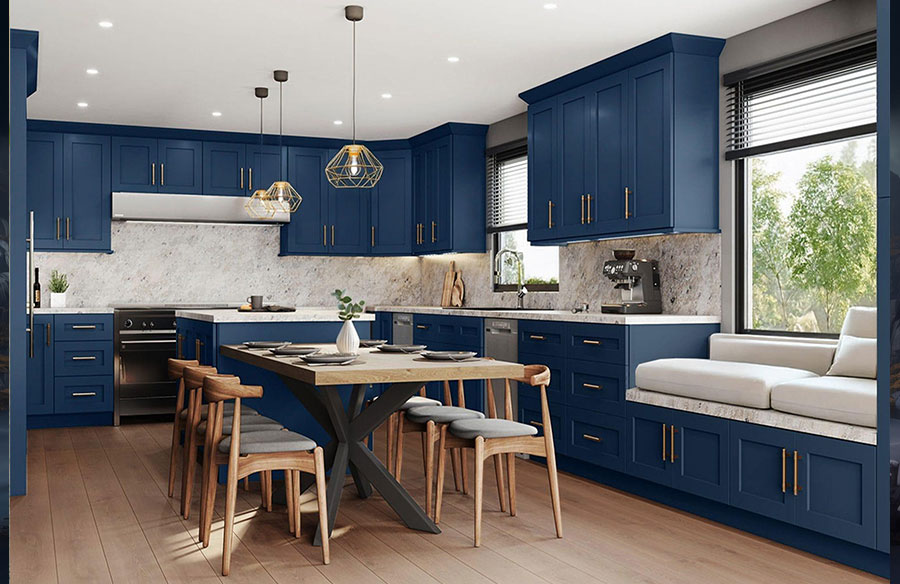
Kitchen cabinets drive a large share of remodel expenses. But cost is not a mystery. It is a set of choices. This guide breaks those choices down. It gives clear price ranges. It shows how to plan a budget. It teaches you to buy smart. Short sentences. Practical steps. Real tactics.
Quick snapshot — average cabinet cost ranges (U.S., 2025)
- Low-budget / RTA or simple stock: $1,200 – $6,000.
- Mid-range / semi-custom: $6,000 – $18,000.
- High-end / custom: $18,000 – $60,000+.
These ranges are for cabinets only. They exclude counters, appliances, demo, and flooring. Labor is extra. Labor often adds $1,000 to $6,000 depending on kitchen size and complexity.
Why cabinets cost so much — the main drivers
Cost comes from many parts. Know them. Control them.
- Materials. Particleboard, MDF, plywood, solid wood. Each has a different price and lifespan.
- Doors and finish. Doors are the visible part. Finish quality can double the price.
- Hardware and accessories. Soft-close, full-extension slides, pull-outs cost more.
- Manufacture method. Stock, semi-custom, custom, or RTA. Custom is costly. RTA is cheap.
- Labor and installation. Skilled installers cost more in big cities.
- Design complexity. Islands, tall pantries, curves — these add hours and cost.
- Shipping and logistics. Large cabinets cost more to ship and may incur storage fees.
- Location. Prices vary by metro area and by contractor availability.
If you know these drivers, you can make trade-offs.
Understand the product types — cost implications
Different product types change price dramatically.
Stock cabinets
- Pre-made in fixed sizes.
- Fast delivery.
- Lowest cost per linear foot.
- Limited sizes and finishes.
Cost range: Low end of the spectrum. Good for simple kitchens.
RTA (Ready-to-Assemble)
- Flat-packed.
- You assemble or hire local help.
- Best unit price for the look you want.
If you need low cost and flexibility, consider rta cabinets. RTA often gives the best mix of price and style for budget projects.
Semi-custom
- Size and finish options.
- Faster than full custom.
- Better fit and more finish choices.
Semi-custom is the sweet spot for many homeowners.
Custom
- Built to order.
- Any wood, any detail.
- Long lead times and higher cost.
Custom is for unique layouts or high-end design.
Real cost examples — three scenarios with numbers
Numbers help plan. These are realistic examples. They include cabinets only and estimated install labor.
Small kitchen refresh (8 linear feet)
- RTA stock cabinets: $1,200 – $2,800.
- Installation labor: $500 – $1,200.
- Total: $1,700 – $4,000.
Typical family kitchen (12–15 linear feet)
- Semi-custom cabinets: $7,000 – $12,000.
- Installation labor: $1,200 – $2,500.
- Total: $8,200 – $14,500.
Large or gourmet kitchen (20+ linear feet + island)
- Custom cabinets: $20,000 – $60,000+.
- Installation labor: $3,000 – $8,000.
- Total: $23,000 – $68,000+.
These ranges reflect real U.S. market variability. Always get quotes for your zip code.
Cost per linear foot — a useful metric
Cabinet sellers often quote per linear foot. This helps quick estimates.
- Budget stock/RTA: $75 – $150 per linear foot.
- Semi-custom: $200 – $500 per linear foot.
- Custom: $500 – $1,200+ per linear foot.
Calculate linear feet along counter runs. Include tall units separately.
Extra costs that homeowners often miss
Budget for these. They add up fast.
- Removal and disposal of old cabinets. $150–$800.
- Cabinet modification to fit appliances. $100–$800.
- Corbels, trim, crown molding. $200–$2,000.
- Countertop templating and installation. $500–$3,000+.
- Backsplash removal or repair. $200–$1,500.
- Electrical or plumbing relocation. $200–$2,000+.
Plan a 10%–20% contingency in your budget. It helps avoid surprises.
Materials deep dive — how each core affects price
Particleboard / melamine
- Cheapest.
- Common in low-cost stock cabinets.
- Susceptible to water damage.
Good when: Budget rules and kitchen is dry.
MDF (paint-grade)
- Smooth painted surface.
- Good for modern painted doors.
- Affordable.
Good when: You want a painted finish and lower cost.
Plywood
- Strong and stable.
- Better for drawer boxes and cabinet interiors.
Good when: You want longer-lasting cabinets without full custom cost.
Solid wood
- High-end look.
- Pricier and heavier.
- Best for visible doors and trim.
Good when: You want luxury and longevity.
Veneer
- Real wood veneer over MDF or plywood.
- Cost-effective natural look.
Good when: You want wood appearance at lower cost.
Doors, finishes, and the hidden premium
Doors and finish drive the visual impression and cost.
- Molded doors cost less.
- Shaker doors are mid-priced and very popular.
- Inset doors require precision and cost more.
- Hand-applied finishes and multi-step lacquer add price.
White shaker doors remain a top sell. If you want a classic look with good resale appeal, consider white shaker cabinets. They balance cost, style, and market acceptance.
Hardware and accessories — value vs. cost
Hardware seems small. But it matters.
- Soft-close hinges add $20–$80 per door.
- Full-extension drawer slides add $30–$150 per drawer.
- Specialty organizers (spice pullouts, pan racks) add $100–$500 each.
Hardware upgrades increase cost but improve function and perceived value.
How to build a realistic cabinet budget — step-by-step
- Measure your kitchen. Get linear feet and tall units.
- Pick a product type. RTA, stock, semi-custom, or custom.
- Choose materials and door style. This sets base cost.
- Add hardware and accessories. Include soft-close and organizers.
- Add labor estimate. Get local quotes.
- Add delivery, disposal, and extras. Include template and countertop coordination.
- Add contingency. 10%–20% recommended.
This gives you a working budget. Update as quotes arrive.
Procurement strategy — where to buy for best value
Choosing where to buy affects price and risk.
1. Direct from manufacturer
- Lower retail markup.
- Good product support.
2. Specialty online sellers
- Wide selection.
- Often better value for semi-custom and custom doors.
3. Big-box stores
- Fast stock and returns.
- Good for basic installs and emergency replacement.
4. Local cabinet shops
- Best fit and finish.
- Higher cost but local support.
5. Wholesale / liquidation
- Great deals if you can time it.
- Limited return options.
If price matters, compare multiple channels. For budget systems, RTA vendors are often the cheapest. Look into rta cabinets as a source for competitive pricing and options.
Negotiation tips with suppliers and contractors
You can often reduce cost with clear negotiation.
- Get multiple quotes. At least three.
- Ask for bundled discounts. Cabinets + install often cheaper together.
- Ask about showroom stock or returns. These may be discounted.
- Negotiate payment terms. Partial payment on delivery can help cash flow.
- Ask for free samples or color swatches. This avoids costly mistakes.
Contractors may have trade discounts. Ask them where they buy. You can compare their price to your direct purchase.
Financing your cabinet project
Many buyers spread cost over time.
- 0% promotional financing via retailers. Read terms.
- Home improvement loans — fixed payments, predictable.
- Credit cards — useful for short-term, but interest ramps up.
- Home equity loans or HELOC — low-rate for major remodels.
Match financing to your budget horizon. Don’t overextend on decorative upgrades.
Timing and lead times — plan like a pro
Lead times matter for project flow.
- Stock / RTA: days to 2 weeks.
- Semi-custom: 2–6 weeks.
- Custom: 6–12+ weeks.
Plan counters and installers after cabinet delivery. Delays cost money and time.
Installation realities — DIY vs. pro
DIY saves money. But it has caveats.
DIY pro:
- Save on labor.
- Requires time and tools.
- RTA works well.
Hire pro:
- Faster and precise.
- Higher upfront cost.
- Better for islands, inset doors, and complex layouts.
If you buy RTA, some installers will assemble and install for a reasonable rate. This hybrid approach often yields the best price-to-quality ratio.
Long-term cost: maintenance and lifecycle
Think beyond purchase price.
- Durability: Plywood and solid wood last longer.
- Refinish cost: Painted MDF may need touch-ups sooner than solid wood.
- Repair: Replace a panel cheaper than whole cabinet.
- Resale: Neutral, classic cabinetry often adds more value.
Budget for maintenance. A small annual fund for touch-ups prevents big future costs.
Sustainability and green cost factors
Eco choices can affect cost.
- FSC-certified wood costs more.
- Low-VOC finishes may cost slightly more but improve air quality.
- Reclaimed or reclaimed-look finishes can be pricier due to labor.
Some buyers accept a small premium for sustainability. Others prioritize initial cost.
Quick checklist — avoid common budget traps
- Measure twice, order once.
- Confirm hinge type and hole placement.
- Order samples for finish and color.
- Ask about warranty and return policy.
- Include delivery and storage costs.
- Plan for moldings and fillers.
- Confirm installation scope with a written quote.
A checklist reduces change orders and extra costs.
Case study: budget plan that saved 40%
A homeowner wanted a modern kitchen look. The boxes were in good shape. The initial custom quote was $18,000. The homeowner took a different route.
- Chose RTA shaker doors and drawer fronts.
- Kept existing cabinet boxes.
- Bought new hardware and soft-close hinges.
- Hired local installer for door hanging only.
Result: Final spend $6,800. Quality looked high. Project finished in two weeks. Savings: nearly 62% vs custom quote.
If you value cost control, door-swap and RTA hybrid plans often win.
Where to look for the best deals and inspiration
For affordable options and curated deals, read buyer guides that compare low-cost systems. For example, curated lists of the cheapest kitchen cabinets help you find true bargains and realistic expectations. For classic, high-appeal looks at reasonable prices, search options like white shaker cabinets. And for RTA systems that let you control cost and delivery, check rta cabinets.
Sample RFP / quote request template (copy-paste)
Use this when asking suppliers or contractors. It speeds replies and improves accuracy.
Subject: Request for Quote — Kitchen Cabinet Project (ZIP: _____)
Hi [Supplier / Contractor Name],
I have a kitchen that is approximately ___ linear feet of base cabinets and ___ linear feet of wall cabinets. I want to: (choose one)
- Replace cabinets entirely / Replace doors only / Reface existing cabinets
Preferred product type: (RTA / Stock / Semi-custom / Custom)
Door style: (Shaker / Slab / Raised panel / Inset)
Core material: (MDF / Plywood / Solid wood)
Finish preference: (painted / stained / thermofoil)
Hardware: (soft-close hinges / full-extension slides / pulls)
Accessories: (pull-outs / lazy susan / spice rack)
Desired timeline: (order date and install date window)
Delivery address: (include ZIP code)
Please provide:
- Itemized cost for cabinets and doors.
- Estimated installation labor cost.
- Lead time for production and delivery.
- Warranty details.
- Shipping and storage fees, if any.
Thanks,
[Your name]
[Phone]
[Email]
Use this template to get apples-to-apples quotes.
Common FAQs — short answers
Q: Can I get a full kitchen for under $5,000?
A: Yes, with RTA and modest hardware. Size and finish limit scope.
Q: Will new cabinets increase my home value?
A: Often yes. Mid-range improvements with neutral finishes give the best ROI.
Q: Is DIY assembly feasible?
A: For RTA and simple layouts, yes. Islands and custom work are harder.
Q: How long do cabinets last?
A: With good materials and care, 15–30 years is common.
Q: Should I paint or replace doors?
A: Paint if doors are structurally sound and you want low cost. Replace for damaged or style-change needs.
Final planning worksheet (short)
- Kitchen linear feet: ____
- Product type preferred: ____
- Estimated cabinets budget: $____
- Estimated installation budget: $____
- Contingency (10–20%): $____
- Target completion date: ____
Fill this and share with suppliers for quick feedback.
Final thoughts — control cost, not quality
“How much will kitchen cabinets cost?” is not one number. It is a plan. Your choices control the price. Start with measurements and a realistic budget. Decide what you will pay more for. Doors and finish drive visual impact. Boxes and build quality drive lifespan.
If you want to maximize savings and still get style, RTA and smart hardware upgrades are a top approach. Explore cost comparisons and product lines like rta cabinets. If you seek inspiration for low-cost complete setups, check guides to the cheapest kitchen cabinets. And if a classic look is your goal, white shaker cabinets remain a buyer-friendly choice.