Workplace safety goes beyond just following rules. It’s about building a work environment where everyone cares about keeping each other safe.
In the United States, workplace safety has improved dramatically over the decades.
In this article you will learn how to improve safety culture in the workplace, and why it matters.
What Workplace Safety Culture Really Means?
Workplace safety culture reflects the shared attitudes, values, and behaviors that determine how safety is prioritized across an organization.
A true safety culture builds an environment where safe practices are instinctive. Because employees see their importance in protecting themselves and their colleagues.
Safety culture can be broken down into several key domains of risk:
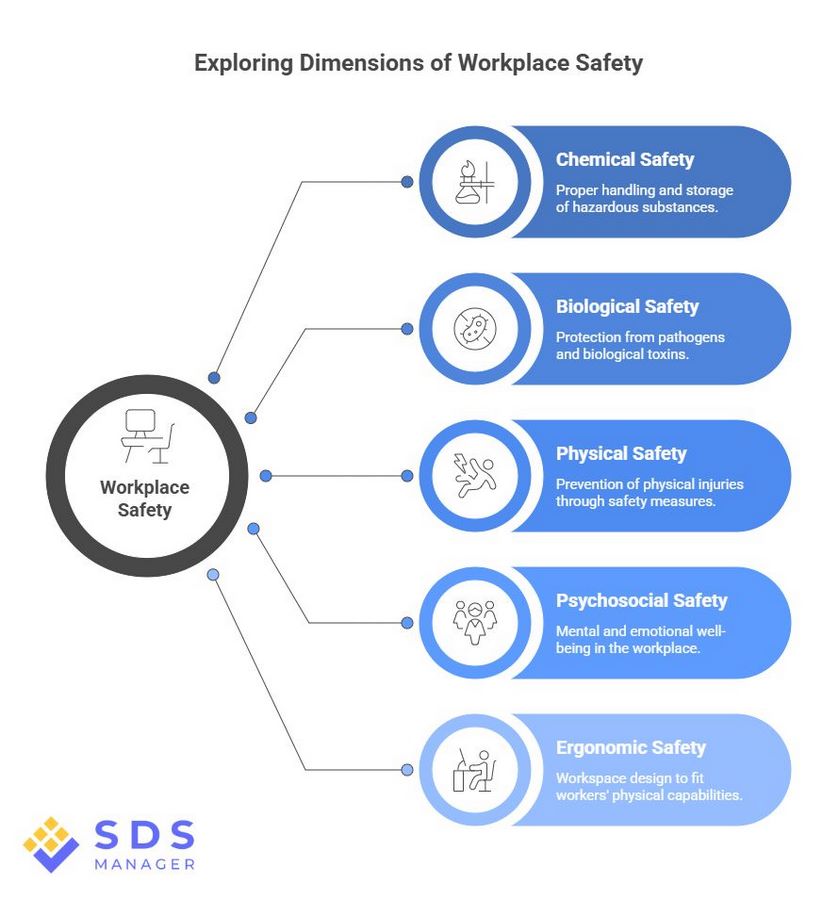 Chemical Safety
Chemical safety culture ensures that employees who work with or around hazardous materials are protected from exposure, spills, and long-term health effects.
A strong chemical safety program builds confidence by giving workers the tools, knowledge, and systems they need to handle materials safely.
A strong chemical safety program ensures that:
- SDS Management Systems are in place so workers have instant access to chemical safety information.
It allows SDS updates to be shared quickly, provide mobile access, and often include QR codes for fast retrieval during emergencies.
- Every chemical container is clearly labeled with hazard information, usage instructions, and emergency actions.
Beyond labeling, chemicals must be stored according to compatibility guidelines.
- Employees are trained to identify spills, initiate containment procedures, and escalate incidents to designated response teams.
- Proper ventilation systems and engineering controls such as fume hoods and local exhaust are in place to reduce exposure to airborne hazards.
- Personal protective equipment (PPE) is provided when engineering and administrative controls are not sufficient.
Biological Safety
Biological safety involves preventing exposure to harmful microorganisms, viruses, and biological agents.
It protects not only employees but also customers, patients, and the wider community from the spread of disease.
By implementing strong biosafety practices, organizations can reduce the risk of outbreaks and ensure a healthier, more resilient workplace.
Best practices include:
- Infection Control Protocols: Regular hand hygiene, disinfection of surfaces, and vaccination programs protect workers and the public.
- Safe Handling of Biological Materials: Proper containment levels (biosafety cabinets, sealed containers) minimize accidental exposure.
- Sharps Management: Training and designated disposal systems for needles, scalpels, or glass reduce the risk of injuries and infections.
- Emergency Preparedness: Workers should know procedures for responding to biological incidents, such as exposure to infectious diseases.
Physical Safety
Physical safety refers to the protection of workers from environmental, mechanical, and situational hazards that can cause injuries or accidents. These risks exist across all industries and workplaces.
A strong physical safety program combines preventive systems, training, and preparedness measures such as:
- Machine Guarding and Lockout
Machine guards protect workers from dangerous moving parts, while lockout procedures make sure equipment is completely shut down before maintenance or repair.
- Fall Protection
The most frequent accidents at work include slips, trips, and falls. Using harnesses, guardrails, anti-slip flooring, and safe scaffolding greatly reduces risks in construction and industrial settings.
- Safe Material Handling
Moving heavy or awkward items can cause strains, collisions, or crush injuries if done incorrectly. Forklift training, marked traffic lanes, and clear weight limits keep people safe when handling materials. Simple tools like pallet jacks, hoists, or dollies also make the job easier and help prevent unnecessary injuries.
- Fire and Electrical Safety
Fires and electrical problems can spread quickly if they aren’t addressed in time. Regular checks of wiring, outlets, and equipment help catch issues early. Easy access to fire extinguishers, clearly marked exits, and regular evacuation drills give employees the knowledge and confidence to respond safely in an emergency.
Psychosocial Safety
Psychosocial safety focuses on mental health, stress, workplace relationships, and organizational climate.
It recognizes that a truly safe workplace is one where employees feel respected, supported, and able to perform their duties without fear of harassment, discrimination, or burnout. Key practices include:
- Workload Balance
When deadlines and production demands pile up, stress and fatigue can lead to burnout or risky shortcuts. Setting realistic expectations and checking in regularly with employees helps keep workloads manageable and work safer.
- Anti-Harassment Policies
Clear anti-harassment policies, paired with proper training and fair enforcement, create a healthier workplace where employees can focus on their jobs without fear of mistreatment.
- Mental Health Support
Access to counseling, wellness initiatives, and employee help services demonstrates that the organization promotes mental health. These resources help employees in managing stress, developing resilience, and staying engaged. - Learning Culture
Mistakes and incidents are opportunities to learn. Shifting from blame to problem-solving encourages employees to share what went wrong so the whole team can grow stronger together. This mindset builds trust and continuous improvement.
Ergonomic Safety
Ergonomic safety reduces the risk of musculoskeletal disorders (MSDs) caused by poor workstation design, repetitive movements, or unsafe lifting techniques.
These risks are common across both office-based roles and physically demanding jobs. Best practices for ergonomic safety include:
- Workstation Design
In office environments, adjustable chairs, monitor stands, and keyboard placement reduce strain on the back, neck, and wrists. For industrial tasks, workstations should be designed to minimize unnecessary reaching, bending, or twisting.
- Task Rotation
Repetitive motion injuries build over time. Rotating workers between tasks that use different muscle groups helps prevent overuse injuries. In manufacturing, for example, alternating between assembly, inspection, and packaging tasks can reduce strain.
- Lifting Techniques and Tools
Safe lifting training teaches employees to use leg strength rather than the back. Providing mechanical aids such as dollies, pallet jacks, or powered lifts ensures that workers do not exceed safe limits.
- Regular Assessments
Workplace conditions and employee needs evolve over time. Regular ergonomic assessments help identify risks early and adapt equipment or workflows. These proactive adjustments reduce absenteeism and long-term injury costs.
 The Value of Workplace Safety Culture
Investing in safety culture development provides significant returns through multiple channels.
Companies with strong safety records typically pay less for insurance, avoid fines, and legal trouble.
Safe workplaces also operate more smoothly, with fewer interruptions and higher productivity.
Ultimately, investing in workplace safety culture is an investment in people and there is no more important investment an organization can make.
FAQs
Q1: How can organizations improve safety culture most effectively?
Focus on leadership commitment, employee engagement, transparent communication, and proactive systems like risk assessments and digital safety tools.
Q2: Why is psychosocial safety important?
Because employee well-being impacts performance, retention, and trust. A healthy mental environment supports safer decision-making.
Q3: How do risk assessments strengthen safety culture?
They prioritize hazards across multiple dimensions, ensuring resources are directed where they are most needed.
Q4: What role does training play in safety culture?
Training builds competence and confidence by teaching employees how to recognize hazards and apply safe practices in real-world scenarios.