In cities where construction never pauses, sales offices are often treated as temporary necessities. They emerge at the start of a project, filled with freshly built furniture and fittings, only to be abandoned or demolished once the project concludes. This cycle, repeated endlessly across developments, generates not only waste but also a certain blindness to possibility: why should a sales office always mean disposable?
Project Name: Nomadic office
Studio Name: rurbn
Architect: Saumil Patel
Photographers credit: Dhrupad Shukla
This project set out to question that assumption. Instead of designing another static, single-use sales office, we imagined a space that could move, adapt, and stay relevant beyond the lifespan of one project. The answer lay in something deceptively simple: loose, independent furniture.
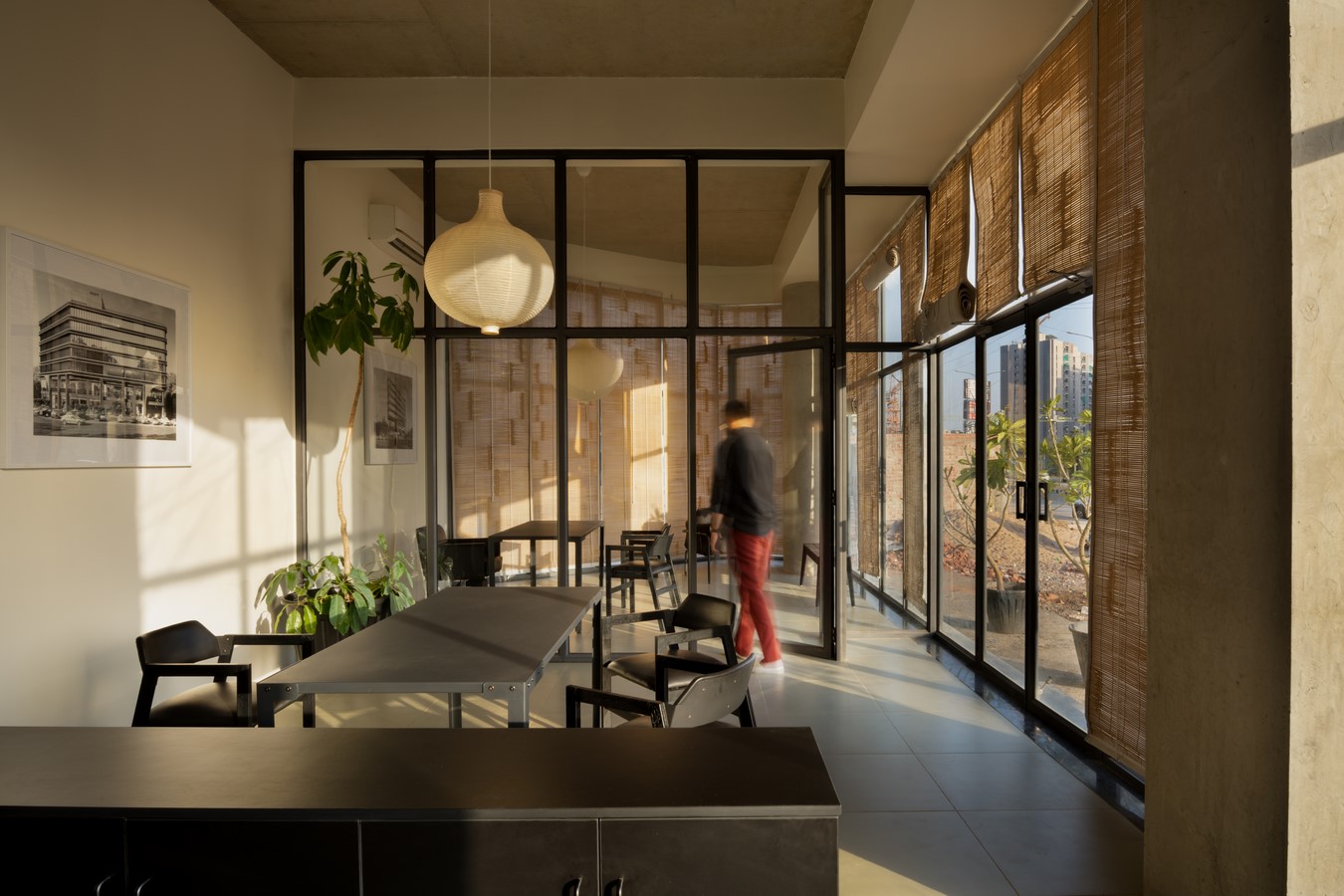
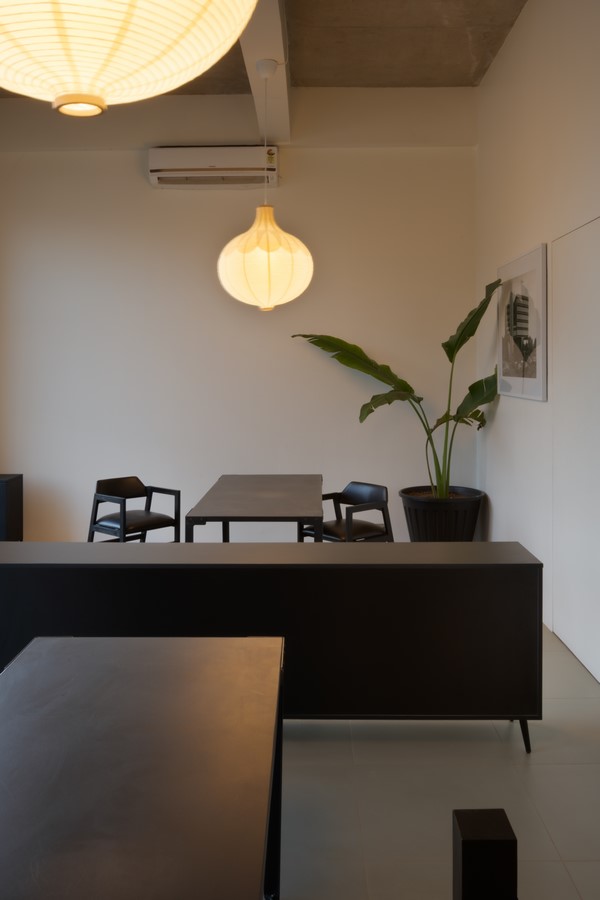
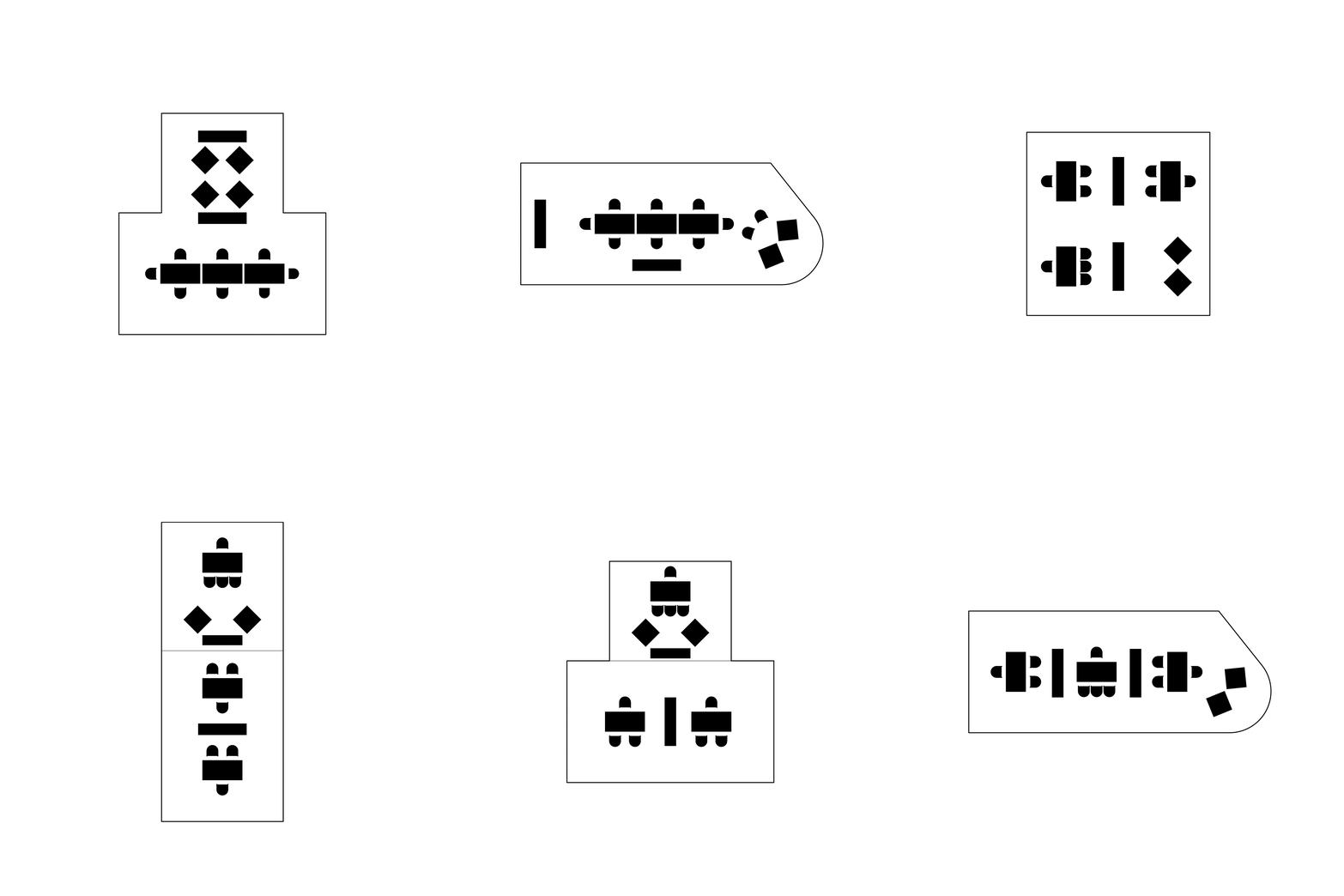
Every piece within the office—tables, chairs, storage, partitions—was chosen to remain free from the architecture of the site. Nothing is fixed to walls or floors. Everything can be picked up, shifted, or rearranged to suit a new spatial condition. When the client moves to their next project, the office comes with them. What was once a temporary setup now becomes a reusable toolkit—portable, adaptable, and sustainable.
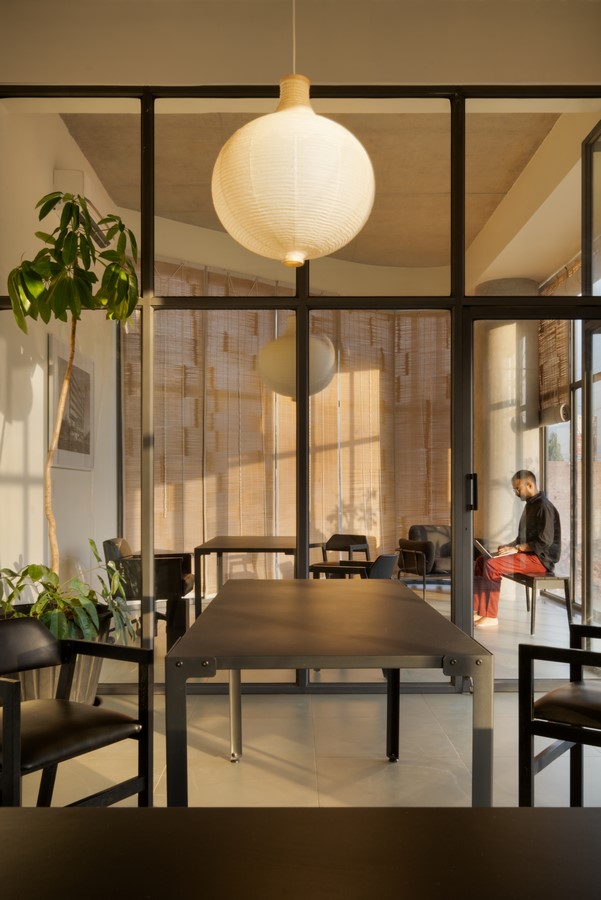
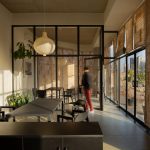
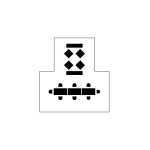
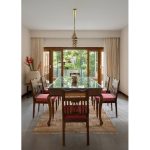
The spatial arrangement responds to the practical requirements of a sales office. A private cabin allows for focused client meetings, while a set of desks accommodate the accounts department. At the entry, a reception table serves as the first point of contact for general inquiries. This clear hierarchy of spaces ensures efficiency while retaining openness and transparency across the interior.
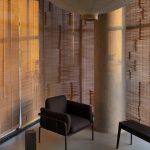
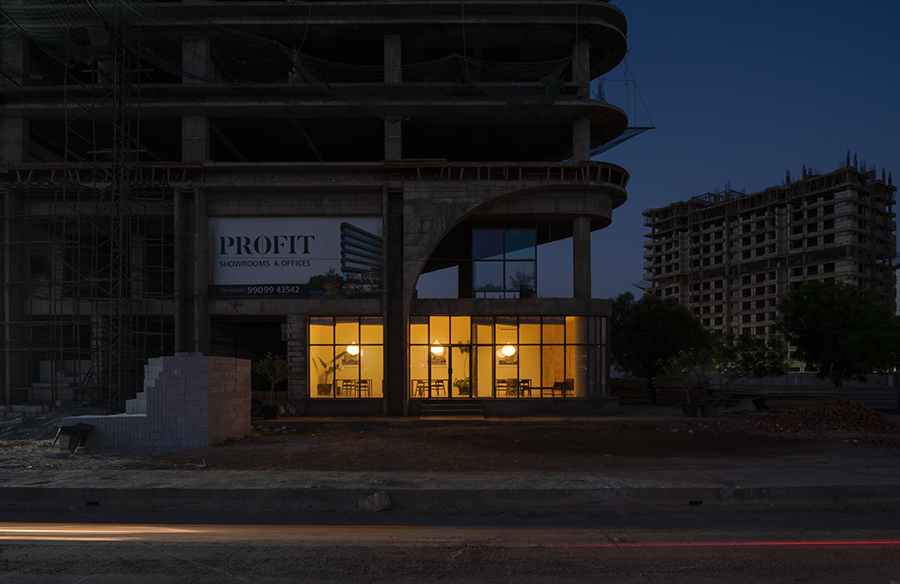
Materiality was approached with clarity and restraint. The interior is minimal and honest: black furniture, neutral floors, white walls. The backdrop is calm, allowing the light—both natural and artificial—to animate the space. Large glass windows frame the interior, turning the office into a glowing beacon after dusk, visible from the construction site and beyond. In the evening, the warm light spilling out offers a sense of welcome amidst raw concrete and scaffolding, an unlikely reminder that even transitional spaces can carry dignity.
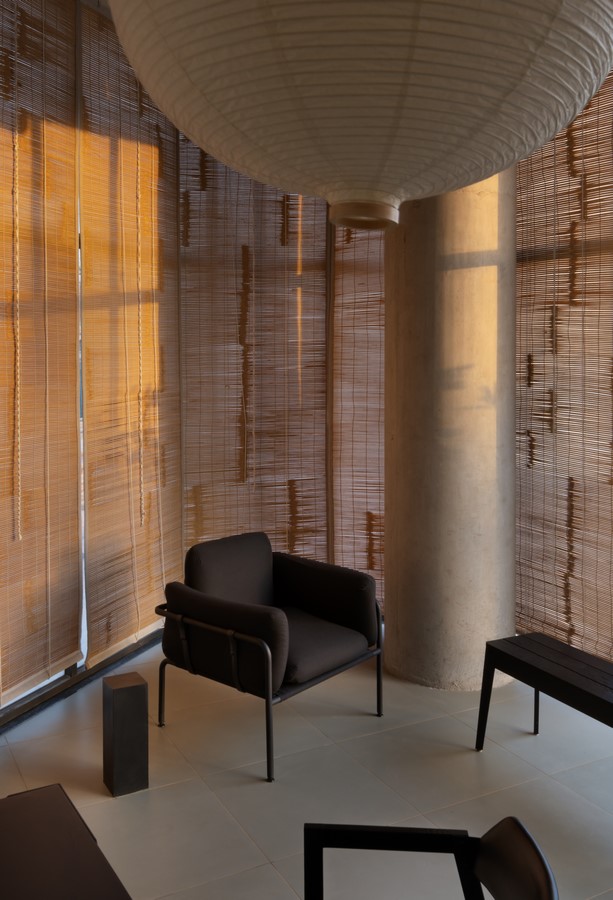
Speed and affordability were also central to the design brief. Sales offices are often required to be built fast, and this one was no exception. By eliminating fixed construction and focusing on readymade, movable furniture, the office was completed in just 15 days. This efficiency reduced both cost and waste, proving that sustainability does not have to come at a premium. It can, in fact, be a practical, economical choice.
The result is more than a workspace—it is a proposition. In a city like Ahmedabad, where the culture of construction is booming, this project quietly asks: do we really need to keep building and demolishing sales offices, or can we rethink them as movable assets? Can a space remain both temporary and permanent at once?
The office demonstrates that by reimagining what is considered temporary, architecture can step away from cycles of wastefulness and instead embrace cycles of reuse. It shows that sustainability can be embedded in the smallest, most everyday projects—not only in grand gestures but also in modest interventions.
At night, when the construction site is cloaked in darkness, the office glows like a lantern. It stands as both a practical workplace and a symbolic gesture: proof that even the most ordinary programs carry the potential for extraordinary rethinking.
This is not just a sales office. It is a portable thought, designed to move with the project, with the client, and with the times.