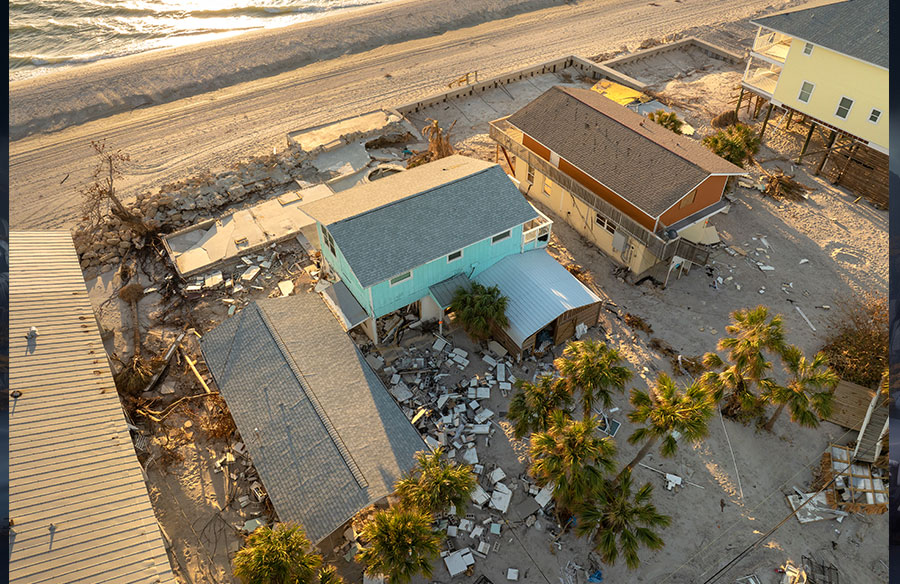
When palm trees sway in a hurricane, they don’t fight the wind; they move with it.
Buildings, unfortunately, aren’t built to dance. When a Category 4 or 5 storm barrels through, traditional structures face a brutal test. Roofs peel away. Windows shatter. Entire walls can buckle under pressure.
Over the past four decades, hurricanes have grown stronger, wetter, and more destructive, fueled by rising sea surface temperatures and changing weather patterns. For coastal communities, this isn’t just a seasonal inconvenience; it’s a recurring threat that reshapes lives, economies, and entire landscapes.
So here’s the real question: how do we design buildings that can stand firm without becoming rigid to the point of failure? Can architecture borrow nature’s lesson of flexibility, adapting not just to survive the storm, but to help communities bounce back faster?
That’s where adaptive architecture comes in, designing spaces that bend, absorb, and endure instead of simply resisting. In the sections ahead, we’ll explore how innovative building strategies are reshaping hurricane-prone regions, protecting both the structures themselves and the people who call them home.
Rethink Sites and Forms
Good hurricane-resistant design starts with knowing the terrain.
- Different locations face different threats; a coastal village may battle storm surge, while a hillside community worries about landslides.
- In flood-prone areas, elevating structures on stilts or piers lets water flow underneath, reducing dangerous hydrostatic pressure.
- In high-wind zones, orienting buildings to deflect prevailing gusts—using curved walls or aerodynamic rooflines- can prevent roofs and walls from taking the brunt of the force.
Landscaping isn’t just about looks. Mangroves, berms, and bioswales can slow incoming water, reduce erosion, and act as natural shields.
When it comes to materials, resilience is non-negotiable:
- Impact-rated glass protects from flying debris.
- Reinforced concrete and cross-braced steel frames add lateral stability.
- Even traditional materials like bamboo or rammed earth can be robust when paired with modern engineering techniques.
The goal isn’t to turn every home into a bunker—it’s to create structures that can flex with the storm instead of failing under it.
Build Spaces That Can Shift Roles When Needed
When hurricanes hit, everyday buildings often become something else entirely—schools turn into shelters, gyms into relief hubs, courtyards into supply drop-off points. If we know this happens, we should design for it from the start.
Picture a school with hallways wide enough for cots, or a community center with storage for emergency gear and multiple entry points for supply trucks. Even an apartment block could include one reinforced space for residents to wait out the worst of the storm.
Modular construction helps, too. Panels or container units can be assembled quickly and replaced one at a time if damaged. The goal isn’t just to survive the storm—it’s to have spaces ready to serve the community while everything else is still getting back on its feet.
Foster Human Resilience Through Design
Good hurricane-ready architecture isn’t just about load-bearing walls—it’s about the people inside them. The way a space feels during and after a storm matters.
Windows that still let you see out, even with shutters in place, can ease that closed-in feeling. Bright corridors and open courtyards give neighbors a place to gather. Rooftop gardens or terraces can double as landing zones for relief deliveries when roads are flooded. Clear signage and simple color coding mean people can find their way—fast—even in low light or high-stress moments.
Recovery also depends on what happens outside the walls. Architects can push for relief funding and build partnerships with nonprofits to host preparedness workshops right in the spaces they design. Many residents don’t fully understand how hurricanes ripple through their communities until they see it firsthand.
Even small actions help. Adding a short note about hurricane donations in a leasing packet or community newsletter can connect tenants to organizations that provide shelters, food, water, medical care, and clean-up supplies for families who’ve lost everything. When social responsibility is built into the blueprint, the result is more than a strong building; it’s a stronger community.
Integrate Sustainability and Climate Adaptation
Resilient design and sustainability go hand in hand. A green roof can soak up rainfall instead of sending it straight to storm drains. Solar panels keep the lights on when the grid fails. Rainwater systems give access to clean water if pipes are damaged, and natural ventilation means fewer worries if power is out for days.
Using locally sourced materials not only cuts carbon emissions but also supports the community’s economy. And with climate models predicting stronger storms, building codes are shifting to higher base flood levels and tougher wind ratings. Architects should be part of those policy conversations, pushing for codes that make space for innovation.
Even practical upgrades can honor local identity. Elevated homes can still carry their regional style with shaded verandas, decorative screens, and details that feel like home.
A Call to Action for Designers
Adaptive architecture isn’t just about designing buildings that survive storms; it’s about shaping places where people can recover and rebuild. That means thinking beyond structure to create spaces that protect, connect, and serve the community in any weather. If we keep empathy, creativity, and collaboration at the center, we don’t just build for today’s challenges; we lay the groundwork for safer, stronger cities in the years ahead.