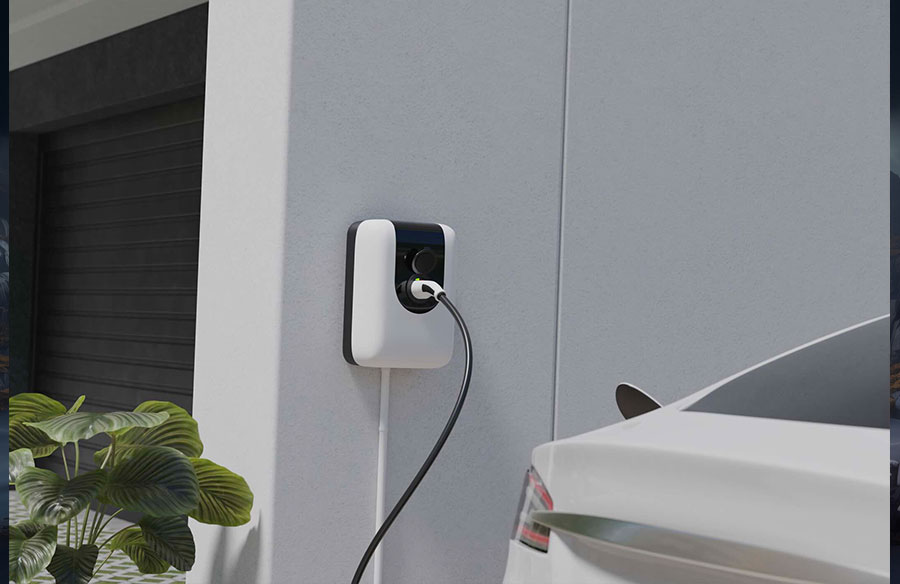
While public fascination often centers around DC fast chargers with their rapid-fire performance, the unsung hero of the EV revolution is undoubtedly AC charging. It is AC systems that fuel the daily journeys of most electric vehicle owners, whether they’re commuting to work, running errands, or making delivery rounds. Their role may be subtle, but it is foundational. Unlike fast-charging installations that serve as roadside pit stops, AC chargers are embedded into daily life.
AC charging’s compatibility with everyday routines is what gives it staying power. Most EVs spend the majority of their time parked—overnight at home, during work hours at the office, or while idling in fleet depots. This idle time becomes an opportunity for steady, low-stress energy replenishment. By aligning with natural downtimes, AC charging reduces the need for drivers to seek out charging as a separate activity, instead folding it seamlessly into their schedule.
The benefits extend beyond individual convenience. For utilities, AC charging represents a manageable load that can be spread across off-peak hours, easing strain on the grid. For cities, it’s a low-cost solution that fits into existing infrastructure without requiring massive overhauls. And for the broader goal of decarbonizing transportation, it provides the scalable, sustainable backbone needed to support widespread adoption of electric vehicles across personal, commercial, and public use cases.
Infrastructure That Mirrors Human Behavior
The success of electrification hinges on charging solutions that align with how people actually move through the world. AC charging, by its very nature, complements daily routines rather than disrupts them. Vehicles are typically parked far more than they are driven, making low-speed, unattended charging an ideal match. Whether in residential garages, workplace lots, or commercial depots, AC chargers quietly refill batteries during the natural pauses in a vehicle’s day.
This passive charging experience is key to broader EV adoption. For the average commuter, plugging in overnight is far less intrusive than a detour to a public fast-charging station. The slower pace is not a drawback but a feature—one that fits intuitively into lives already structured around routine. Drivers wake up to fully charged vehicles, without needing to manage queues, monitor timers, or think about kilowatts. It is precisely this frictionless integration that makes AC charging indispensable in normalizing electric mobility.
Among the systems designed to serve these behavior-driven needs, Flux AC Chargers by ChargeTronix stand out for their modular and scalable approach. Built around a distributed cabinet architecture, they allow multiple dispensers to be powered simultaneously from a single hub—ideal for fleet yards, apartment complexes, or any high-density environment. The product’s customizability, including integrated access control and cord management options, speaks directly to the needs of environments where simplicity and uptime are non-negotiable. In settings where EV charging must happen in the background of daily life, this blend of thoughtful engineering and operational flexibility provides a practical, future-ready solution.
The Economics of Electrification at Scale
Affordability is often the deciding factor in whether a business or individual chooses to electrify. Compared to DC fast charging infrastructure, AC systems offer a more accessible and cost-effective path forward. Installation is generally simpler, often using existing electrical panels and requiring minimal trenching or transformer upgrades. This makes it easier to equip apartment buildings, workplace garages, or retail lots without complex permitting or high capital expenditure.
Energy costs also tilt in AC charging’s favor. With their slower charge rates, these systems can take advantage of off-peak electricity pricing, reducing utility bills significantly over time. Businesses can implement scheduled charging policies to ensure fleet vehicles only charge during low-demand hours. Residential users benefit from smart charger apps that automate this process, allowing energy use to align with personal habits and utility incentives.
Long-term maintenance is another often overlooked but essential advantage. AC chargers, being mechanically simpler, tend to have longer service intervals and fewer technical failures than their DC counterparts. For fleet managers or property developers managing dozens—or even hundreds—of chargers, this reliability translates into fewer site visits, less downtime, and lower operational overhead. In total, the economics of AC charging support a gradual, sustainable scaling of electric infrastructure without the burden of excessive up-front or ongoing costs.
Smarter Grids, Smarter Charging
The intersection of EV charging and smart energy management is where AC systems shine. Many newer AC chargers are equipped with advanced software that enables dynamic load balancing, scheduled charging, and energy usage analytics. These features allow homeowners, building managers, and fleet operators to fine-tune charging behavior, optimizing both energy consumption and vehicle readiness.
Participation in utility demand response programs is another growing capability. Through networked charging systems, utilities can modulate energy flow during periods of high demand, reducing grid stress and providing financial incentives to users. This coordinated approach transforms EVs from passive consumers to active participants in energy ecosystems. As the electric grid modernizes, this two-way communication between charger and utility becomes increasingly valuable.
Vehicle-to-grid (V2G) technology remains in its early stages, but its future is closely tied to the capabilities of AC systems. As more bi-directional charging technologies emerge, AC infrastructure will become the gateway through which parked EVs send electricity back to the grid or home energy systems. This possibility, while not yet mainstream, could redefine how we think about both transportation and electricity—making every vehicle a potential energy node in a vast, intelligent network.
Urban Integration and Public Charging Evolution
AC charging’s flexibility makes it an ideal candidate for urban deployment. Unlike fast chargers, which often require large physical footprints and significant grid upgrades, AC units can be mounted discreetly on walls, poles, or curbside pedestals. This allows for subtle but powerful integration into urban streetscapes, where space is at a premium and infrastructure budgets are tight.
City governments are increasingly turning to AC charging as part of their clean transportation strategies. Whether installed in public parking structures, libraries, parks, or transit hubs, these chargers expand access to EV infrastructure without disrupting neighborhoods. The familiarity of slower, overnight charging also aligns well with community expectations and habits, reducing friction in adoption and encouraging more residents to consider EVs.
As cities roll out zoning requirements for EV-ready buildings and expand public-private partnerships, AC charging will serve as the connective tissue of electrified transportation networks. From taxi fleets to delivery services to private citizens, the widespread availability of AC ports will create the ecosystem necessary for comprehensive electrification. And because AC charging can be installed incrementally, it allows cities to grow their networks organically, with infrastructure that evolves alongside demand.
Powering the Road Ahead
The story of electrification is not about revolution overnight but about daily, compounding transformation. AC charging plays a quiet but powerful role in that transformation, offering a stable, sustainable solution that aligns with real-life behavior. It is not about speed or spectacle but about dependability and design that fits into daily life without disruption.
As EV adoption continues to rise, trust in infrastructure becomes paramount. Drivers and fleet operators need to know that charging will be available, affordable, and aligned with their schedules. AC charging delivers on those expectations consistently, proving that the future of mobility does not require radical shifts in behavior. Instead, it simply makes better use of the moments we already spend parked, waiting, or idle.
In a rapidly evolving industry filled with futuristic promises and flashy innovations, AC charging remains grounded in pragmatism. It is the quiet enabler of electric transportation, the bridge between today’s technology and tomorrow’s transformation. Its simplicity, adaptability, and affordability ensure that as the world moves toward electrification, AC charging will remain at the heart of the journey.