In industrial, laboratory, and manufacturing applications, the need for precise, reliable, and consistent fluid transfer is paramount. Whether you’re dealing with delicate fluids, chemicals, or food-grade liquids, it’s essential to choose the right pump to meet your operational needs. Peristaltic pumps have become one of the most popular choices for fluid handling due to their versatility, ease of maintenance, and ability to transfer fluids without contamination.
In this article, we will explore the advantages of peristaltic pumps, how they work, and why they are considered a reliable solution for ensuring smooth fluid flow across various industries.
What is a Peristaltic Pump?
A peristaltic pump, also known as a positive displacement pump, is a type of pump that moves fluid through a tube using the principle of peristalsis, a method of sequential compression and relaxation. This process is similar to how our digestive systems move food through the intestines.
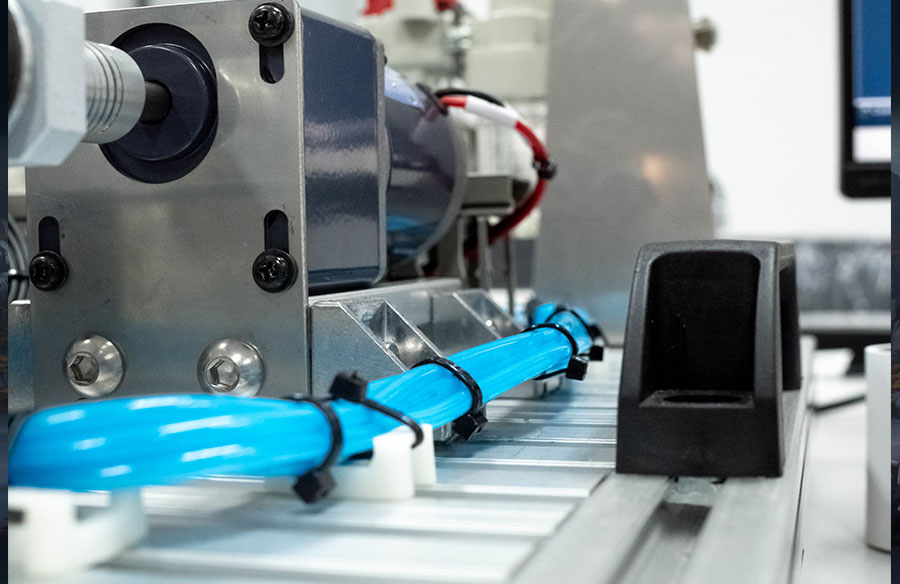
In a peristaltic pump, rollers or shoes rotate along the outside of a flexible tube. As the rollers compress the tube, the liquid inside is forced forward and out. Once the rollers pass, the tube returns to its original shape, creating a vacuum that draws in more fluid. This pumping action is gentle, reliable, and perfect for applications requiring the handling of delicate or shear-sensitive fluids.
Advantages of Peristaltic Pumps
1. Precise Flow Control
Peristaltic pumps are known for their precise flow control. The flow rate is determined by the speed at which the rollers rotate, making it easy to adjust the pump to achieve the desired output. This is crucial for industries like pharmaceuticals, biotechnology, and food processing, where accuracy is key to ensuring consistency in production and maintaining product quality. Whether you’re pumping tiny quantities of liquid for laboratory experiments or large volumes for industrial processes, peristaltic pumps offer precise and repeatable results.
2. Easy to Maintain and Clean
One of the major benefits of peristaltic pumps is that they have very few parts that come into direct contact with the fluid being pumped. Since the liquid only touches the inside of the flexible tube, there is little risk of contamination, which makes these pumps ideal for sanitary applications, including medical and food industries. The tubes are typically easy to replace, making maintenance straightforward and hassle-free.
Cleaning peristaltic pumps is also simplified because there are no valves, seals, or complicated components to clean. This reduces downtime, as the pump can be easily disassembled and cleaned without requiring specialized tools or expert knowledge. This simple maintenance routine helps improve operational efficiency.
3. Handling Viscous Fluids
Peristaltic pumps are highly effective at pumping a wide variety of fluids, including those that are viscous or contain suspended solids. Their positive displacement mechanism allows them to handle thick liquids, slurries, and even abrasive materials without clogging or losing efficiency. This makes them invaluable in industries such as wastewater treatment, chemical processing, and food manufacturing, where viscous fluids are common.
4. Gentle Pumping Action
One of the standout features of peristaltic pumps is their ability to gently handle fluids. Since the pump moves fluid without creating turbulence, it is an ideal choice for transferring sensitive liquids, such as cells, proteins, or pharmaceutical compounds. The gentle nature of the pump minimizes shear forces, preventing the degradation or denaturation of sensitive substances.
This gentle pumping action is also beneficial when pumping food products such as juices, syrups, and sauces. It ensures that the product remains intact without losing its consistency, flavor, or texture, making peristaltic pumps an excellent choice for the food and beverage industry.
5. No Contamination
Since the liquid never comes into contact with moving parts, the risk of contamination is significantly reduced. This is especially important in pharmaceutical, biotechnology, and food and beverage industries, where even the slightest contamination can lead to product failure and health risks.
Whether you’re dealing with pure liquids or chemically aggressive substances, peristaltic pumps ensure that the fluid remains pure and untainted, offering a safe, clean, and efficient pumping solution.
6. Self-Priming Capabilities
Peristaltic pumps have the unique ability to self-prime, which means they can start pumping fluid even if there is air in the suction line. This makes them particularly useful in applications where the fluid source may be at a lower elevation or prone to fluctuating pressure. Self-priming reduces the risk of pump failure and ensures smooth operation, even in challenging environments.
WiFi-Enabled Peristaltic Pumps: The Next Step in Fluid Handling
Technology is constantly evolving, and WiFi-enabled peristaltic pumps represent the next step in optimizing fluid handling systems. These pumps come equipped with WiFi connectivity, allowing operators to remotely monitor, control, and adjust pump performance.
With WiFi-enabled pumps, you can easily track pump status, flow rates, and other critical metrics in real-time. This remote access ensures that operators can stay on top of operations without needing to be physically present, which is particularly useful in large-scale industrial settings or for operations that run around the clock. WiFi-enabled pumps are also ideal for integrating into automated systems, reducing the need for manual intervention and streamlining your operations.
Microlit WiFi-enabled peristaltic pumps combine the precision and reliability of traditional peristaltic pumps with modern wireless capabilities, providing businesses with a powerful, flexible, and efficient solution to manage fluid flow in a variety of industries.
Applications of Peristaltic Pumps
Peristaltic pumps are used in many industries due to their versatility. Here are some of the most common applications:
1. Pharmaceutical Industry
In pharmaceutical production, maintaining the purity of fluids is critical. Peristaltic pumps are used to transfer ingredients and active pharmaceutical ingredients (APIs) in a way that minimizes contamination. Their gentle pumping action is ideal for handling delicate liquids, and their ability to maintain precise flow rates ensures that the correct dosage is administered.
2. Food and Beverage Industry
In the food and beverage industry, peristaltic pumps are often used to transfer juices, sauces, syrups, and other food-grade liquids. The pump’s gentle handling ensures that the product retains its original quality and texture. Additionally, peristaltic pumps are widely used in bottling and packaging lines due to their reliability and ease of cleaning.
3. Chemical Processing
For chemical manufacturing, peristaltic pumps are ideal because they can handle aggressive chemicals and fluids containing solids. Their ability to pump viscous fluids and corrosive materials with minimal wear and tear ensures that production processes remain smooth and efficient.
4. Water Treatment
In wastewater treatment, peristaltic pumps are used to pump chemicals for flocculation, filtration, and disinfection. The self-priming capabilities and resistance to clogging make them well-suited to the often challenging conditions of water treatment plants.
About Stellar Scientific
At Stellar Scientific, we are committed to providing high-quality laboratory equipment and solutions to our customers. We specialize in offering peristaltic pumps that provide reliable fluid handling and precision for a wide range of industries. Our products, including the Microlit WiFi-enabled peristaltic pumps, offer advanced functionality with ease of use, ensuring that your fluid management systems operate efficiently and effectively.
We understand the unique challenges that each industry faces, and we are here to help provide customized solutions to optimize your processes.