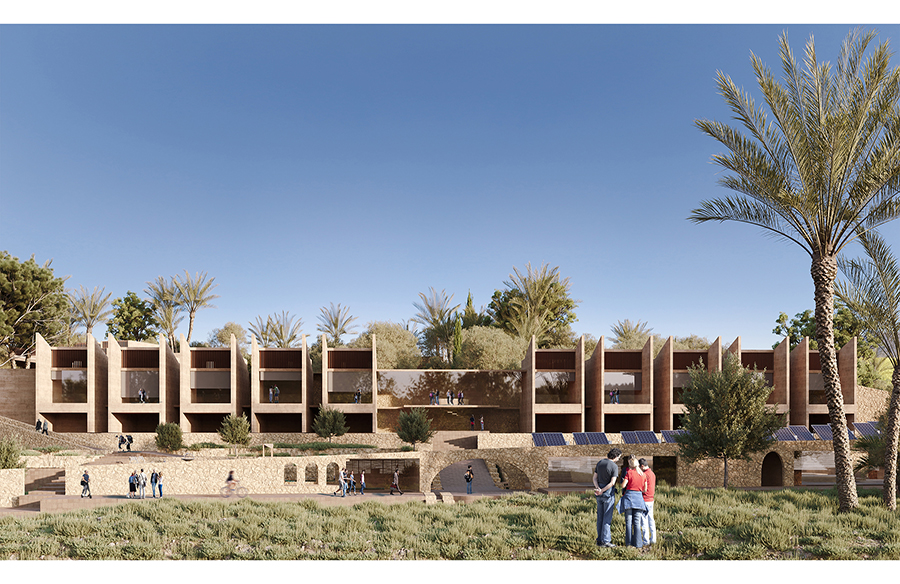
Morocco, a land of rolling hills and rich cultural heritage, draws its identity from centuries of tradition, diverse landscapes, and symbolic architecture. Surrounded by various cultural influences and shaped by a Mediterranean climate, Morocco’s architectural soul is deeply rooted in nature.
Project Name: The life line
Studio Name: olay studio
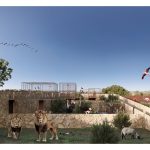
The very name “Morocco” is etymologically linked to “the land of sunsets,” reflecting a belief that nature is a divine gift to be honored and protected.Morocco reveres natural forces such as the Musa bird, the Barbary lion, the argan tree, and Jebel Toubkal as national symbols. Inspired by this reverence, our design journey began with an immersion in the project’s site — a hillside gently sloping toward the sea. Nature, views, and climate were prioritized throughout the design process.
Concept and Form
Emerging organically from the earth, the architectural form rises and falls with soft, fluid curves—mimicking the surrounding hills. This formal language draws from the natural topography and spirals into architectural expression inspired by the artwork of Najia Mehadji, a French-Moroccan painter whose work merges Eastern and Western visual traditions. Her painting, The Line of Hope, captures free-flowing gestures that symbolize movement, freedom, and the journey of life—core themes embedded in the design.The undulating forms rise from the earth, peak, and return to it, evoking the eternal rhythm of the sun’s path. In Moroccan tradition, the wave and spiral are sacred motifs. The wave represents energy and interconnectedness, while the spiral symbolizes continuity and the cycle of life—motifs rooted in Berber symbolism and embedded within the architectural language of the site.
Site Planning and Program
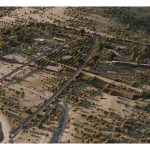
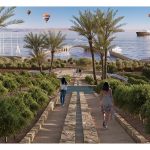
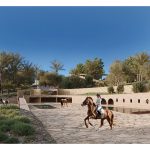
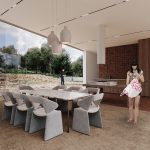
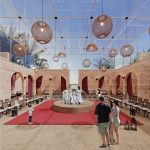
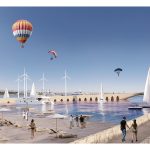
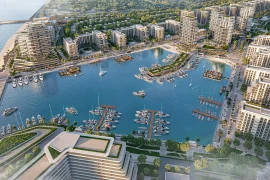
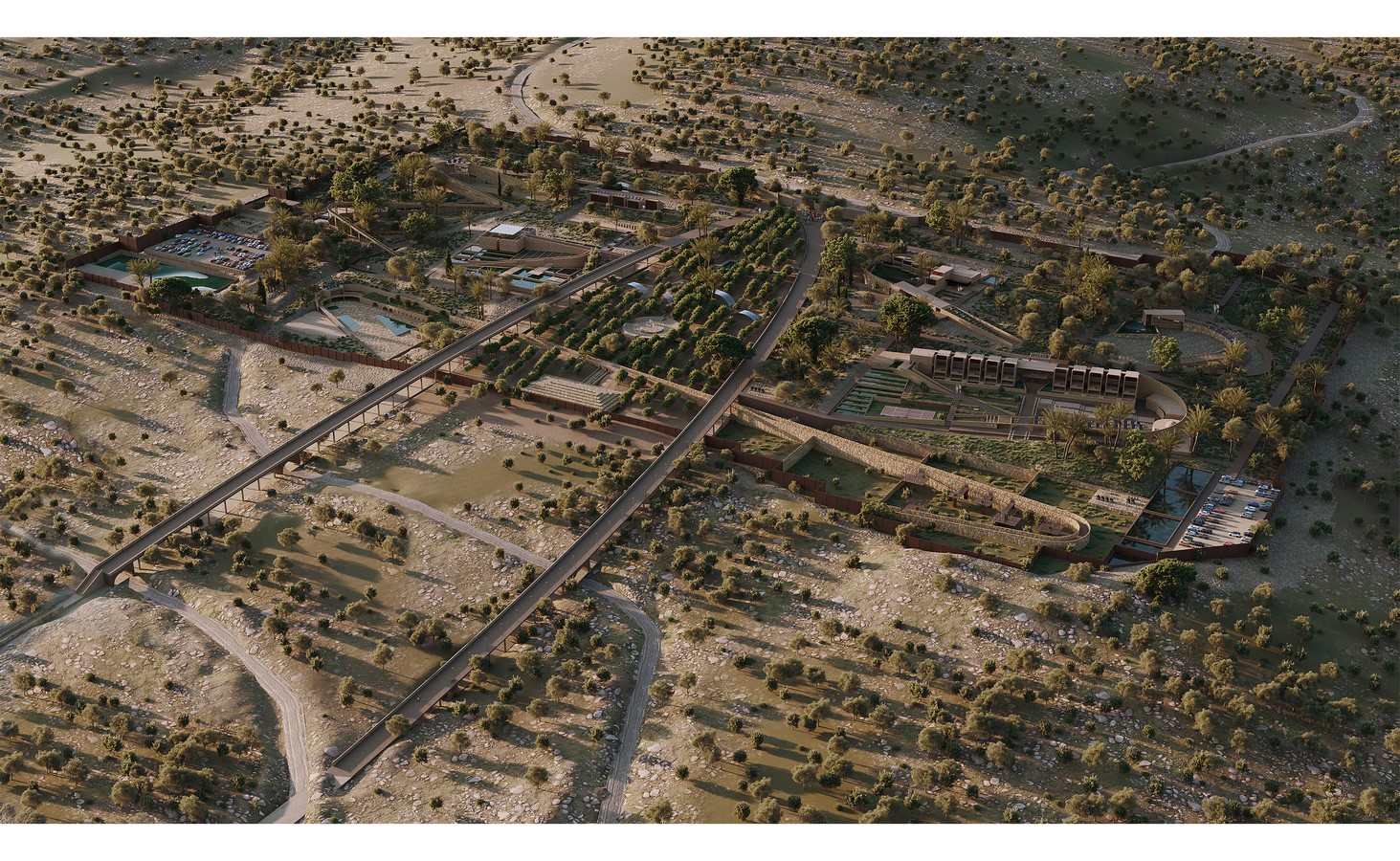
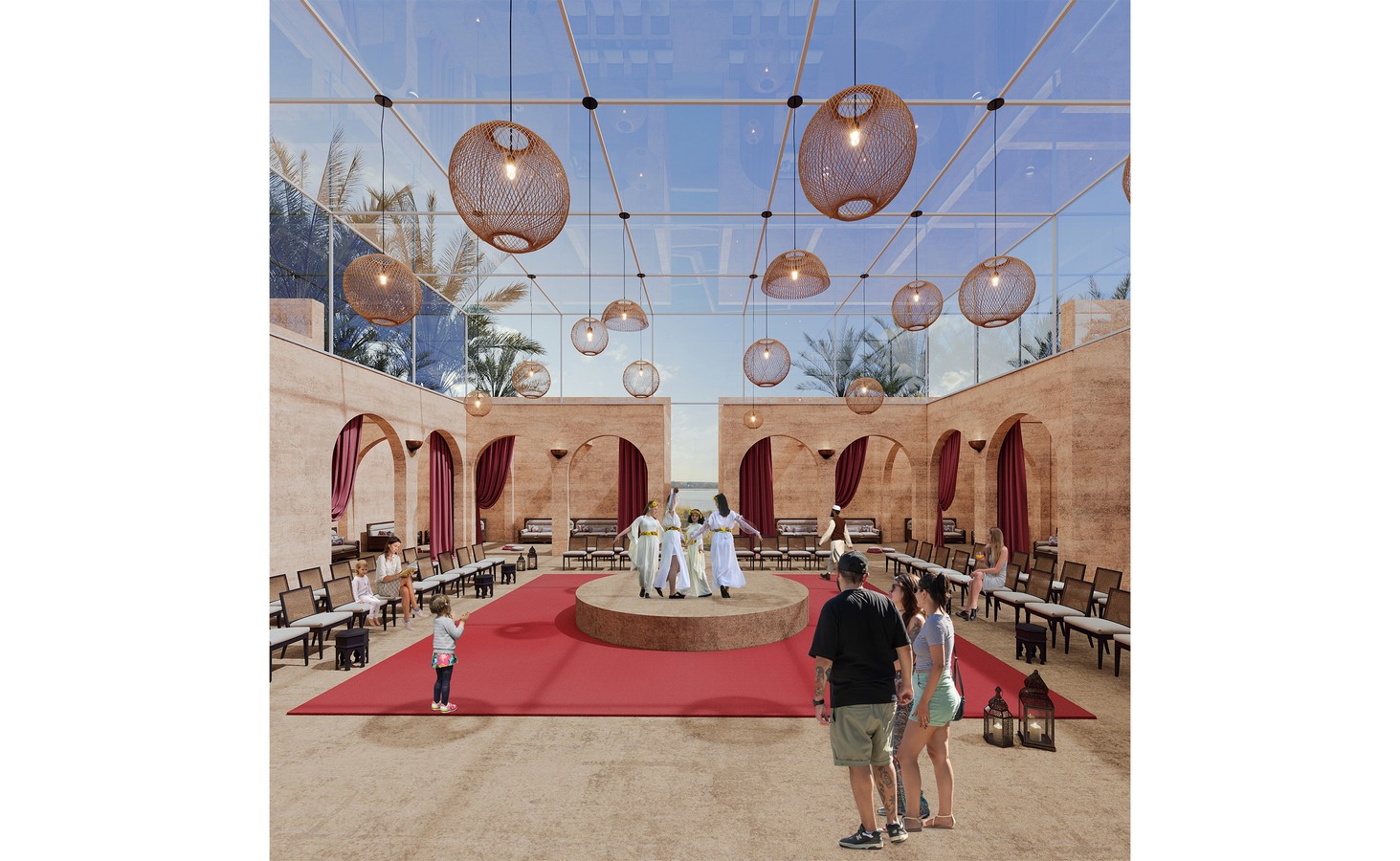
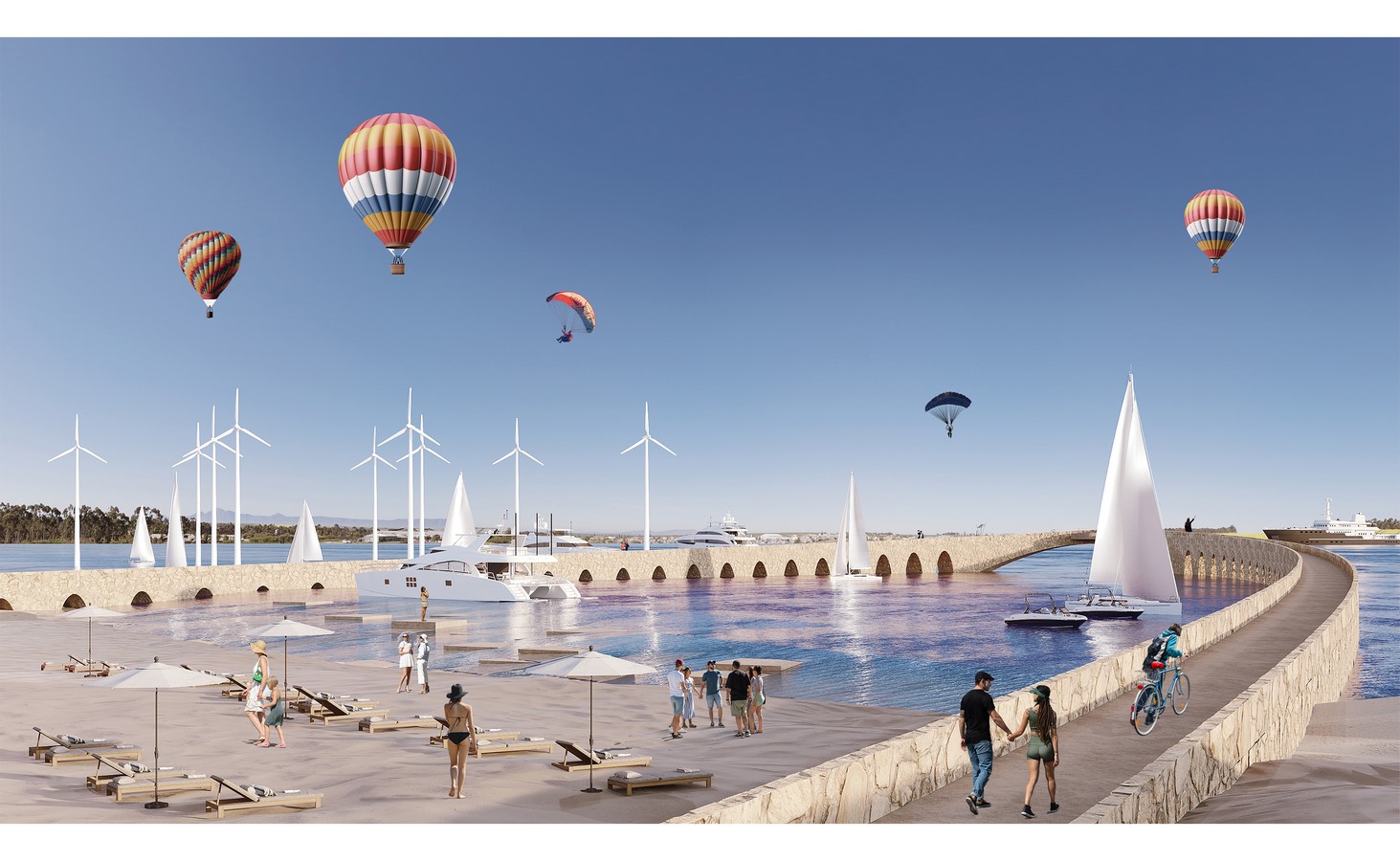
The masterplan follows a modular 25×25-meter grid, allowing for spatial flexibility and rhythmic repetition. The site is bisected by a central east-west water channel, aligned with the slope, and defines the project’s main axis. A sculptural oval promenade encircles the central garden and extends to the sea, creating a pedestrian and equestrian bridge with upper and lower levels. The lower level hosts recreational amenities—diving, surfing, ballooning, restaurants, and gathering spaces—while the upper level connects key circulation paths.The site is divided into northern (private) and southern (public) zones.The north accommodates residential units, guest suites, wellness and spa areas, a swimming pool, administrative offices, and environmental zones, all linked by shaded walkways and green buffers for privacy.The south includes educational spaces, art galleries, sports facilities, stables, event venues, composting areas, and parking.A vertical connector links these zones with shared open spaces: botanical gardens, animal shelters, and gathering areas.
Architectural Language and Cultural Expression
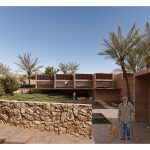
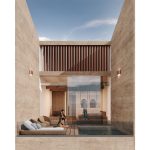
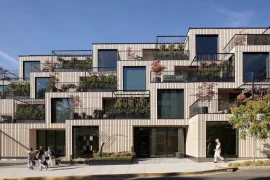
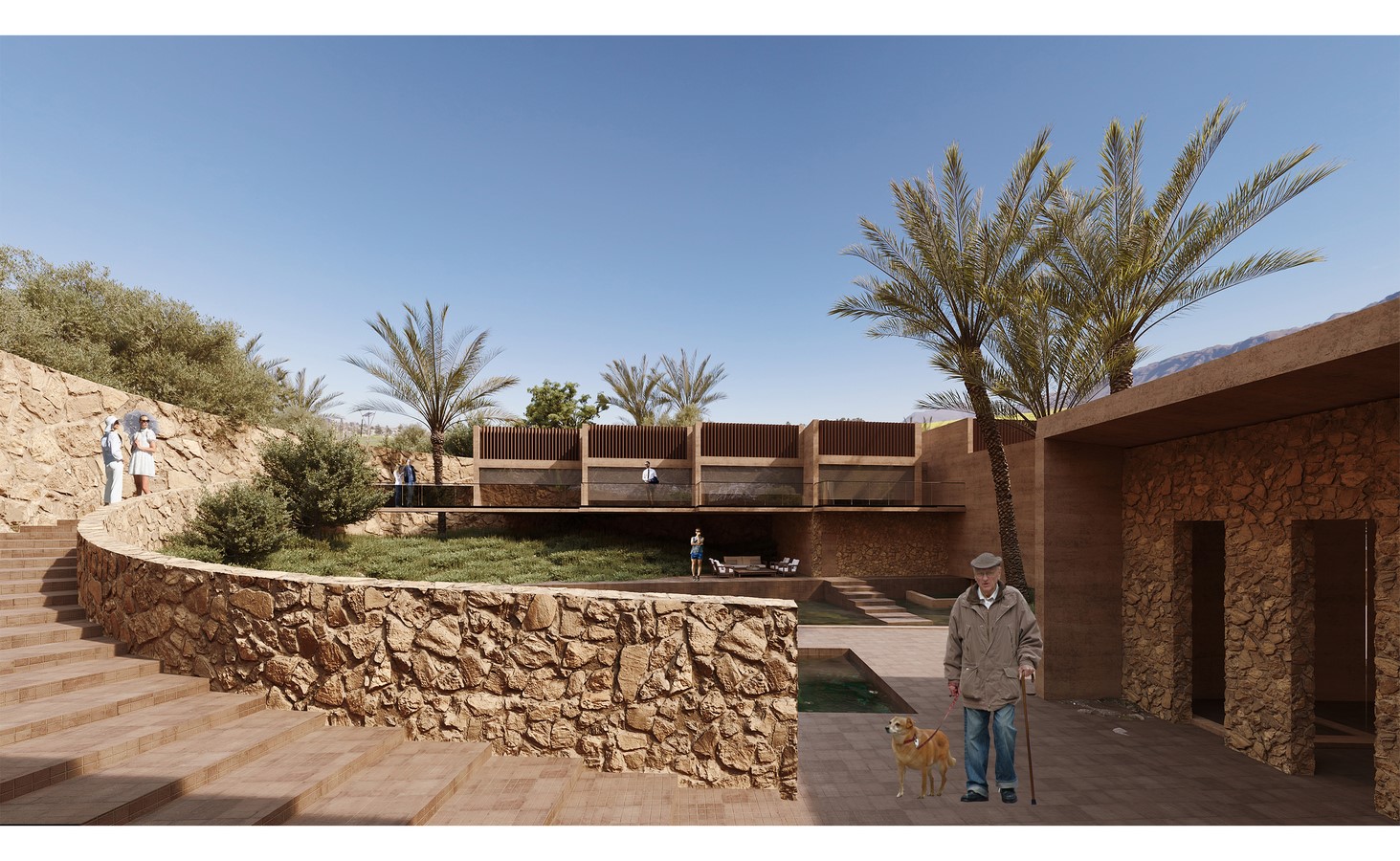
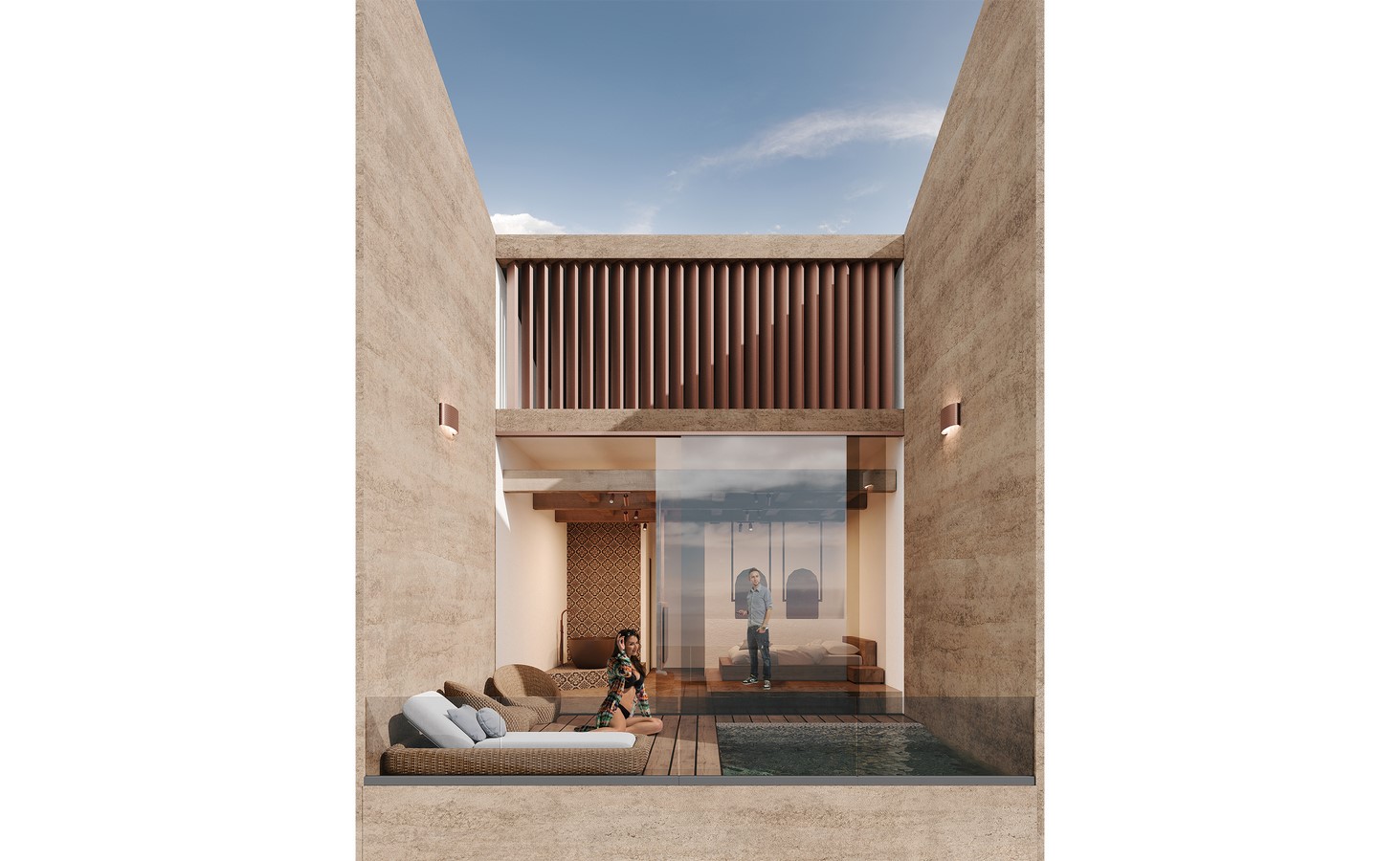
Drawing inspiration from traditional Dar and Riad typologies, buildings spiral around inward-facing courtyards that offer privacy, shade, and microclimatic comfort. At the heart of the courtyard lies a pool surrounded by lush greenery, Moroccan tiles, earthen floors, and textiles—forming a serene, interactive Moroccan garden.
Materiality and Construction
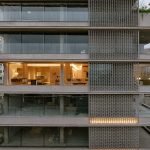
The architecture is constructed primarily from rammed earth, a sustainable and locally sourced material that responds to environmental and economic considerations. Rammed earth walls are complemented by wooden beams, concrete slabs, brick and tile flooring, and zellij mosaics—each material steeped in Moroccan heritage.Zellij tiles, in particular, offer symbolic meaning. Moroccan ceramics reflect a deep connection to the earth, crafted through generational artistry. From intricately painted tajines to vibrant mosaics, each piece captures harmony, color, and culture.Large operable glass panels dissolve the boundary between indoor and outdoor space. Wind towers and evaporative cooling systems ensure natural ventilation. Green roofs, solar panels, and planted terraces improve energy performance and self-sufficiency.
Ecological and Energy Strategy
Water management is inspired by traditional Khettara and Qanat systems, with gravity-fed canals distributing water from a central reservoir to gardens and buildings.Fruit orchards (olives, citrus) and vegetable greenhouses line the site’s stepped landscape, benefiting from Sicilian and Persian irrigation systems.A pond at the intersection of the north-south axis enables water collection and redistribution.Greywater reuse, composting, and on-site septic treatment support agricultural and landscape irrigation.Wind turbines near the coastline generate renewable energy, complemented by solar arrays on building roofs.Bicycle lanes and electric vehicle stations support low-carbon mobility.
Inclusivity and Accessibility
The design incorporates universal accessibility with ramps, separate access for public and private zones, and inclusive public spaces. Each building includes integrated service areas to reduce transport needs and optimize operation.
Wellness and Tradition
Inspired by traditional Moroccan hammams, wellness spaces feature underfloor heating, steam rooms, and natural materials to provide holistic care. These spaces are sanctuaries for relaxation and cultural continuity.