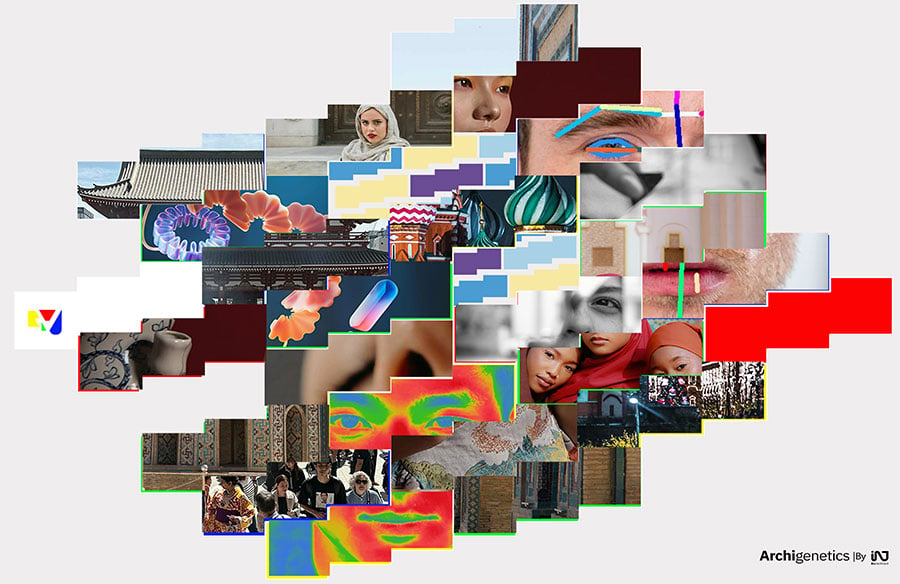
In an era where architecture is often reduced to algorithms, materials, and metrics, a new theory has emerged—provocative, poetic, and deeply human. Ibrahim Nawaf Joharji, Principal Architect at INJ Architects, presents Archi-genetics: a bold architectural theory that claims architecture is not just cultural or functional, but biological.
Joharji began shaping this theory in 2010, inspired by a striking pattern he noticed during his travels: cities seemed to reflect the people who built them. Chinese cities exuded Chinese character, Japanese homes mirrored the calm precision of Japanese faces, and in Arabia, traditional buildings spoke the language of their people. This wasn’t a coincidence. It was a deeper reflection—a genetic mirror.
The catalyst was unexpected. A humorous photo book titled “Do You Look Like Your Dog?” showcased images of people with pets that looked uncannily similar to them. Joharji thought: If dogs can resemble their owners, why can’t architecture resemble its creators? This question sparked over a decade of research.
Through visual analysis, cultural exploration, and philosophical inquiry, Joharji developed the idea that our aesthetic preferences are not random or universal. They are inherited. We are instinctively drawn to shapes, materials, and spatial experiences that reflect our own genetic identity. The built environment, in this view, becomes an extension of our biological essence.
Archi-genetics draws heavily from Firasa – the ancient Arab science of ethno-perception, which connects facial features and personality traits. Joharji revives this cultural lens and applies it to contemporary architecture, suggesting that cities and structures are collective portraits of their people. According to this theory, what we perceive as beautiful is culturally and genetically coded.
While some previous architectural concepts have touched on ideas like “architectural DNA” or “genotypic design,” none have connected the aesthetic experience of space so directly with human biology and inherited taste. That’s where Archi-genetics stands apart.
To validate the originality of this theory, Joharji’s team submitted the concept for AI-based review and semantic analysis. The results confirmed its uniqueness and theoretical contribution. The AI analysis emphasized that Archi-genetics offers a fresh synthesis that bridges design theory, cognitive aesthetics, and cultural anthropology in ways rarely seen in architectural discourse.
Already, elements of this theory can be seen in the design philosophy of INJ Architects, where the interplay between local identity, material honesty, and contextual adaptation becomes a core value. The firm’s recent projects reflect an awareness of place that transcends sustainability and functionality, speaking instead to a deeper psychological and genetic resonance.
Joharji encapsulates this vision with a phrase that may one day become as famous as “Less is More”:
“We Build What We Are.”
This is not just a slogan; it is a worldview. It suggests that architecture is not a canvas upon which identity is painted, but rather the very expression of identity itself—a materialized mirror of who we are, where we come from, and what we pass on.
In a time when global architecture often chases sameness, Archi-genetics proposes a radical return to the individual, the tribal, the inherited. It demands a reevaluation of what we consider beautiful, and why.
The full theory and case study can be read here: Archi-genetics on INJ Architects.
As the architectural world continues to search for meaning beyond form and function, theories like Archi-genetics offer a timely—and perhaps timeless—reminder: that design begins not just with context, but with us.