
AI video localization is revolutionizing how global brands are breaking language barriers in 2025. With AI tools for video translation and cultural adaptation, brands can extend their global reach and enhance viewer engagement. This article examines the technologies driving this transformation and showcases successful case studies on AI video localization, highlighting how global brands are overcoming language barriers in 2025.
Key Takeaways
- AI video localization streamlines the adaptation of content for diverse languages and cultures, improving engagement and user experience while ensuring quality and consistency.
- Key technologies such as automated translation, dubbing, and real-time translation tools enhance brand communication and expand global reach, addressing challenges in synchronization and cultural relevance.
- Maintaining cultural sensitivity and collaboration between AI and human reviewers is crucial for ensuring accurate and relatable localized content that fosters emotional connections with global audiences.
The Power of AI in Video Localization
AI-driven video localization is reshaping how brands connect with audiences worldwide. AI tools adapt video content for various languages, regions, and cultural nuances with remarkable efficiency through automated translation, dubbing, and editing tasks. This transformation not only simplifies the localization process but also ensures consistency and quality, enabling businesses to reach diverse audiences more effectively.
The impact of AI-powered video localization extends beyond mere translation and includes:
- Enhancing personalization through tailored multilingual messaging and content creation
- Making localization accessible even to users with minimal technical skills
- Improving user experience with engaging content in native languages, leading to higher engagement rates and increased conversion
- Maintaining accurate and culturally appropriate translations through natural language processing, which is crucial for effective localization
Advanced AI tools enable businesses to break down linguistic barriers and connect with global audiences more efficiently. Key innovations, such as multilingual systems and real-time translation tools, are further enhancing the creative localization landscape, enabling the delivery of a consistent brand message across multiple languages using a single AI-driven language tool. Additionally, these advancements enable teams to communicate seamlessly in multiple languages.
Automated Translation and Dubbing
Automated translations and dubbing are game-changers in the video localization strategy. Key aspects include:
- AI technologies, such as machine translation, automate the translation of scripts, subtitles, and text, significantly accelerating the localization process.
- Tools like Rask.ai can translate video and audio into over 130 languages, showcasing the potential of AI to reach wider audiences effortlessly.
- The use of text-to-speech synthesis enables natural-sounding voice-overs, thereby enhancing the quality of multilingual content.
AI also excels in automating the dubbing process, including voice cloning and lip-sync, which are essential for maintaining the authenticity of localized videos. This automation not only reduces the time required for translation and adaptation but also ensures that the translated speech matches the original video seamlessly.
The versatility of modern dubbing solutions, such as Rask.ai, which supports both subtitle and voiceover localization, highlights the efficiency and effectiveness of AI in breaking language barriers.
Lip-Sync Technology Enhancing Viewer Experience
Advanced lip-sync technology plays a pivotal role in enhancing viewer engagement by ensuring that the translated audio perfectly matches the original video. This technology adapts to different languages while maintaining natural speech patterns, making the content feel authentic and relatable.
For instance, Rask AI’s Lip-Sync feature provides a pixel-perfect viewing experience by aligning the translated audio with the visual elements of the video. Traditional dubbing methods often lead to a loss of brand voice and personality, negatively impacting viewer engagement.
Voice Cloning for Authentic Communication
Voice cloning technology enables brands to communicate in their original voice across multiple languages, preserving emotional tones and fostering authentic connections with their audiences. The VoiceClone feature, for example, enables users to:
- Replicate their voice in 30 different languages
- Maintain the emotional resonance of dialogues in localized videos
- Ensure relatability in communications across diverse audiences
This capability is crucial for maintaining the emotional resonance and relatability of dialogues in localized videos featuring the same person and spoken content.
Advanced AI preserves original voice characteristics, helping brands maintain speaker authenticity across languages with advanced ai features.
Real-Time Translation Transforming Global Communication
 In our increasingly interconnected world, real-time translation is revolutionizing global communication by enabling seamless interactions across languages. This technology is propelling video conferencing platforms to the forefront of the global market, opening boundless possibilities for international collaboration. The primary benefit of real-time translation is its ability to facilitate instantaneous communication, breaking down language barriers and improving effective communication in international business meetings.
As technology continues to advance, real-time translation is increasingly being integrated into video communication platforms. This feature is now becoming a standard offering among major solutions in the market. Advanced AI language models are at the core of this transformation, enabling platforms like Google Meet to incorporate AI dubbing features, thereby enhancing real-time translation capabilities. These advancements address communication challenges and foster global collaboration by providing accurate and contextually relevant translations in real-time.
The integration of real-time translation tools into video conferencing platforms significantly limits the communication challenges typically faced during international meetings. This technology not only enhances global reach but also ensures linguistic and cultural accuracy, making it easier for businesses to engage with diverse audiences worldwide.
Advancements in Real-Time Speech-to-Speech Translation
Recent advancements in real-time speech-to-speech translation include:
- Significant improvements in accuracy and context understanding of translations.
- The development of modern machine translation models, such as Multimodal Machine Translation (MMT), enables the understanding and processing of text, images, audio, and video for more accurate and contextually relevant translations.
- AI solutions like Wordly AI and Interprefy are gaining traction due to their efficiency in facilitating real-time translations during international conferences and meetings.
However, AI translation still faces challenges in handling cultural nuances and idiomatic expressions, which can affect accuracy. While AI translation accuracy is approaching that of human translators, there are still gaps that need to be addressed to ensure complete linguistic and cultural accuracy.
Nonetheless, AI-powered localization tools have shortened production cycles, allowing brands to respond quickly to market demands and adapt their content swiftly.
Wearable Devices Breaking Language Barriers
Wearable technology, such as smart glasses and earbuds, is revolutionizing communication by providing instant translation capabilities. These devices enable users to engage in conversations without language barriers, making it easier to communicate with people from diverse linguistic backgrounds.
Wearable devices, with integrated real-time translation features, are breaking language barriers and enhancing global communication in today’s interconnected world, fostering more inclusive and accessible interactions.
AI Agents in Customer Support
AI agents are transforming customer support by providing real-time assistance and multilingual support, significantly improving accessibility for diverse audiences. These AI-powered agents ensure quick and accurate responses to customer inquiries, enhancing user experience and engagement.
Features like real-time support and document translation make it easier for businesses to cater to multilingual users, demonstrating the effectiveness of AI solutions in enhancing customer support.
Enhancing Cultural Relevance with AI
 Tailoring content to demonstrate respect for different cultures and languages is a cornerstone of effective video localization. AI localization enhances viewer engagement by providing content in preferred languages, fostering a stronger emotional connection with audiences. Staying updated with language and cultural trends ensures that video localization remains relevant and engaging, further enhancing user experience.
Natural Language Processing (NLP) plays a crucial role in identifying potential cultural sensitivities, allowing brands to create content that resonates authentically with local audiences. AI localization tools can adapt video content by modifying audio and visual components, ensuring that the content aligns with local cultural perceptions.
Additionally, maintaining ethical standards in AI practices ensures that user personal data is handled responsibly and with transparency, building trust and credibility. Inclusive translation fosters trust, enhances conversions, and meets accessibility standards, underscoring the importance of considering cultural context and sensitivity in video localization.
By leveraging AI technologies, brands can ensure that their content is not only linguistically accurate but also culturally relevant, enhancing user engagement and overall audience engagement.
Adapting Visual Elements and Scripts
Adapting visual elements and scripts to align with local cultural perceptions is essential for effective communication and viewer engagement. AI tools help ensure that adapting content, such as colors and symbols, is culturally appropriate and avoids confusion, ensuring cultural sensitivity.
Automated features in AI localization help maintain visual consistency and ensure that terminology and tone remain consistent across various localized video outputs. Human review stages further enhance the preservation of language nuances, tone, and emotion in AI-generated video content.
Ensuring Accurate Subtitles and Closed Captions
Accurate subtitles and closed captions are crucial for effective communication and engagement with diverse global audiences. AI tools significantly enhance the speed and accuracy of subtitle generation, making it easier for brands to provide multiple language options simultaneously.
It is essential to adapt scripts to ensure that phrases, idioms, and cultural references are relevant to local audiences. Precise and culturally relevant subtitles and closed captions enable brands to break language barriers and foster a deeper understanding and increased viewer engagement.
Human Oversight for Quality Assurance
Incorporating human oversight in the localization process ensures cultural relevance and accuracy, enhancing the quality of AI-generated content. Human experts add valuable cultural insights and creative input, ensuring that culturally nuanced content maintains its intended impact.
Implementing robust quality control processes includes:
- Human review stages
- Improving translation accuracy
- Ensuring contextual appropriateness
- Validating the accuracy and cultural relevance of localized content.
Benefits of AI-Powered Video Localization for Brands
 AI-powered video localization offers numerous benefits for brands, including cost-effectiveness, speed, expanded global reach, and consistency across multiple languages. By leveraging AI technologies, brands can significantly reduce the time and costs associated with video translation and adaptation, allowing quicker market entry and broader audience reach. This efficiency enables brands to scale their video content internationally without a substantial financial burden.
Expanding global reach is another significant benefit of AI localization. Localized videos enable brands to access previously untapped markets, thereby enhancing their global footprint and fostering viewer loyalty. For instance, VR World experienced a notable increase in user visits and retention through the implementation of AI-driven localization tailored for the Japanese audience. Providing content that resonates with local audiences enables brands to enhance engagement and foster stronger connections with viewers worldwide.
Maintaining consistency across multiple languages is crucial for preserving brand integrity and reducing human error. AI tools ensure consistent quality and messaging across different language versions, making it easier for brands to manage multilingual content. Human oversight plays a vital role in maintaining authenticity and quality, further enhancing the effectiveness of AI-driven localization efforts.
Cost-Effectiveness and Speed
AI localization tools significantly reduce the time and costs associated with translating and adapting videos. AI technologies automate the localization process, eliminating the need for multiple actors and studio rentals, thereby resulting in substantial cost savings.
Businesses that adopt AI tools can:
- Achieve quicker market entry for global campaigns
- Reduce overall expenses
- Ensure high-quality content delivery
- Scale large projects with multiple languages and regions, enhancing cost-effectiveness and speed of AI-powered localization.
Expanding Global Reach
AI technology enables brands to identify suitable international markets for localization based on various analytical metrics. Localized videos enable brands to access new markets, expand their global market footprint, and enhance viewer loyalty.
For example, VR World’s implementation of Rask AI’s Japanese localization resulted in a 22% increase in visits and a 40% rise in returning users, demonstrating the potential of AI to enhance global reach and engagement.
Consistency Across Multiple Languages
AI technologies ensure consistent quality and messaging across different languages, which is crucial for maintaining brand integrity and minimizing human error. Tools like Rask.ai utilize intelligent databases to maintain translation consistency and alignment with the original messaging and tone.
Human oversight plays a crucial role in enhancing the quality and authenticity of localized content, ensuring that it resonates well with international, global, and diverse audiences.
Key Technologies Driving AI Video Localization
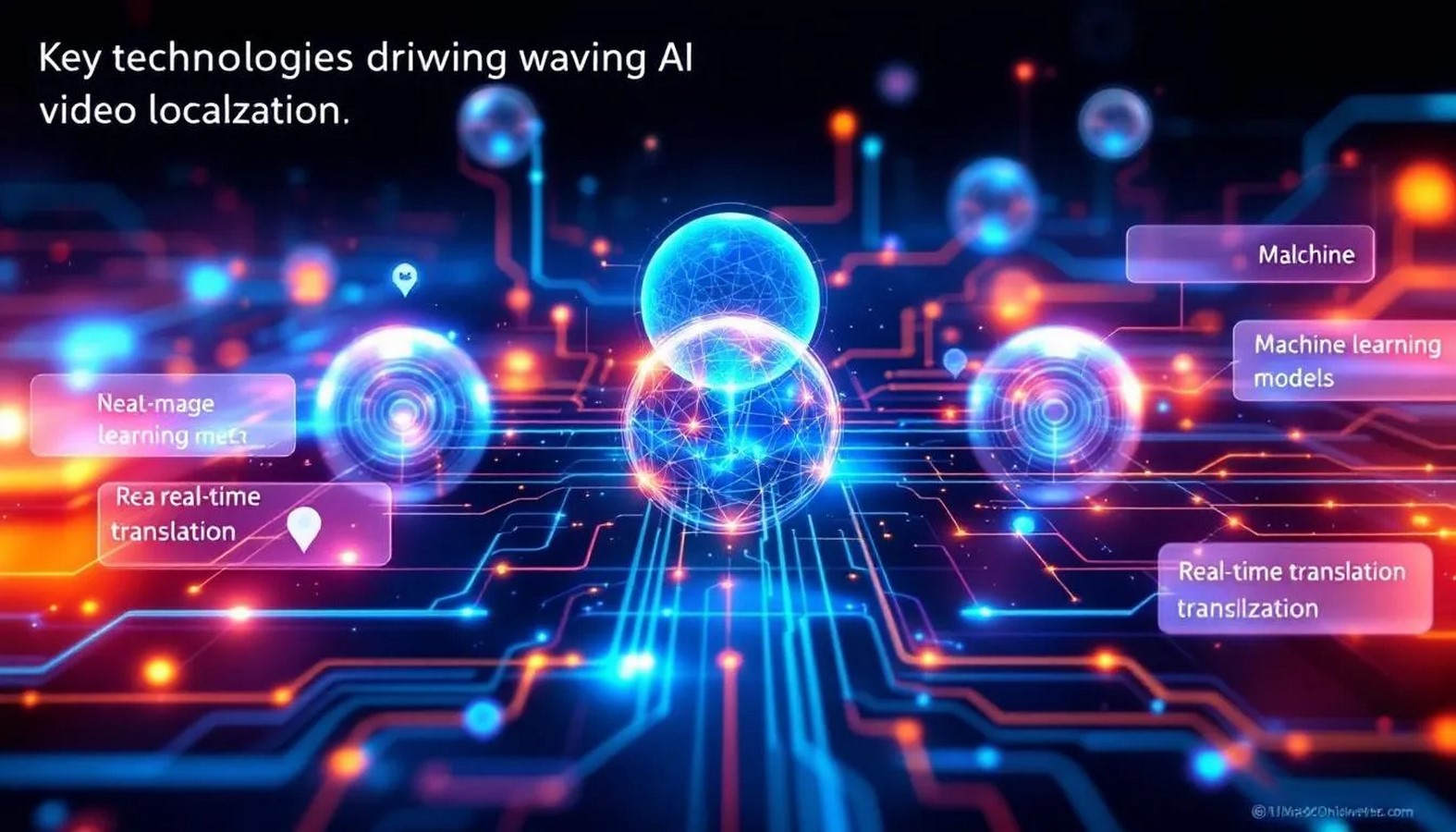 Several key technologies are driving the advancements in AI video localization, including:
- Machine learning algorithms
- AI avatars
- Text-to-speech synthesis
- Ethical AI practices
These technologies are reshaping the localization landscape by providing more accurate, efficient, and culturally relevant solutions. AI tools often integrate seamlessly with content management systems and video editing tools, facilitating collaboration and version control, making the localization process more streamlined and effective.
Machine learning and AI technologies enhance localization in several ways:
- Machine learning algorithms, particularly deep learning techniques, improve the accuracy and efficiency of speech recognition systems.
- Neural machine translation models provide contextual translations by analyzing entire sentences, enhancing the overall localization process.
- AI avatars and text-to-speech technologies create engaging, localized characters and audio, improving viewer relatability and engagement.
- These technologies eliminate the need for hiring actors, making the localization process more cost-effective and scalable.
Ethical AI practices are essential for ensuring responsible data use and transparency in video localization. Key aspects include:
- Choosing AI tools that prioritize data privacy and comply with regulations like GDPR.
- Building trust and credibility with users through responsible practices.
- Using tools like Rask AI, which integrates C2PA certification for media transparency and authenticity, demonstrates a commitment to ethical AI practices.
Machine Learning Algorithms
Deep learning techniques have revolutionized the accuracy and efficiency of speech recognition systems, significantly enhancing the video localization process. Modern AI systems utilize neural machine translation to provide contextual translations by analyzing entire sentences, resulting in more accurate and contextually relevant content.
Rask.ai’s multi-speaker detection capability further exemplifies the advancements in machine learning algorithms, making it easier to manage complex video content.
AI Avatars and Text-to-Speech Synthesis
AI avatars and text-to-speech synthesis technologies are transforming the localization process by creating engaging, localized characters and natural-sounding audio through generative ai. These technologies adapt to different cultural contexts, enhancing viewer relatability and engagement.
AI voice synthesis is increasingly capable of producing audio that closely resembles human speech, further improving the quality of localized videos and artificial intelligence. Text-to-video conversion tools streamline the localization process, making it more efficient and scalable.
Ethical AI Practices
Ethical AI practices are crucial for responsible data use and maintaining transparency in video localization. Ensuring compliance with data privacy regulations, such as GDPR, is essential for building user trust and avoiding potential fines and reputational damage.
Choosing AI tools that prioritize ethical practices and data privacy is recommended to uphold legal standards and user trust. Rask AI’s integration of C2PA certification showcases a commitment to media transparency and authenticity.
Overcoming Challenges in AI Video Localization
AI video localization faces several significant challenges that can hinder its effectiveness, including maintaining translation accuracy, addressing synchronization issues, and ensuring data privacy. Complex workflow management is required for multi-language content, necessitating thorough planning from initial scripting to final quality checks. Quality inconsistency between different language versions can affect user experience, making it essential to implement robust quality control processes. The resource-intensive nature of the localization process often necessitates the involvement of multiple vendors and specialists to manage.
Maintaining translation accuracy is a significant challenge, but the future of translation lies in human-AI collaboration. Incorporating human review at various stages of translation can significantly enhance accuracy and context-awareness. Regular localization testing helps identify issues like mistranslations and cultural inaccuracies before content launch, ensuring high-quality and culturally appropriate translations.
Synchronization issues, such as audio, subtitles, and text falling out of sync, are common in AI-generated content. Advanced lip-sync technology helps address these challenges by synchronizing AI dialogue with avatars’ lip movements for a natural appearance. Regular testing is recommended to catch timing issues and ensure a seamless viewing experience.
Data privacy concerns are also paramount, requiring compliance with regulations and responsible data use to maintain user trust and avoid legal repercussions.
Maintaining Translation Accuracy
The future of translation technology lies in human-AI collaboration, ensuring more accurate and context-aware translations. Incorporating human review at various stages of the language translation process can significantly enhance the accuracy and cultural relevance of localized content.
Regular localization testing helps identify and address issues like mistranslations and cultural inaccuracies before the content is launched, ensuring a high-quality final product.
Synchronization Issues
AI-generated content often faces synchronization challenges, such as audio, subtitles, and text falling out of sync. Advanced lip-sync technology helps address these issues by synchronizing AI dialogue with avatars’ lip movements for a natural appearance, enhancing the viewer experience.
Regular testing is a recommended practice to catch and rectify timing issues, ensuring a seamless and engaging viewing experience.
Data Privacy Concerns
Data privacy and compliance with regulations are crucial when utilizing AI platforms for video localization. Ensuring responsible data use and adhering to privacy regulations, such as GDPR, is essential for maintaining user trust and avoiding potential fines and reputational damage.
Choosing AI tools that prioritize data privacy and ethical practices is recommended to uphold legal standards and build credibility with users.
Case Studies: Success Stories of AI Video Localization
Real-world case studies demonstrate how AI video localization can significantly enhance brand reach and engagement in diverse markets. VR World, Fisiolution, and UpPro School are prime examples of successful AI-driven localization strategies.
VR World experienced a notable increase in user visits and retention through the implementation of AI-driven localization tailored for the Japanese audience. Using Rask AI’s Japanese localization, VR World achieved a 22% increase in visits and a 40% rise in returning users, showcasing AI’s potential to enhance global reach and engagement.
Fisiolution boosted its US engagement by 15% using Rask AI’s dubbing solutions. The company leveraged AI technologies to streamline its localization process, resulting in enhanced viewer engagement and effectiveness of localized content. These results underscore the effectiveness of AI technology in enhancing viewer engagement for localized content.
UpPro School utilized Rask AI to redub its entire course library in multiple languages, maintaining originality in Ukrainian through VoiceClone technology. This approach enabled UpPro School to enhance accessibility while preserving the quality and authenticity of its course content across various languages. The combination of Rask AI and VoiceClone technology exemplifies the effectiveness of AI in providing high-quality, localized educational content.
VR World
VR World significantly enhanced user engagement and brand loyalty by implementing AI-driven localization strategies tailored for the Japanese audience. By leveraging Rask AI’s Japanese localization, VR World achieved a 22% increase in visits and a 40% rise in returning users, demonstrating the effectiveness of AI in overcoming language barriers and expanding its global reach.
Fisiolution
Fisiolution boosted its US engagement by 15% using Rask AI’s dubbing solutions. The company leveraged AI technologies to streamline its localization process, resulting in enhanced viewer engagement and effectiveness of localized content.
These results underscore the value proposition of AI-powered translation technology in providing effective translation solutions.
UpPro School
UpPro School successfully redubbed its entire course library with Rask AI, maintaining originality in Ukrainian through VoiceClone technology. This approach enabled UpPro School to enhance accessibility while preserving the quality and authenticity of its course content across various languages.
The combination of Rask AI and VoiceClone technology exemplifies the effectiveness of AI in providing high-quality, localized educational content.
Guide to Implementing AI Video Localization
Implementing AI video localization requires thoughtful planning and execution across several stages:
- Scripting to post-production testing
- Utilizing user-friendly platforms to alleviate technical barriers, making it easier for brands to adopt AI localization solutions
- Employing AI-driven dubbing to allow brands to make real-time updates to scripts, enhancing the agility of the localization process
Choosing the right AI tools is crucial for ensuring that the content resonates with global audiences. Key considerations include ensuring that the chosen platform meets specific project needs and audience expectations. An effective AI localization tool should offer features like voiceovers, text-to-speech, and AI-generated avatars in multiple languages.
Integrating AI-powered localization solutions into existing workflows offers several advantages:
- Simplifies the video localization process, enabling brands to maintain consistency in reaching diverse audiences.
- Automates time-consuming tasks, allowing teams to focus on strategic decisions and creative aspects rather than manual processes.
- Enables comprehensive testing across various devices and platforms to ensure localized videos perform well in different environments.
These factors lead to a more polished and effective final product.
Choosing the Right AI Tools
Selecting the right AI platform for video localization is crucial. This choice helps ensure that the content connects with audiences worldwide. Key considerations include ensuring that the chosen platform meets specific project needs and audience expectations.
An effective AI localization tool should offer features like voiceovers, text-to-speech, and AI-generated avatars in multiple languages, providing a comprehensive solution for diverse localization needs.
Integrating AI into Existing Workflows
Integrating AI-powered localization solutions streamlines the video localization process, enabling brands to maintain consistency in reaching diverse audiences. AI tools can automate time-consuming tasks, allowing teams to focus on strategic decisions and creative aspects rather than manual processes.
The implementation of AI in workflows enables faster turnaround times for content localization, leading to improved efficiency and reduced costs for global brands.
Testing and Quality Control
Comprehensive testing across various devices and platforms is crucial to ensure that localized videos perform optimally in diverse environments. Thorough testing helps identify any issues early, leading to a more polished and effective final product.
Ensuring high-quality standards through rigorous quality control processes enhances the overall viewer experience and effectiveness of localized content.
Summary
In conclusion, AI video localization is a transformative technology that enables brands to break language barriers and connect with global audiences more effectively. By leveraging advanced AI tools, businesses can achieve cost-effective, efficient, and culturally relevant localization, enhancing user engagement and expanding their global reach. The integration of machine learning algorithms, AI avatars, text-to-speech synthesis, and ethical AI practices ensures the creation of high-quality, consistent, and authentic localized content. As we move forward, the collaboration between human expertise and AI technologies will continue to drive advancements in video localization, empowering brands to thrive in today’s interconnected world.
Frequently Asked Questions
What is Rask AI?
Rask AI is an advanced tool designed for video localization and dubbing, providing intelligent solutions for scaling video content effectively.
How many languages can Rask AI automatically translate video and audio into?
Rask AI can automatically translate video and audio into over 130 languages. This extensive capability enhances its utility for diverse linguistic needs.
What feature does Rask AI use to match translated audio for a better viewing experience?
Rask AI employs a Lip-Sync feature to ensure that translated audio aligns precisely with the visual elements, enhancing the viewing experience.
How did Ian Wharton benefit from using Rask AI?
Ian Wharton significantly reduced his localization costs by £ 10- 12k through the use of Rask AI. This financial benefit highlights the platform’s effectiveness in managing expenses.
What percentage increase in US engagement did Fisiolution achieve by using Rask AI?
Fisiolution achieved a 15% increase in US engagement by utilizing Rask AI’s dubbing solutions.