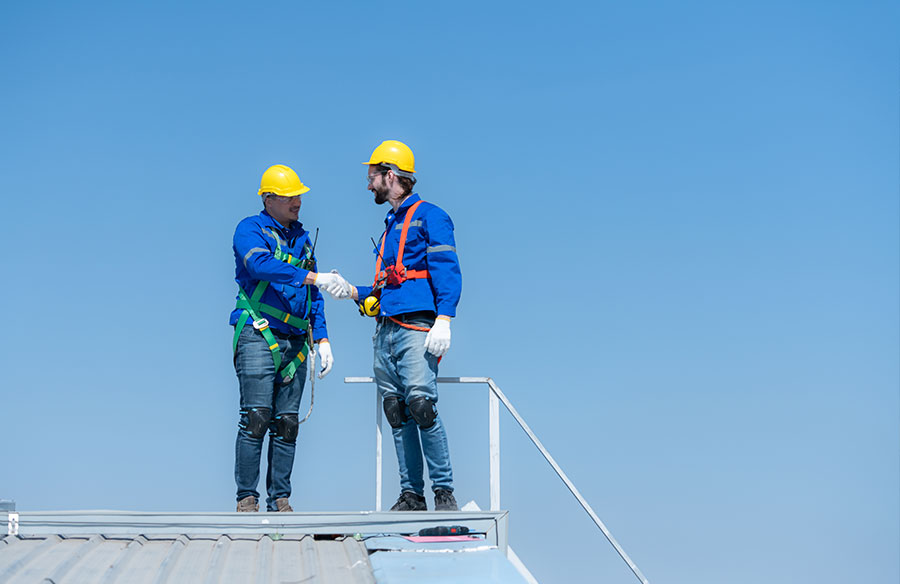
Imagine working on a roof without the right safety gear. One slip could cause you to fall badly. Roof work is very dangerous, so making sure everyone is safe is essential to avoid crashes and injuries. For every roofer to stay safe and sound on the job, this blog will talk about five important safety tips.
1. Use of Personal Protective Equipment (PPE)
Hard hats protect the head against things that fall on it. Putting on gloves protects your hands from sharp edges and makes it easier to hold things. You can keep your balance on damp or uneven ground if your shoes don’t slip.
Before using personal protective equipment (PPE), it’s a sensible idea to check it for any damage that could cause it to break. Safety comes first, even if it takes longer to put on all the gear.
2. Proper Ladder Setup and Use
It is possible to access the roof by using ladders; however, they need to be put up correctly. So that the stairs don’t sway, place them on a surface that is both stable and flat. The ladder’s base should be about one foot from the wall for every four feet of height.
Make sure the top of the ladder is held down so that it does not slip. Be careful and face the step with both hands on it as you ascend. You should not climb with large tools on your back; instead, you should use a rope or a hoist.
3. Installing Guardrails and Edge Protection
Adding strong guardrails to the work area helps keep you from falling. They keep workers from getting too close to dangerous areas by acting like a fence.
Protect the edges of the roof in a way that fits its shape and size. Often, check the rails to make sure they stay strong. Guardrails keep you safe even when they aren’t paying attention.
4. Use of Fall Arrest Systems
When workers slip and fall, fall arrest devices keep them from hitting the ground. Hooks or lifelines on the roof are used to connect harnesses to them. These systems swiftly capture falls, thereby reducing the risk of injury.
Workers wear belts that are snug but not too tight. They need to be strong and set up in the right places. These methods demonstrate safety.
5. Communication and Emergency Preparedness
When workers use radios or hand signals to talk, they don’t have to shout over the tools or the wind. There should be clear plans for what to do if someone hurts themselves or falls.
It is very helpful to have a first aid kit and know the emergency phone numbers. Before you go to work, everyone should know what to do in case of an incident. Being ready means getting help faster and having safer roofing days.
Ensure Successful Roof Installation
Making sure everyone is safe at heights while installing a roof is essential to keep everyone safe and avoid costly accidents. You can make the installation process safer and go more smoothly by using the right tools, following the right steps, and being ready for situations.
For trusted guidance and quality roof safety solutions, always rely on professional resources. Prioritize safety at every stage to ensure a successful roof repair and your peace of mind.