
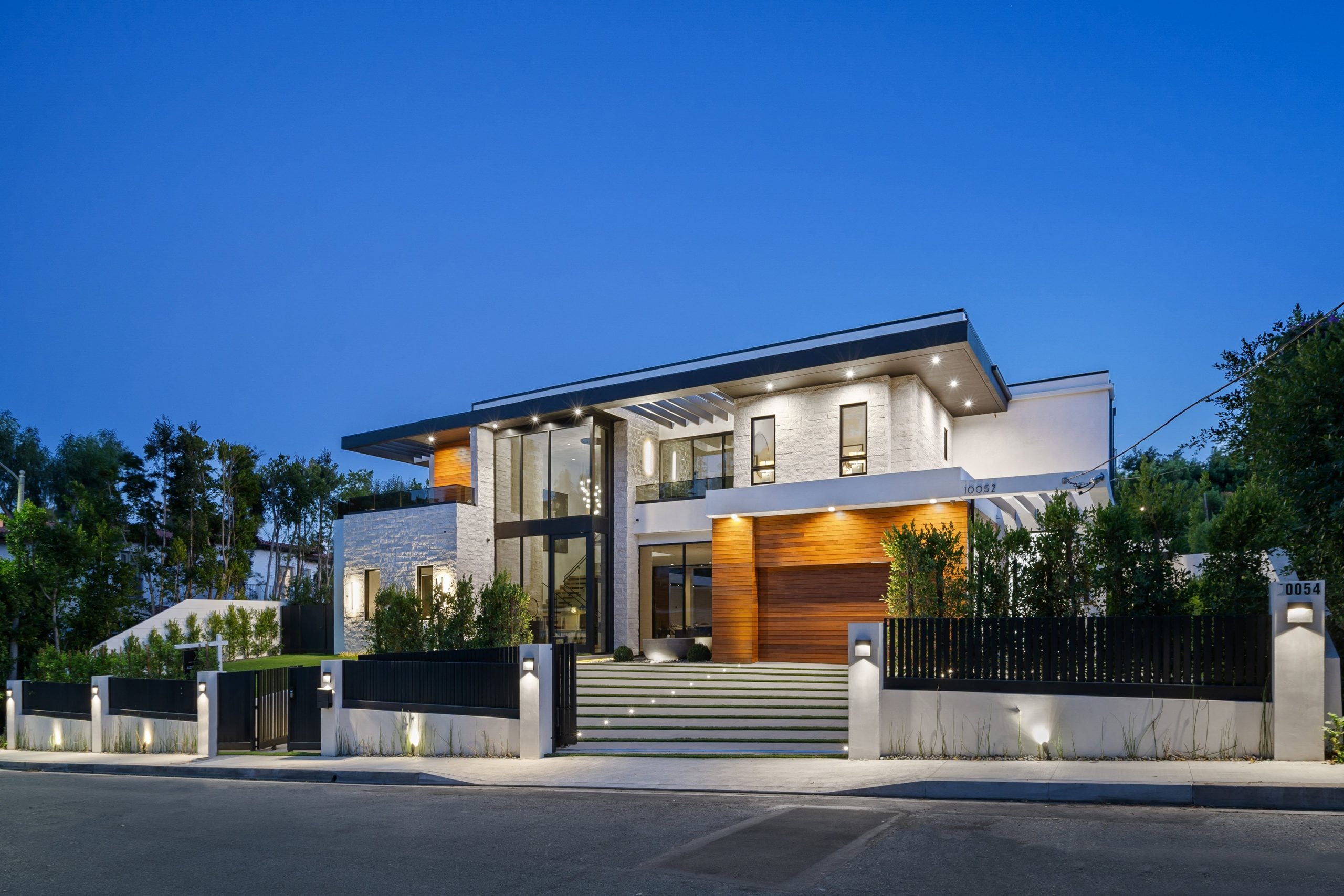
While traditional home exteriors still look great in today’s context, many homeowners, especially the younger generation, are leaning towards sleeker and more modern exteriors.
If you belong to that group, then you need to know how trends are shifting to ensure your home’s exterior is modern and up to date.
It’s not just about aesthetics. Modern home designs also prioritize practical aspects like durability and low maintenance, as well as environmental friendliness.
To learn about how trends have shifted over the years for residential exteriors, we interviewed Samuel Drysdale from Dallas Siding Pros.
Here are the current architectural trends you need to know about when it comes to residential exteriors.
1. Combining Materials
For the longest time, it was extremely rare to see homes with more than one main material for their exterior.
For one, it was much simpler to do it that way. No need to hire a designer or contractor to create a fancy design plan.
This meant homeowners could DIY and save money, which would have been a priority for the older generation that tended to be more frugal.
It was also cheaper to go with only one material since you could get a better price when buying a larger quantity of one material than to buy less of two different materials.
The bigger factor at play though, is that most people in the past just tended to go with a single material. That was the norm, so most people just went with that.
The more limited range of materials may have played a part too, but the main reason is simply that everyone else only used one material, so naturally, the average homeowner would just follow suit. The idea of combining materials is a very recent concept, and only became more popular nowadays because people are more open to experimenting with new ideas.
Such an idea would likely have been frowned upon or laughed at in the past, which was probably another reason why this concept only surfaced recently.
The good news is, you’re living in the present, which means you’re free to go ahead and mix materials as much as you like without others thinking you might have a screw loose.
Mixing materials opens up a whole new world of possibilities to add character and personality to your exterior facade.
For example, you could add a splash of stone to your modern home, so that it’s not just sleek and modern, but has a hint of rustic charm
It’s like spotting a stone well in a minimalist home — unexpected, but in the best way, making your space cooler and more unique.
You could also do the opposite and incorporate a bit of metal into your traditional home. This brings a bit of modern charm to your space while retaining its core, rustic aesthetics.
And that’s not all. You can mix stone with bricks, stucco with natural wood, concrete with timber, and so much more.
Each brings a different vibe and aesthetic to your space. While it might take more thinking and cost more, the results can be spectacular, and when done right, will give you a space with more personality.
2. Horizontal vs Vertical Siding
Traditionally, most houses use horizontal siding. Once again, like with single-material exteriors, it’s just the norm.
That’s not to say you don’t see traditional houses with board and batten siding, it’s just much less common than horizontal siding.
In recent years though, there has been increasing interest in exploring board and batten siding, which has largely been an unexplored style for most people.
Due to its rarer nature, board and batten usually gives a home a modern vibe, as it signals that you’re doing something different and new with your design. That’s one of the reasons why it’s picking up in popularity — homeowners want to try something new and set their homes apart.
In particular, it’s becoming increasingly popular for modern farmhouse and Scandinavian-inspired designs, which are usually taller and narrower.
It’s not just for those designs though. Vertical siding also helps break up larger walls, where it can be visually boring, and also, practically, it’s hard to find and install such long boards. So in between, designers are starting to use vertical siding to break up these walls, especially as present homeowners are more open to board and batten. So it’s not a must, but just know that if you’re trying to set your home apart, board and batten siding can be another tool in your arsenal to use.
3. Textures And Finishes
The main difference between past and present finishes is that now, homeowners actually care about and will customize the finishes.
In the past, since it was more about cost-efficiency and practicality, additional customization of textures and finishes, which would cost more, was practically a sin.
Besides, siding in its natural form has its own beauty, and if it didn’t look too good, well, who cared? All that mattered to the older generation was that it would protect their house.
Technology wasn’t as advanced back then either, so textures and finishes would have been harder to create, and thus cost more.
In the present day, with more advanced technology, not only is it cheaper to create these textures and finishes, but homeowners also care more about aesthetics and expressing themselves through their home.
That’s why over the years, there’s been a growing interest in additional textures and finishes on top of just basic installation.
Conclusion
It’s important to note that these trends don’t necessarily make your home look a lot better, and can even backfire if done wrongly. In fact, many modern homes don’t employ any of these at all.
These are simply trend shifts that you can consider if you’re doing work on the exterior of your home.
However, they can be fun and give you more freedom to express yourself and customize your home’s exterior, and even if you’re fine with sticking to safer, time-tested designs, it’s still good to know your options so that you can make an informed choice.
And if you want to stand out and be more innovative, these are definitely trends you should consider.