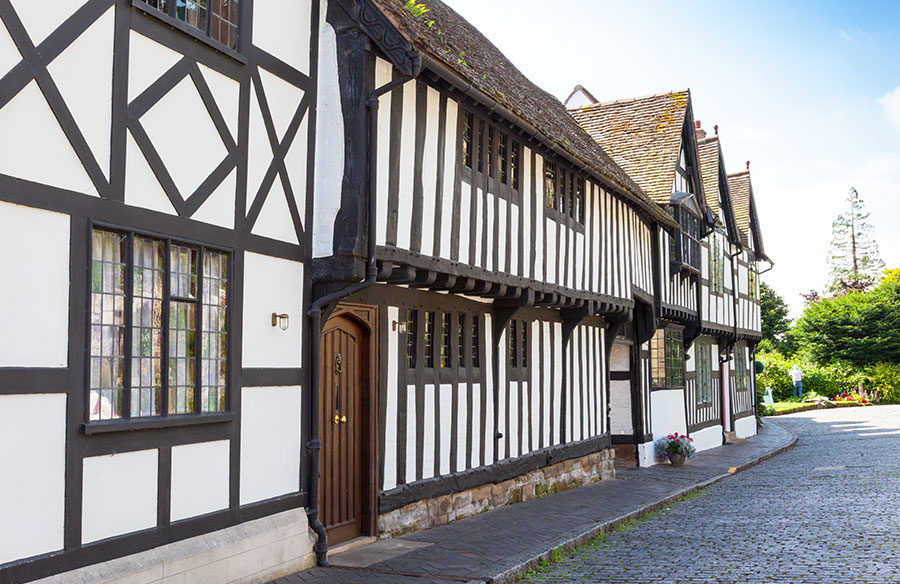
Tucked away in the quiet village of Wotton-under-Edge, Gloucestershire, the Ancient Ram Inn is one of Britain’s most enduring examples of medieval domestic architecture. Built in 1145, this centuries-old structure offers more than just creaking floorboards and weathered timbers — it holds the story of England’s rural past, architectural resilience, and cultural folklore that has captured attention worldwide.
While recent visitors are often drawn by its reputation as “the most haunted house in England”, the Ancient Ram Inn deserves attention not only for its supernatural lore but also for its extraordinary architectural heritage.
Medieval Craftsmanship
The Ancient Ram Inn was constructed during the early 12th century and first served as housing for the masons and builders working on the nearby St. Mary’s Church. It later switched to a priest’s residence, showing the close relationship between ecclesiastical and domestic architecture in Norman England.
Its construction shows the typical vernacular architecture of the medieval West Country, hand-hewn timber frames, wattle and daub infills, uneven stone floors, and a steeply pitched roof made to withstand the region’s persistent rain. Strangely, much of the original timber structure remains intact, its blackened beams bearing witness to 900 years of history.
The building’s profile are hallmarks of age and authenticity, with structural defects that have fascinated preservationists. These characteristics, while charmingly imperfect, highlight the challenges of maintaining such an ancient property in Britain’s damp climate.
Surviving Centuries of Change
Over the centuries, the Ancient Ram Inn has evolved from a residence to an inn, and eventually into a privately owned heritage site. Unlike many historic buildings that underwent modernization, the Ancient Ram Inn has retained much of its original medieval character. Visitors today can still see hand-carved timber joints and centuries-old wooden pegs — a rarity in contemporary architectural heritage.
However, preserving such an aged structure poses constant challenges. The timber frame, though resilient, requires careful conservation to prevent rot and structural weakening. Its preservation is largely due to the dedication of its current custodians, who balance historical integrity with the practicalities of public access and safety.
Architecture Enveloped in Folklore
Architecture and cultural narrative often go hand in hand — and few buildings demonstrate this better than the Ancient Ram Inn. While its architectural significance is beyond question, the stories that swirl around its creaking corridors are what peak public fascination in current times.
According to local legends, the building’s location was once a site of pagan worship, and historical accounts suggest it may have been built over an ancient burial ground. Visitors and paranormal investigators frequently report strange occurrences within its timbered walls, from unexplained cold spots to shadows and unexplained sounds.
Public fascination with the supernatural has turned the Ancient Ram Inn from a quiet relic into a magnet for heritage tourists and ghost hunters alike, thanks in part to the building’s well-documented paranormal history.
Bridging Architecture and Cultural Memory
What makes the Ancient Ram Inn especially interesting is its role as both a historical structure and a vessel of living folklore. Unlike polished heritage sites that feel frozen in time, the Inn remains dynamic — a place where architecture and oral history meet, and where every creak and shadow adds to its appeal.
Its story reminds us that buildings are more than bricks and beams; they are vessels of human experience. Through centuries of use, neglect, and preservation, the Ancient Ram Inn has become an enduring testament to both the craftsmanship of medieval builders and the enduring power of storytelling.
Conclusion
The Ancient Ram Inn stands not just as a building but as a living archive of England’s past. Its weathered timbers and sagging roof tell stories of medieval life, craftsmanship, and belief systems. Its reputation as one of the most haunted locations in the country breathes life into its legacy, drawing visitors from all over the world.
In understanding the Inn’s architecture, we also understand its place in the cultural fabric of England. As we preserve its beams and boards, we preserve its stories — ensuring that both its tangible and intangible heritage endure for generations to come.