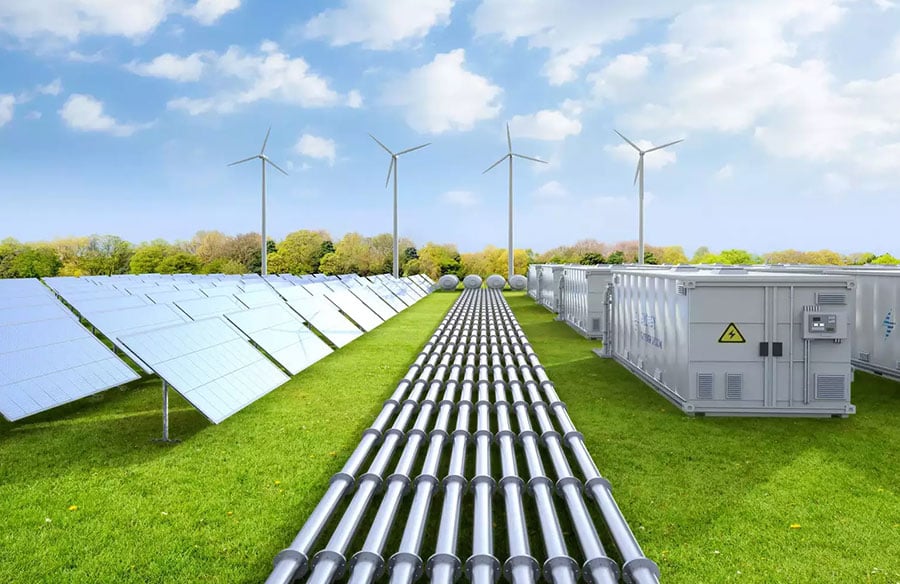
The global shift towards renewable energy is accelerating as countries strive to reduce carbon emissions and achieve sustainability goals. However, one major challenge remains: the intermittent nature of renewable energy sources such as solar and wind. Since these energy sources depend on environmental conditions, their availability fluctuates, making it difficult to provide a stable and continuous power supply. This is where Energy Storage Systems (ESS) come into play, offering a game-changing solution to ensure 24/7 renewable power.
The Growing Need for Energy Storage Systems
The demand for efficient storage solutions is rising as the world shifts to cleaner energy. India’s National Electricity Plan (NEP) 2023 states that the country’s energy storage capacity is expected to climb to 411.4 GWh by 2031-32, with a predicted spurt to 2,380 GWh by 2047. The increasing need is due to the integrating of a larger percentage of renewable power into the grid, the assurance of stability, and the reduction of dependence on fossil fuels.
India has committed to achieving 50% of its aggregate installed capacity through non-fossil fuel-based energy sources by 2030. Energy Storage Systems will reduce power fluctuations, stabilize the grid, and maximize energy distribution.
Understanding Energy Storage Systems
Energy Storage Systems are technologies that store excess electricity generated during periods of low demand and release it when needed, ensuring a steady power supply. These systems improve energy efficiency, reduce reliance on backup fossil-fuel-based power, and enable seamless integration of renewable energy sources into the grid.
ESS solutions can be categorized into five primary types:
- Mechanical Storage – Includes Pumped Storage Hydro, Compressed Air Energy Storage (CAES), and Flywheel Energy Storage, utilizing kinetic and gravitational energy.
- Electrochemical Storage – Comprising batteries such as lithium-ion, sodium-sulfur (NaS), and flow batteries.
- Thermal Storage – Utilizes heat-based methods like molten salt, ice storage, and phase-change materials.
- Electrical Storage – Includes supercapacitors and Superconducting Magnetic Energy Storage (SMES).
- Chemical Storage (Hydrogen Storage) – Converts electricity into hydrogen through electrolysis, storing energy in a versatile and transportable form.
Benefits of Energy Storage Systems
The use of Energy Storage Systems provides several benefits for the energy market and consumers. Some of the most significant advantages are:
- One of the biggest challenges in using renewable energy sources is their variability. Energy Storage Systems guarantee that power is still available even when solar or wind generation varies. This balances supply and demand, avoiding grid collapse and blackouts.
- At peak hours, the electricity demand is high, creating additional energy expenses and pressure on the grid. Energy Storage Systems make peak shaving possible by charging when demand is low and delivering energy when demand is high, minimizing infrastructure stress and reducing electricity prices.
- Without storage, surplus renewable energy produced during times of high output (e.g., solar power at midday) tends to be wasted. Energy Storage Systems guarantee that this energy is saved and used effectively, minimizing dependence on fossil fuel-based power generation.
- By reducing the demand for fossil fuel-powered backup power plants. This is in line with international climate objectives and improves sustainability initiatives.
- Conventional grid extension involves heavy investment in distribution and transmission networks. With Energy Storage Systems, utilities can postpone the expensive upgrades, maximizing the efficiency of the current network.
Innovative Energy Storage Solutions for the Future
As technology advances, several groundbreaking Energy Storage Solutions are emerging to enhance efficiency, sustainability, and cost-effectiveness:
- More reliable and cheaper due to greater energy density and charging speed, such batteries are in increasing demand.
- Using vanadium redox and zinc-bromine chemistries, flow batteries provide longer lifetimes and greater scalability for large-scale deployments.
- Hydrogen-based storage technologies offer a clean method of storing and transporting renewable energy over long distances.
- Innovative gravity energy storage towers employ surplus electricity to hoist heavy weights, subsequently releasing energy by dropping them to produce electricity.
- Technologies like sand thermal storage and molten salt offer long-term energy storage to industrial and utility applications.
India’s Commitment to Energy Storage Systems
The Indian government has also acknowledged the significance of Energy Storage Systems as part of its renewable energy plan. Regulations like the Energy Storage Obligation (ESO) require a fraction of renewable energy to be stored for future utilization, so energy is always available.
India’s focus on energy storage is also evident in schemes such as the National Energy Storage Mission, which is aimed at encouraging domestic battery production, minimizing import reliance, and spurring innovation in storage technology. Private sector engagement is also gaining momentum, with companies like Hero Future Energies being a case in point, investing in energy storage systems to aid India’s shift to a clean energy economy.
Conclusion
As the world transitions to a net-zero emissions economy, Energy Storage Systems will be critical in turning renewable energy into a secure, 24/7 power source. By addressing intermittency, improving grid resilience, and maximizing energy consumption, these systems will open the door to a cleaner, greener, and more sustainable energy future.
Governments, businesses, and individuals must collaborate to accelerate the deployment of Energy Storage Systems to unlock renewable energy’s full potential. Investing in research, innovation, and infrastructure will be crucial to achieving a future powered entirely by clean energy.
With Energy Storage Systems at the forefront of the energy revolution, a world powered 100% by renewable energy is not only a dream but fast becoming a reality.