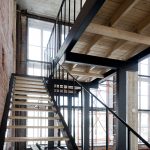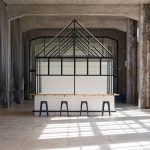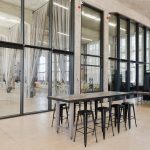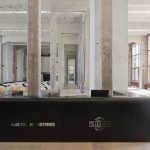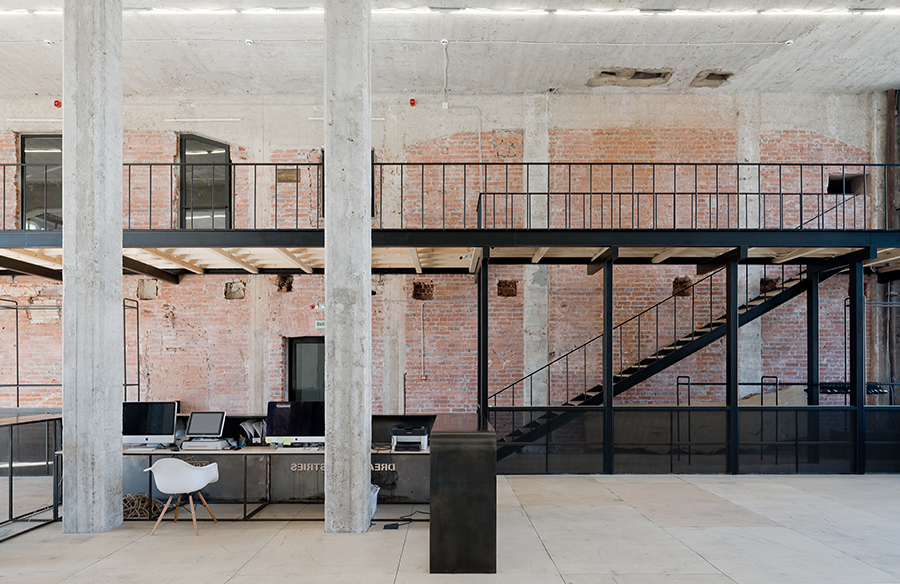
The Central Telegraph is located on Tverskaya street in the center of Moscow. Architect Ivan Rerberg constructed the building in 1927, and it took only several decades for it to become an architectural monument. The Telegraph has an unusual perimeter structure with both modernist and constructivist features; its surprising geometry and broad glazing distinguishes the building against a background of the Stalinist empire style of that era.
Project Name: DI_Telegraph
Studio Name: Archiproba Studios
Location: Moscow, Russia
Year: 2014
Photographs: Ilya Ivanov
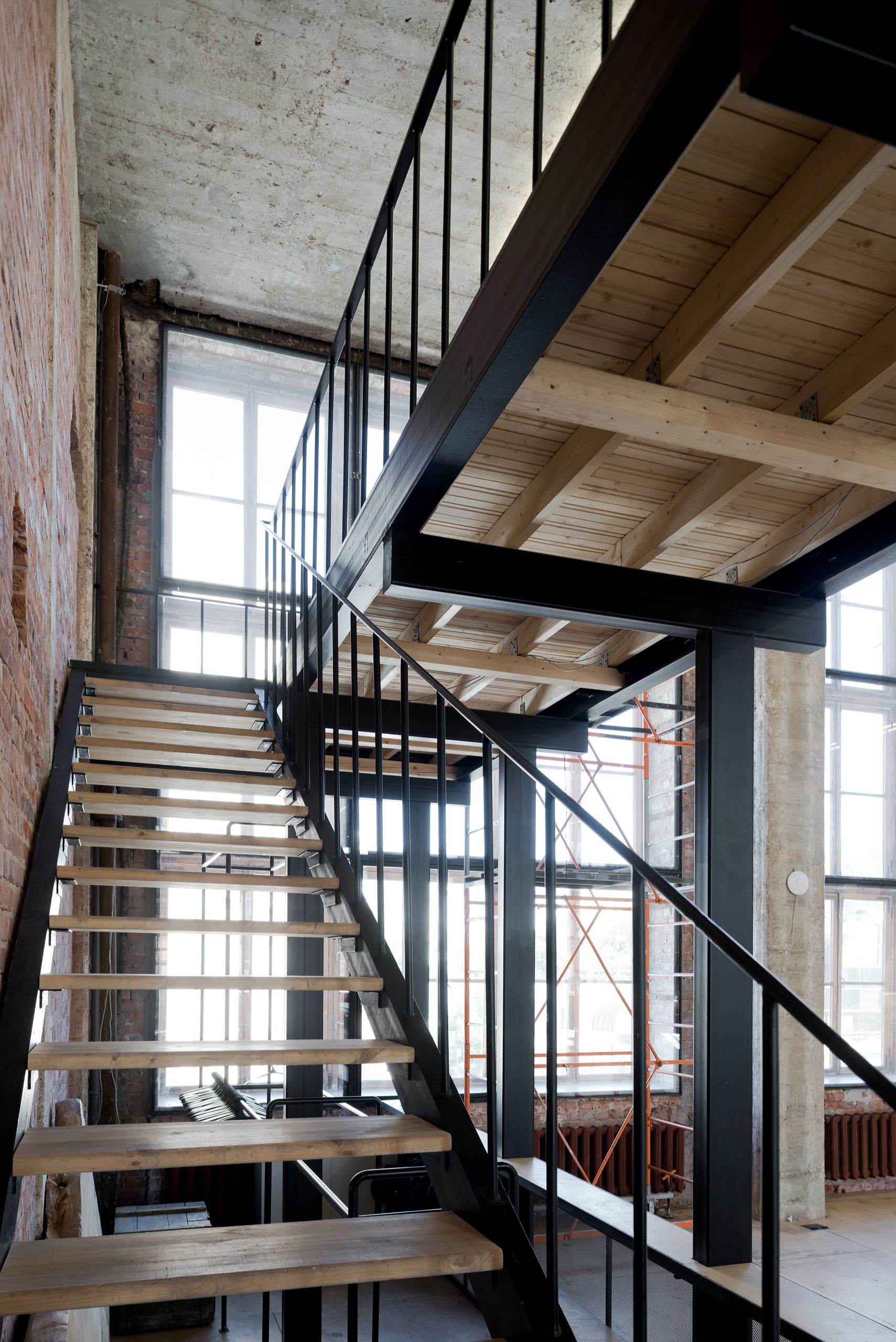
The DI_Telegraph space was originally used to send and receive wire telegrams and to provide other analog telecommunication services. At that time the room was full of equipment generating much heat, that is one of the reasons why its ceiling is seven meters high—hot steam was rising up to be pulled out by huge fans.
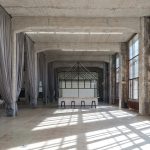
Prior to renovation by Dream Industries, this room has been abandoned in a derelict state for several years. The architects faced a problem of restoration of the space, rather than renovation. There were no walls inside, only few columns located between giant windows and grouped in two rows in the center of the room. In more than eighty years, the windows fell into disrepair, their wooden frames were covered with several layers of paint and were plastered with paper. Restorers were requested to clear one of the windows. Wooden frames from red-yellow larch with splendid metal latches and angles appeared. All the 35 windows were then restored in a similar way.
It has turned out that the main idea of the project should be the return of the space to its original state. Mr. Rerberg was one of the pioneers in creating constructions from reinforced concrete in Moscow; its uneven surface is reminiscent to foliage, which is comfortable for visual perception. Bare, cleansed of everything superfluous, returned back to its 1927 state, the space looked all-sufficient and unique.
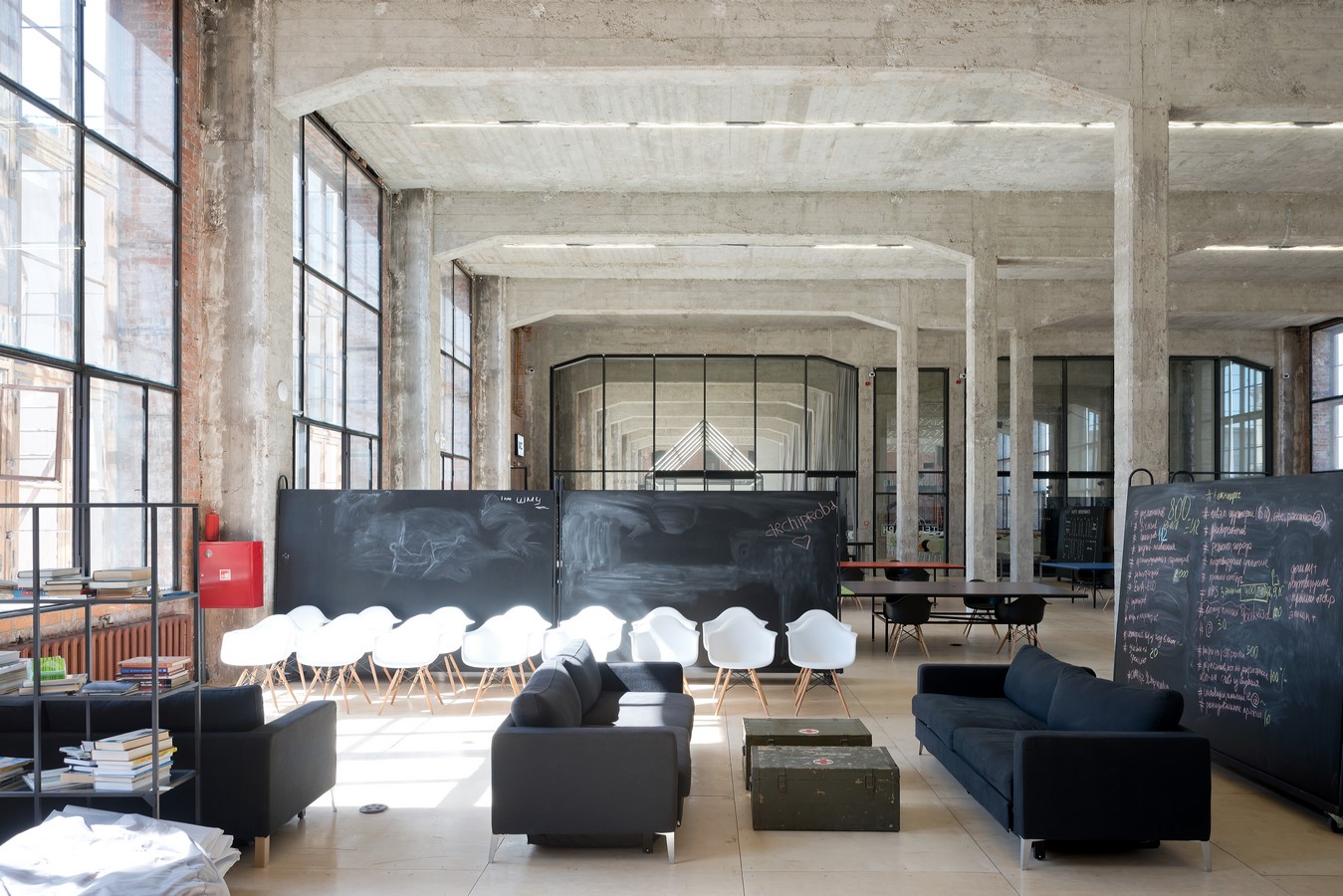
Brick piers, concrete columns, ceiling with traces of rough wooden casing from 1920s, and 80-years-old wooden frames speak eloquently for themselves making reference to the building’s history. All that the authors had to do is just not to spoil anything.
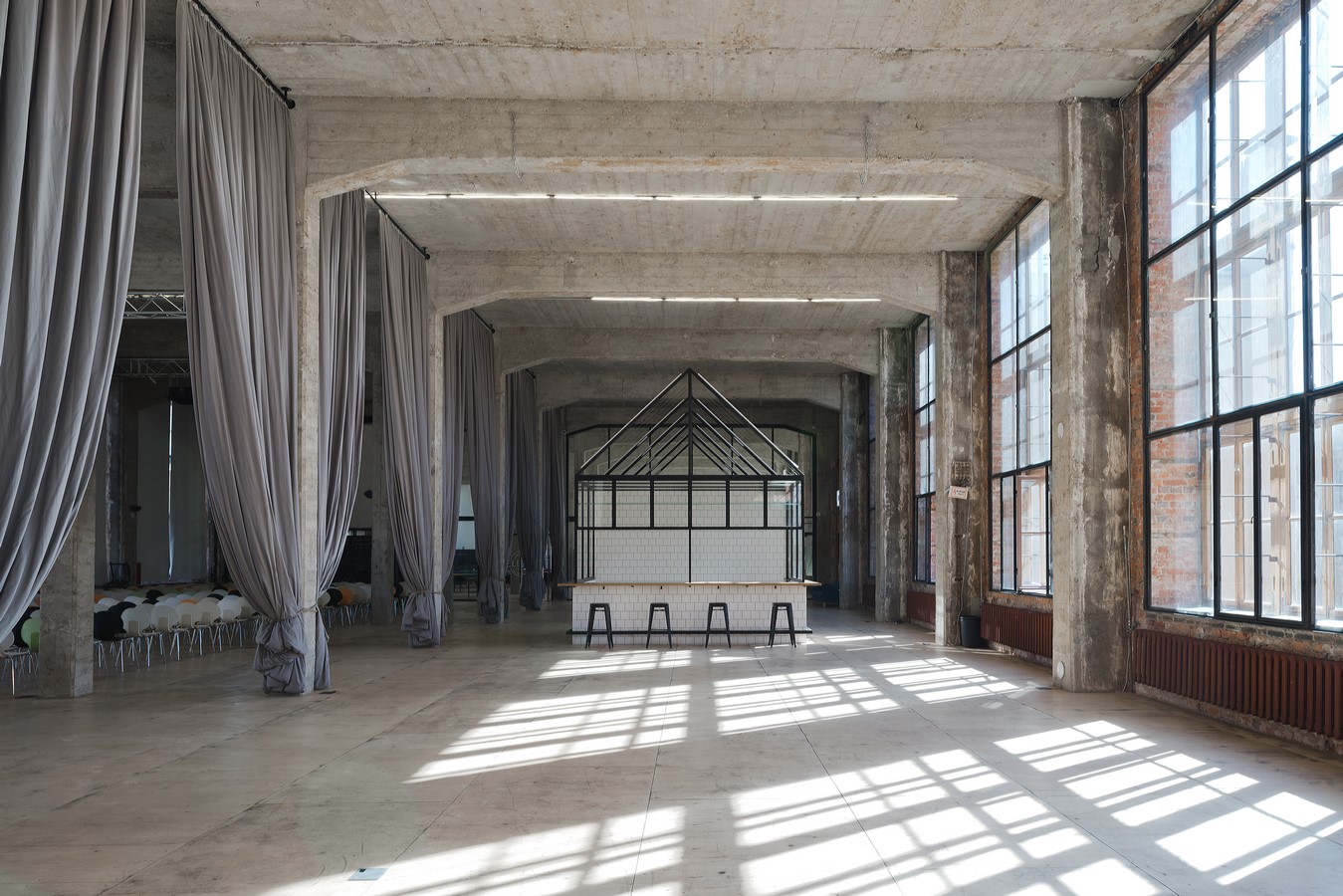
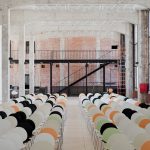
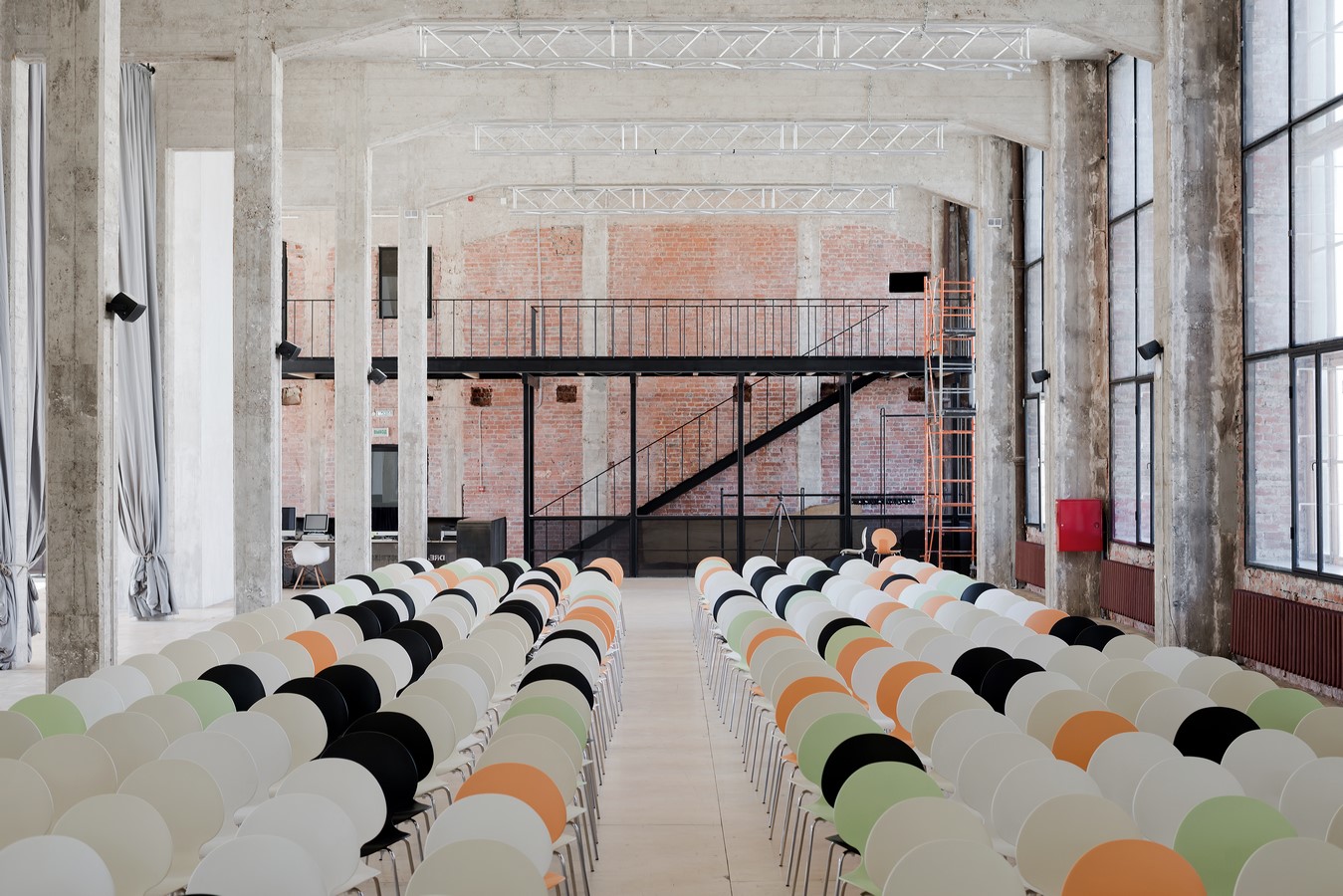
The room was divided into several parts. The first part adjacent to the entrance is a space for educational seminars, conferences, presentations, hackathons and other public activity. A sound-absorbent tissue coulisse was added to improve the acoustics of the hall, which is able to host up to 500 people.