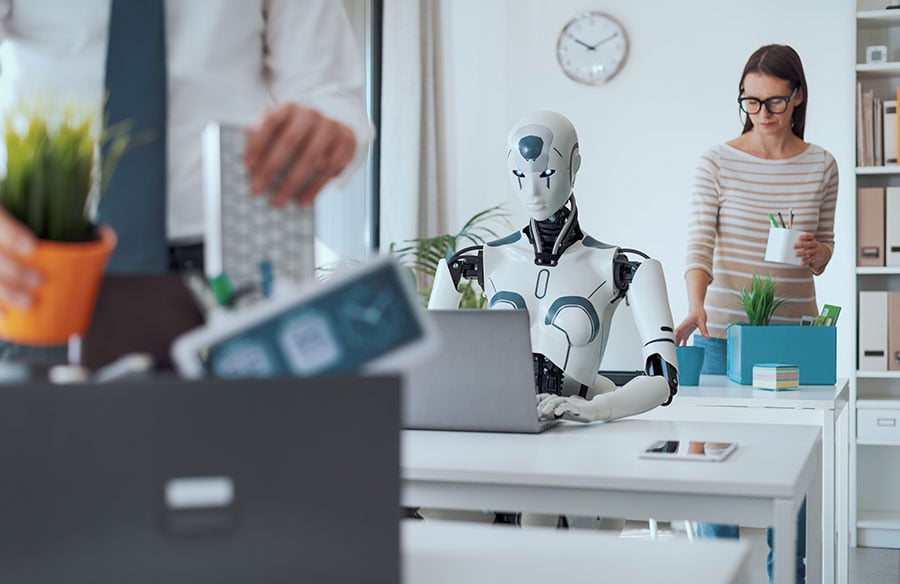
Artificial Intelligence (AI) is revolutionizing industries and reshaping the workforce in ways we could hardly have imagined just a decade ago.
From automation to decision-making, AI-driven technologies are improving efficiency, transforming job roles, and even creating new career opportunities.
As businesses and employees navigate this digital transformation, understanding AI’s impact on the future of work is crucial.
Automation and Job Evolution
One of the most profound ways AI is shaping the workforce is through automation. AI-powered systems can handle repetitive tasks with greater speed and accuracy than humans, reducing the need for manual labor in industries such as manufacturing, logistics, and customer service.
Robots and AI-driven software now manage inventory, assemble products, and handle scheduling, significantly increasing productivity.
According to a McKinsey report, up to 30% of work activities across industries could be automated by 2030 (source). However, automation does not necessarily mean widespread job losses. Instead, it leads to job evolution.
Many routine tasks are being automated, allowing employees to focus on higher-level responsibilities such as strategy, creativity, and problem-solving.
For example, in the financial sector, AI algorithms handle data entry and fraud detection, freeing professionals to provide strategic insights and customer support.
AI-Driven Decision Making
AI is also enhancing decision-making processes across industries. Businesses leverage AI-driven analytics to process vast amounts of data, identifying patterns and trends that human analysts might overlook. This capability helps companies make informed decisions faster and with greater accuracy.
For instance, AI-powered predictive analytics help businesses anticipate market trends, optimize supply chain operations, and improve customer experiences.
In healthcare, AI-driven diagnostic tools assist doctors in identifying diseases earlier and with greater accuracy, ultimately saving lives. A study by PwC suggests that AI could contribute up to $15.7 trillion to the global economy by 2030 (source).
The Rise of AI-Powered Assistants and Chatbots
AI-driven virtual assistants and AI chatbots are transforming customer service and workplace communication. AI chatbots can efficiently handle customer inquiries, provide instant responses, and even process transactions.
Businesses benefit from reduced costs and improved customer experiences, while employees can focus on more complex interactions requiring human empathy.
In the corporate world, AI-powered virtual assistants schedule meetings, manage emails, and even provide personalized recommendations for improving productivity.
These tools streamline workflows and enhance efficiency, allowing professionals to focus on their core responsibilities.
AI and Remote Work
The rise of AI has also facilitated remote work, a trend that accelerated during the COVID-19 pandemic.
AI-powered collaboration tools, such as virtual meeting platforms with real-time transcription and sentiment analysis, have made remote work more efficient.
AI-driven project management software helps teams stay organized, track progress, and optimize workflows regardless of location.
Moreover, AI-powered hiring platforms assist recruiters in identifying the best candidates by analyzing resumes and predicting job fit, ensuring that remote and hybrid teams are composed of highly qualified individuals.
A survey by Gartner found that 47% of HR leaders are using AI-based tools for recruitment and hiring (source).
New Job Opportunities in the AI Era
While some fear AI may replace jobs, it is also creating new opportunities. The demand for AI specialists, data scientists, machine learning engineers, and cybersecurity experts has surged. Companies require professionals who can develop, implement, and maintain AI systems.
Beyond technical roles, AI is generating new career paths in ethical AI governance, AI policy development, and AI-assisted creative roles in marketing, design, and content creation.
As AI continues to evolve, so will the opportunities for workers willing to adapt and acquire new skills.
Reskilling and Upskilling the Workforce
To thrive in an AI-driven world, reskilling and upskilling are essential. Governments, businesses, and educational institutions are investing in AI-related training programs to equip workers with the necessary skills.
Online platforms now offer courses in machine learning, data science, and AI ethics, making it easier for individuals to stay relevant in an evolving job market.
Companies are also adopting AI-powered learning platforms that provide personalized training experiences, helping employees develop the skills required for emerging job roles.
Ethical Considerations and AI Governance
As AI becomes more integrated into the workforce, ethical concerns arise. Bias in AI decision-making, data privacy, and job displacement are critical issues that need to be addressed.
Organizations must implement transparent AI governance policies to ensure fairness and accountability.
Additionally, governments are introducing regulations to oversee AI deployment in various industries, ensuring that AI benefits society while minimizing risks.
Ethical AI development will play a crucial role in shaping a future where AI augments human capabilities rather than replacing them.
Conclusion
AI is undeniably transforming the future of work, driving automation, enhancing decision-making, and creating new career opportunities.
While AI-powered tools such as AI chatbots are streamlining customer interactions, the broader implications of AI extend across all industries.
As the workforce adapts to these changes, continuous learning and ethical AI governance will be key to ensuring a balanced, AI-driven future that benefits businesses and employees alike.