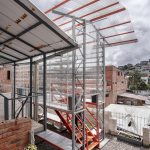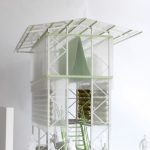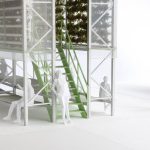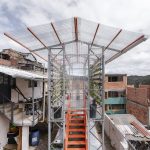
The low-tech hidrioponic module supports the initiatives of community members and local organizations, such as Cesar Salomón and Fondacio Altos del Cabo, who have been collaborating, participating, and working together in the San Luis neighborhood in the city of Bogotá for seven years.
Project Name: A Low Tech Hydroponics Module
Studio Name: alsar atelier
Location: Colombia
Status: Built
Image Credits: Mateo Perez

These collaborations have impacted hundreds of residents and have supported hydroponic farming initiatives as an alternative for food seciriuty in Bogotá’s informal environments. Hydroponics is a cultivation system in which plants grow in an inert substrate or directly in a nutrient solution in water, allowing the crops to be arranged vertically. By supporting hydroponic logistics, which offer a plant density 2 to 10 times higher, water savings of up to 60%, healthier foods, and the ability to farm in any climate or season, the initiative provides sustainable solutions for high density neighborhoods.
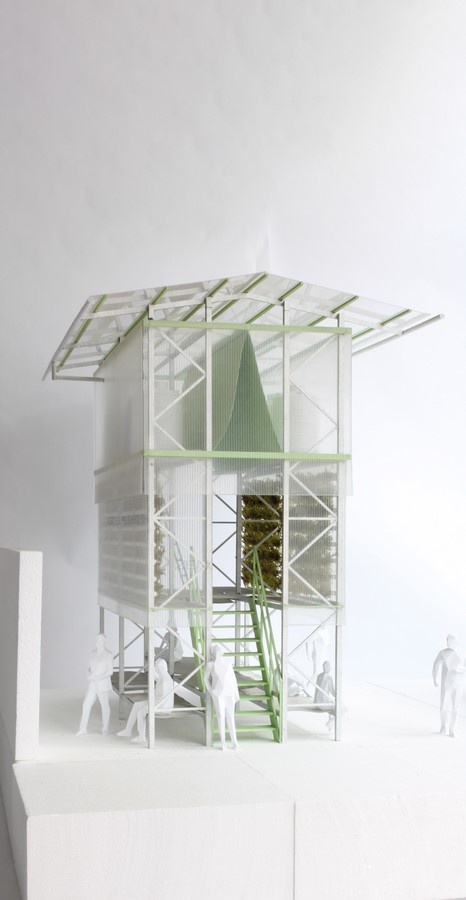
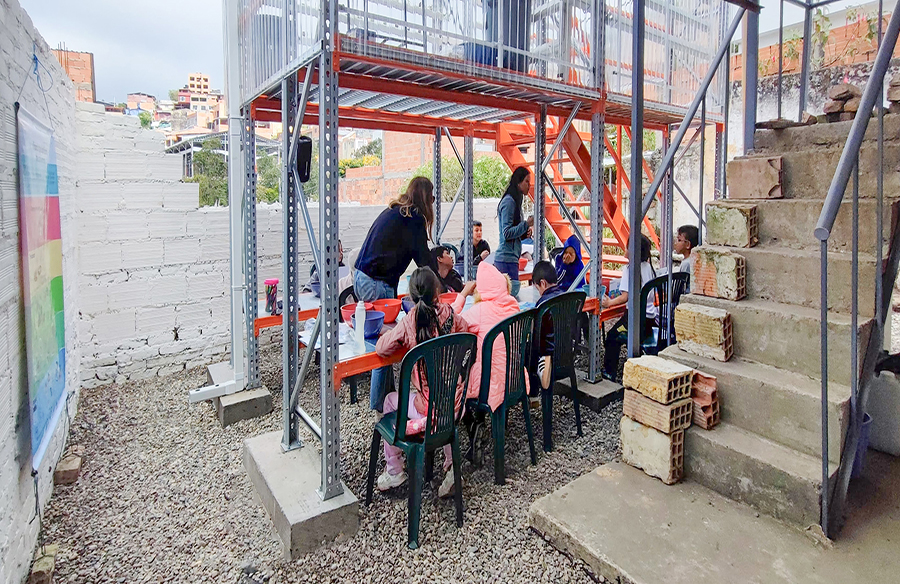
The architectural design of the module, developed by Alsar-Atelier + Oscar Zamora and funded by the organization NEACOL, originates from the use of the industrial shelving system. This system maximizes material and, with its expansionist character, is reimagined as a material enabling socially focused, quick, and reusable construction. The physical formation of informal neighborhoods is variable and temporary due to issues like occupation and permits, and the primary construction materials—concrete and brick—remain inherently permanent. Therefore, the module is designed as a lightweight, semi-permanent structure to fit into this territorial reality. Additionally, the project is designed so that, if dismantled or relocated, the components can return to their original use, avoiding waste, or be moved to another vacant lot and redesigned in terms of size and capacity.
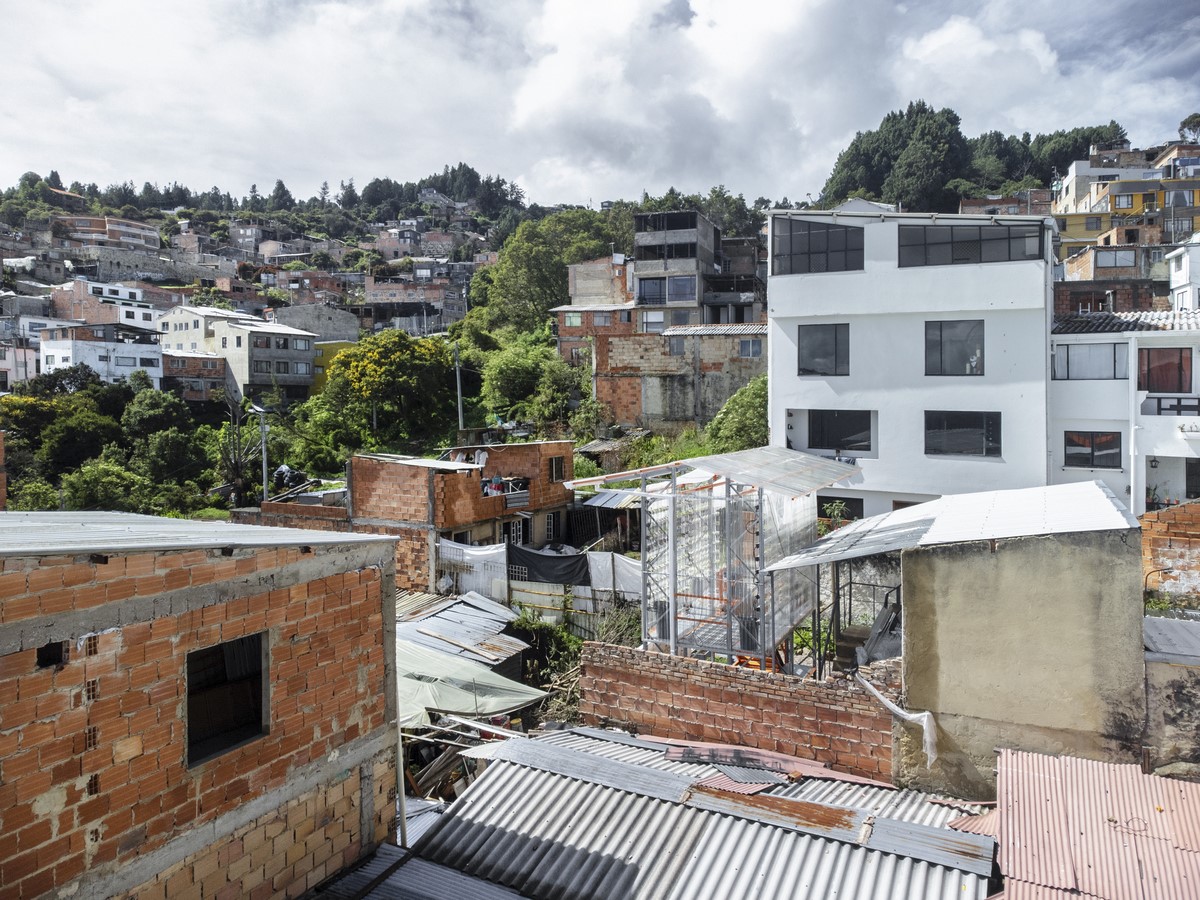
In addition to being a hydroponic module that adapts the use of industrial shelving for easy transport, assembly/disassembly, reuse, and relocation—reducing construction time to one week—the project functions as an analog school. It will support the Altos del Cabo Center by training the community through new hydroponic farming workshops. Furthermore, it will provide space for personal on-site cultivation, sustainable water use, and collective post-harvest activities, promoting practices of financial sustainability and self-management.
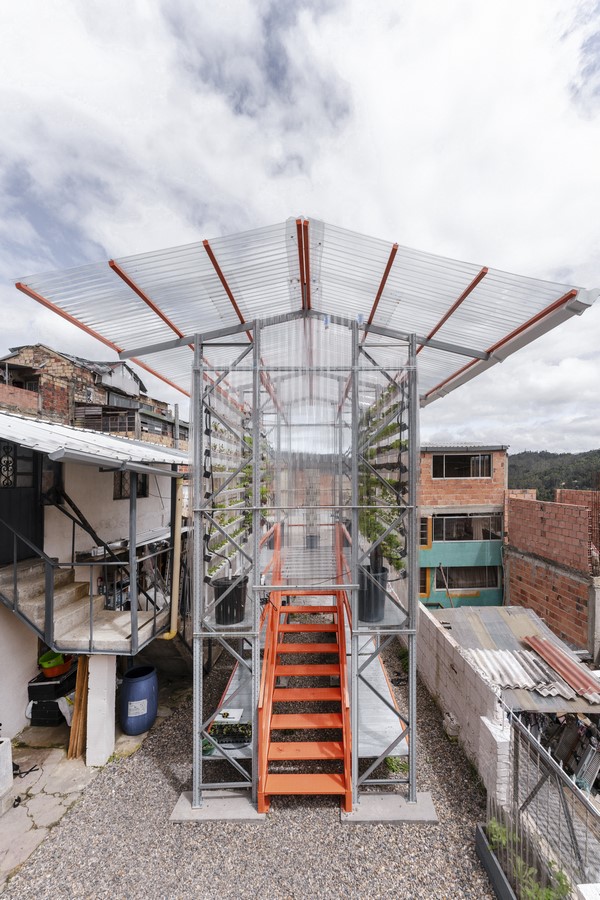
The design complements urban gardening workshops and the use of the Chapinero seed bank, which preserves 23 creole and native species such as mint, sage, calendula, oregano, potatoes, maize, fava beans, high-altitude beans, tomatoes, barley for brewing, and more. This initiative also includes the 2023 Maya Handbook: The Gastronomy and Health of Our Gardens.