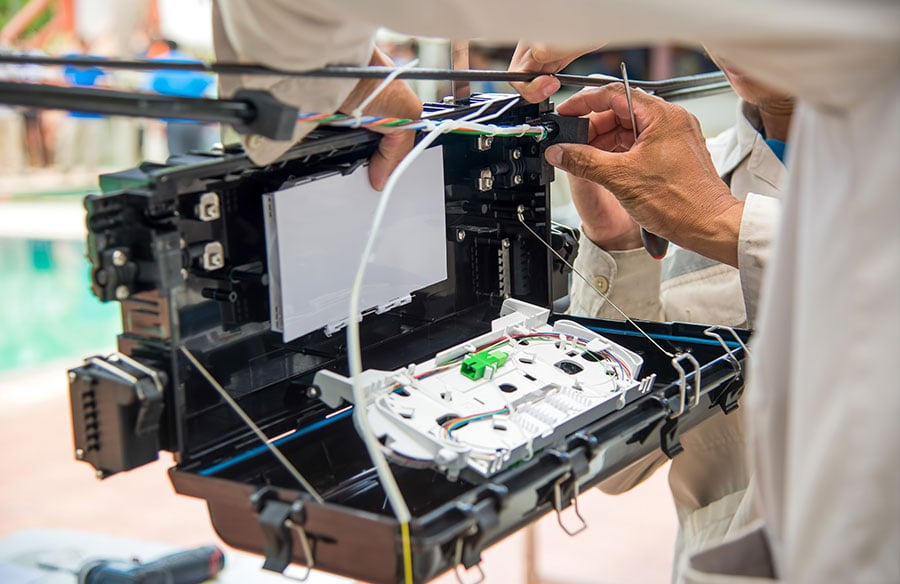
Is your business ready for the next level of connectivity? Fiber optic cables have become the gold standard for high-speed data transmission as demand for faster, more reliable networks grows. Installing and managing fiber optic systems requires expertise, precision, and the right tools. Fiber optic cable installation companies specialize in building these advanced networks, handling even the most complex projects with efficiency and expertise.
If you’re considering fiber optics for your business, understanding how fiber cable contractors and fiber installation contractors work can give you confidence in their ability to deliver reliable, future-ready solutions. This blog explores how these professionals manage large-scale installations, ensuring seamless and efficient performance for businesses of all sizes.
1. Comprehensive Project Assessment
Before starting a project, fiber optic cable contractors conduct a detailed assessment to understand the business’s unique requirements.
- Site Surveys: Teams inspect the physical location to map out cable routes and identify potential challenges.
- Capacity Planning: They evaluate your current and future data needs to determine the best fiber optic solution.
- Customized Design: Based on findings, contractors create a tailored network design that optimizes performance and scalability.
This meticulous planning ensures the project aligns with your business goals and avoids costly errors during installation.
2. Advanced Equipment and Tools
Fiber optic installation requires specialized tools to ensure accuracy and efficiency.
- Fusion Splicers: These devices join fiber optic strands seamlessly, ensuring minimal signal loss.
- OTDR Testing: Optical Time-Domain Reflectometers (OTDRs) verify the integrity of the installed cables.
- Cable Pulling Machines: These tools streamline the laying of fiber in conduits, reducing physical strain and time.
Fiber optic cable contractors use advanced equipment to maintain high standards throughout the installation process.
3. Expertise in Handling Complex Environments
Fiber optic installations often occur in challenging environments, such as urban areas, underground conduits, or multi-floor buildings.
- Urban Installations: Contractors work around existing infrastructure to install fiber in densely populated areas.
- Underground Projects: They precisely handle trenching, directional boring, and cable placement to avoid damaging utilities.
- High-Rise Buildings: In office towers, contractors manage vertical cable runs to connect multiple floors seamlessly.
These contractors adapt to the complexities of different environments, ensuring smooth implementation regardless of the location.
4. Strict Adherence to Industry Standards
Fiber optic installation companies follow strict industry standards to ensure reliability and safety.
- TIA/EIA Compliance: Contractors adhere to Telecommunications Industry Association standards for cable performance and installation practices.
- Local Regulations: They comply with municipal codes and zoning laws for cable placement.
- Safety Protocols: Teams use proper safety equipment and procedures to protect workers and infrastructure.
By following these guidelines, contractors ensure the network operates efficiently and complies with regulations.
5. Scalable Network Solutions
Fiber optic installations are designed to accommodate future growth.
- Modular Designs: Contractors create networks that can expand as your business grows, avoiding costly overhauls.
- High Capacity: Fiber supports virtually unlimited bandwidth, ensuring your network won’t outgrow your data needs.
- Multi-Use Cabling: Fiber optic systems can handle multiple types of traffic, including voice, data, and video, over a single infrastructure.
Scalability ensures your network investment provides long-term value as your business evolves.
6. Minimizing Downtime During Installation
Business continuity is a priority during fiber optic installations.
- Off-Hours Work: Contractors often schedule installation during non-peak hours to avoid disrupting operations.
- Temporary Connections: They set up temporary systems to maintain network access during transitions.
- Efficient Execution: Advanced tools and experienced teams reduce the time required to complete the project.
By minimizing downtime, contractors ensure your business stays connected throughout installation.
7. Comprehensive Testing and Validation
After installation, fiber optic installation companies perform thorough testing to confirm the network meets performance standards.
- Signal Strength Testing: Ensures minimal signal loss across all connections.
- End-to-End Verification: Tests connectivity between all endpoints to confirm seamless integration.
- Documentation: Contractors provide detailed reports on network performance and compliance with specifications.
Testing ensures your network is fully operational and ready to handle your business needs.
8. Seamless Integration with Existing Systems
Most businesses already have existing network infrastructure. Fiber optic cable contractors excel at integrating new fiber systems with these legacy networks.
- Compatibility Checks: Contractors ensure fiber systems work seamlessly with existing hardware.
- Hybrid Solutions: They design networks that combine fiber and traditional cabling where needed.
- Upgraded Hardware: Contractors replace outdated components to maximize the benefits of fiber optics.
This integration minimizes disruptions and enhances your current network’s performance.
9. Reliable Maintenance and Support
Fiber optic systems require regular maintenance to ensure optimal performance. Many fiber optic installation companies offer ongoing support as part of their services.
- Routine Inspections: Contractors check for wear and tear, ensuring cables remain in good condition.
- Rapid Repairs: They provide prompt service to minimize downtime if issues arise.
- Performance Monitoring: Advanced tools track network health, allowing contractors to address potential problems proactively.
Ongoing support ensures your network continues to deliver reliable performance long after installation.
10. Cost-Effective Solutions
While fiber optic installations may seem expensive upfront, the long-term benefits outweigh the costs.
- Durability: Fiber cables last longer than traditional copper cabling, reducing replacement costs.
- Energy Efficiency: Fiber consumes less energy during data transmission, lowering operating expenses.
- High ROI: Faster speeds, greater reliability, and scalability make fiber optics a cost-effective investment for businesses.
Contractors work with businesses to deliver solutions that meet performance goals without exceeding budgets.
Why Choose Professional Fiber Installation Contractors?
Handling fiber optic installations requires precision, expertise, and the right tools. Professional fiber installation contractors:
- Deliver tailored solutions to match your business needs.
- Ensure installations are completed on time and within budget.
- Provide ongoing support to keep your network running efficiently.
By partnering with experts, businesses gain access to cutting-edge technology and reliable support for their network infrastructure.
Partner with Trusted Fiber Optic Cable Installation Companies
If you’re looking for experienced Fiber Cable Contractors, Fiber Installation Contractors, or reliable Fiber Optic Cable Installation Companies, choose a team with decades of experience. Serving Pennsylvania and New Jersey, this trusted provider has delivered network cabling and infrastructure services since 1986. From planning and installation to maintenance and upgrades, they handle every aspect of your project with precision and care.
Contact data cabling contractors today to learn how their expertise can help your business build a future-ready fiber optic network!