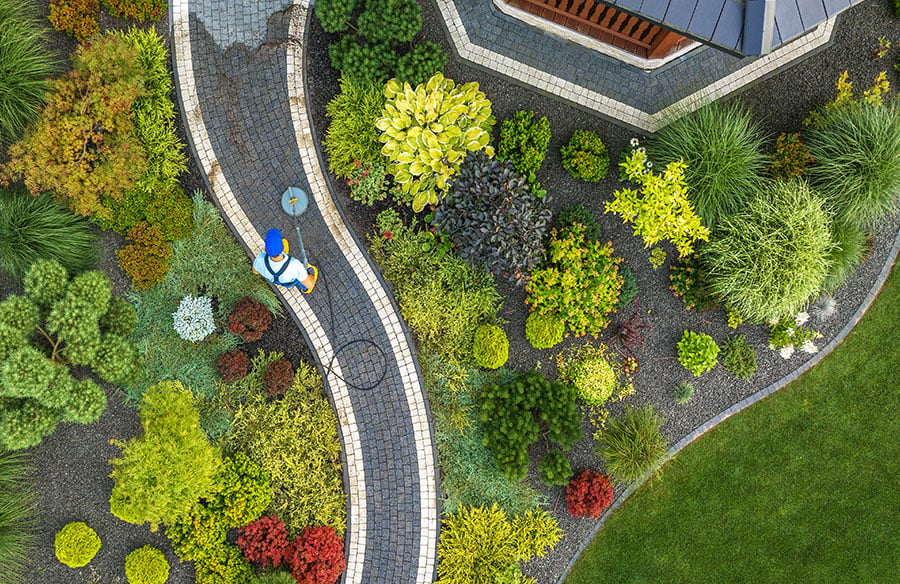
Architectural planning systematically addresses year-round landscaping challenges through strategic design, material selection and environmental analysis. This comprehensive approach ensures landscapes remain functional and beautiful throughout the seasons while minimizing maintenance requirements and resource consumption.
Anticipating Seasonal Adaptability
One of the most significant challenges in landscaping is the impact of seasonal transitions. Year-round service provides lawn, equipment and infrastructure maintenance — integral to landscape sustainability. This can be achieved by either:
- Integrating maintenance-friendly design elements reduces the effort required to keep outdoor areas in peak condition year-round.
- Regular upkeep of installations to ensure landscapes remain visually appealing and function optimally, preventing unexpected disruptions.
Strategic architectural planning anticipates these changes by prioritizing sustainable processes and features such as:
Hardscaping for Stability
Elements like retaining walls, permeable paving and strategic grading prevent erosion and manage water runoff during heavy rains or snowmelt. These structures enhance the landscape’s aesthetics and provide critical support in maintaining soil integrity while averting flooding and soil erosion in vulnerable areas.
Material Selection for Durability
Materials should withstand exposure to the sun, snow, rain and fluctuating temperatures. Choosing the right materials is critical in ensuring that landscaping elements endure the test of time:
- Permeable pavers allow water to seep through, reducing runoff and minimizing ice buildup in colder months.
- Weather-resistant wood and rust-proof metal extend the life of fences, pergolas and outdoor furniture.
- Composite materials that mimic the aesthetic appeal of natural materials but with higher durability and lower maintenance requirements.
Climate-Responsive Planting
Selecting native and climate-resilient plants ensures that gardens thrive in different seasons with minimal intervention. By incorporating species that naturally adapt to temperature shifts and varying moisture levels, homeowners and landscapers can lower maintenance efforts and enrich the ecological balance of outdoor spaces.
Water Management and Drainage Solutions
Water is a double-edged sword in landscape planning. While essential for plant health, in excess, it instigates flooding, erosion and structural damage. Architectural strategies that proactively address these issues include:
- Rainwater harvesting systems: Collecting and storing rainwater for irrigation reduces reliance on municipal water sources.
- Bioswales and green roofs: These features absorb excess rainwater, filter pollutants and regulate temperatures, creating more sustainable landscapes.
- Smart irrigation technology: Automated irrigation systems adjust water distribution based on weather conditions, preventing overwatering and water waste.
Multi-Functional Outdoor Spaces
Designing patios, decks and garden structures that are usable during both summer and winter promotes year-round usability. Features like retractable covers, outdoor heating elements and adaptable seating areas effectively help extend the functionality of these spaces, making them comfortable regardless of the season.
Designing for Maintenance Efficiency
A well-planned landscape is only as good as its upkeep. This is why off-season landscaping comes into play.
Preventative maintenance schedules spread throughout the seasons prevent unexpected breakdowns of equipment during peak usage times. This also significantly extends their life span, reducing the need for costly repairs or replacements, which saves resources in the long term.
Thoughtful architectural planning tackles winter challenges through carefully considered design elements. Elevated pathways accommodate efficient snow removal, while strategic windbreaks protect sensitive areas from harsh winter conditions. Salt-resistant hardscaping prevents deterioration and establishing protected areas for sensitive plant species fosters year-round survival.
Summer presents its own set of challenges that require equally thoughtful solutions. Integrated shade structures and heat-resistant paving materials help manage temperature extremes. Selecting drought-tolerant plants and implementing strategic water management systems promotes landscape resilience during hot, dry periods.
Spring and autumn transitions require special considerations. These seasons are characterized by rapid temperature fluctuations and varying precipitation levels that can stress landscape elements. Designs promoting sustainability must accommodate these transitional periods through flexible drainage systems and adaptable plant selections.
The integration of predictive maintenance technologies has revolutionized landscape management. Artificial intelligence and machine learning algorithms are being integrated into traditional systems to analyze environmental data and forecast potential issues before they become serious problems. This proactive approach allows maintenance teams to address concerns during optimal weather windows, reducing costs and disruption.
Future-Proofing Landscapes
Sustainability is at the forefront of modern architectural landscaping. Future-proofing outdoor spaces against climate change and evolving environmental conditions is vital for global continuity. This is particularly necessary in urban greens, given that nearly 70% of the global population will probably reside in towns and cities by 2050.
Effective future-proofing strategies require an adaptable, resilient approach, such as:
- Drought-tolerant landscaping: Using xeriscaping techniques regulates water consumption without sacrificing beauty.
- Foodscaping: Incorporating fruit-bearing plants and herbs into decorative landscapes brings functionality and ecological benefits to aesthetics.
- Biodiversity integration: Creating habitats that support pollinators and wildlife nurtures a balanced ecosystem that supports plant health and sustainability.
Now Is the Time to Plan for Long-Term Success
Architectural planning that anticipates year-round landscaping challenges creates resilient, sustainable and beautiful outdoor spaces. By considering climate, plant selection, irrigation and maintenance, architects and landscape designers can ensure landscapes that survive and thrive throughout the seasons. This holistic approach enhances not only a space’s visual appeal but also its environmental sustainability and usability.
Jack Shaw is a freelance writer and home improvement specialist. He’s the senior writer of Modded.com, and has contributed his advice through sites like CAD Details, House 2 Home Organizing, Realty Times and more.