

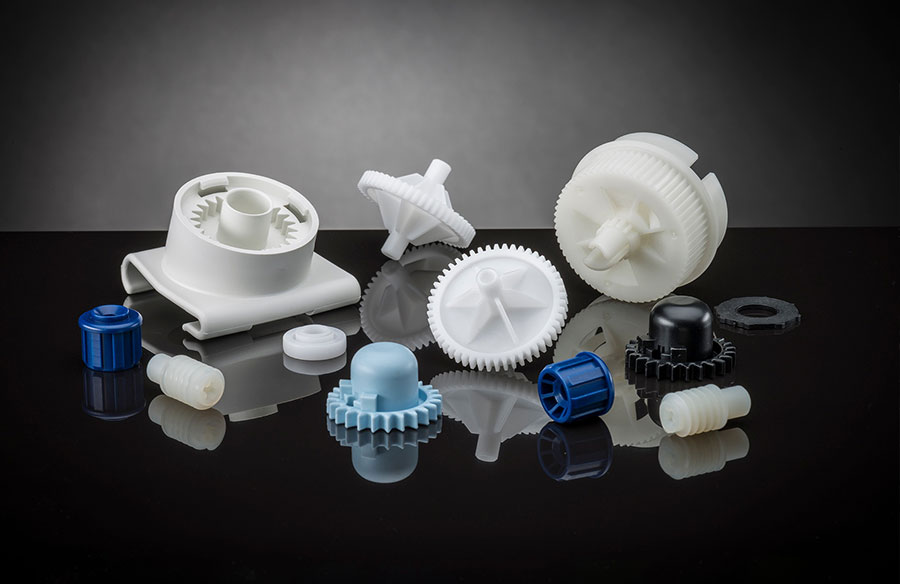
Plastic parts have versatile applications across industries because of their high flexibility. In fact, many industries benefit from injection molded parts because they can meet the exact requirements and specifications of clients, from everyday household items to highly specialized components in medical and aerospace industries.
Injection molding plastic parts and components allows manufacturers to meet the unique demands of various industries with consistency. In addition, the capability of the process to produce complex shapes with minimal waste allows for efficient large-scale production. Read on to find out more about the numerous applications of plastic injection molding.
What is plastic injection molding used for?
The process has many advantages. It’s highly adaptable, as it offers custom-made designs that suit the material, surface finish, durability, and size of the application. It allows for high production rates with inconsistencies reduced to a minimum. It is also cost-effective. These are only some of the reasons why many industries rely on it as the best solution:
Medical devices
In medical industry, injection molding is a source of sterile and reliable equipment, with some of the most common applications including:
-
- Disposables: PPE, fluid collection bags, sample collection swaps, and syringes.
- Labware: High-precision parts can be used for reliable measuring. Plus, technicians can use durable and non-reactive plastics when handling toxic and hazardous materials.
- Orthopedic devices & instruments: Custom-made implants and polymer composites can be used in orthopedic surgeries to help replace damaged joints and correct fractures.
- Dental: Single-use and reusable equipment such as saliva ejectors, mixing spatulas, impression trays, and suction tips.
- Emergency devices: Because of the fast and reliable production cycle of injection molding, clinics and hospitals can request the necessary devices on short notice.
- Surgical devices & instruments: Wound drains, scalpels, catheters, speculums, and endotracheal tubes are only some examples of plastic instruments and devices used during patient examination and surgery.
Industrial manufacturing
With high-volume production and exceptional accuracy, the process allows for reliable large-scale and assembly manufacturing for industries such as:
- Electrical: Plastic is excellent for insulating electrical current, securing safe installation of electrical work. Parts such as adapters, panels, junction boxes, and sockets are usually injection molded.
- Aerospace: The tight tolerances and low weight of plastic parts make them perfect for use in aerospace. Plastic blades, controllers, and bezels are used in many planes to cut out both weight and costs.
- Telecommunication: Telecommunication companies can easily update their infrastructure and networks and fix problems if old components break because of the short production times of injection molding.
- Electronic: The buttons and casings of electronics are typically injection modeled, isolating electrical components from the hands of users, and minimizing variation between product batches.
Military
When it comes to mission-critical applications, the defense industry typically relies on this way of manufacturing because of its precision and reliability. Some common military applications include:
- Weaponry: Injection molded parts in weaponry must respect tight tolerances and fit other components during assembly. They’re usually used in control grips of a machine and must have surfaces that are uniformly textured to secure a good grip.
- Communication devices: The parts in handheld communication devices, such as transceivers, are made to withstand combat environments and won’t degrade when exposed to water, sun, and extreme temperatures.
- Monocular & binocular housings: Plastic monocular and binocular casings ensure the lenses are safe from harsh environments and don’t sustain any damage in case of fall.
- Guidance systems: They attach to missiles, ships, satellites, or aircrafts, which is why they need to be durable and lightweight.
Munitions: The durable and lightweight plastics in munitions are perfect for defense and military uses, from sting-ball grenades to flash bangs.







