

In 2025, interior design and architecture are set to undergo a profound transformation, thanks to advancements in artificial intelligence (AI). AI is revolutionizing not only the way we design homes and offices but also how we interact with and experience spaces. As technology becomes increasingly integrated into our daily lives, interior design must keep up with the evolving demands of functionality, comfort, and aesthetics. But how exactly is AI changing the landscape of interior design, and what does this mean for the future of architecture?
The Role of AI in Interior Design
Artificial intelligence has already started to influence the interior design industry, particularly with the advent of smart technologies. AI-powered tools are streamlining the design process, offering designers and homeowners the ability to create personalized, responsive spaces with greater precision. From virtual design assistants to predictive analytics, AI allows professionals to quickly generate optimized layouts, choose appropriate materials, and even predict design trends before they become mainstream.
Gone are the days when designers relied solely on sketches and physical samples. Today, AI can simulate various design concepts in virtual spaces, allowing for a faster, more efficient approach to selecting furniture, colors, and layouts. The beauty of this technology lies in its ability to analyze vast amounts of data, including user preferences, space dimensions, and even environmental factors, to create solutions that are perfectly tailored to the user.
AI tools are reshaping the way designers approach projects, offering unparalleled capabilities to conceptualize and refine ideas. From generating realistic 3D models to crafting detailed visualizations, these tools empower designers to explore multiple possibilities before making decisions. For instance, Hypnopixels, a platform primarily known for creating digital avatars, demonstrates the creative potential of AI in design. While it excels in avatar creation, its capabilities highlight how AI can transform visual elements into compelling design assets.
AI tools in general allow designers to experiment with styles, materials, and layouts in a virtual space. They analyze user preferences and environmental data to provide instant feedback on how design choices interact. Whether it’s developing an elegant home interior or a functional office, these technologies simplify the design process while maintaining precision. The versatility of AI-powered platforms ensures that every decision aligns with aesthetic and functional goals, offering a more dynamic and user-centric approach to interior design.
The Influence of AI on Home Automation
As homes become smarter, AI is making a significant impact on how we interact with our living spaces. AI-driven systems are now embedded in everyday objects—from lighting to climate control to voice-activated assistants like Amazon Alexa or Google Assistant. By 2025, AI will be even more embedded in home automation, making homes not just “smart” but highly intuitive.
Imagine walking into your home, and the lights automatically adjust to your preferred brightness, the thermostat sets itself to your ideal temperature, and even the art on your walls changes to reflect your current mood. AI is also enabling personalized recommendations based on your behaviors, preferences, and routines. For instance, AI can suggest color palettes, furniture pieces, or room layouts based on your tastes and past choices.
In fact, according to a 2023 study by Accenture, 60% of consumers prefer smart home devices that can learn and adapt to their habits. As this trend grows, it will be crucial for interior designers to incorporate AI-driven home automation into their designs, offering clients spaces that not only look good but also function seamlessly.
Designing Sustainable and Efficient Spaces
In addition to personalization, one of the most important roles AI plays in interior design is in creating sustainable and efficient environments. Sustainability is increasingly a priority for homeowners and businesses, and AI helps designers make informed choices about energy efficiency, material selection, and space optimization.
AI-powered tools can analyze energy consumption patterns and offer recommendations on how to reduce waste, improve energy use, and increase the overall efficiency of a space. For example, AI can suggest designs that incorporate passive heating and cooling methods, choose eco-friendly materials, or even design layouts that maximize natural light to reduce the need for artificial lighting. This contributes to creating spaces that are not only beautiful but also environmentally conscious and cost-effective.
The Rise of Virtual and Augmented Reality in Design
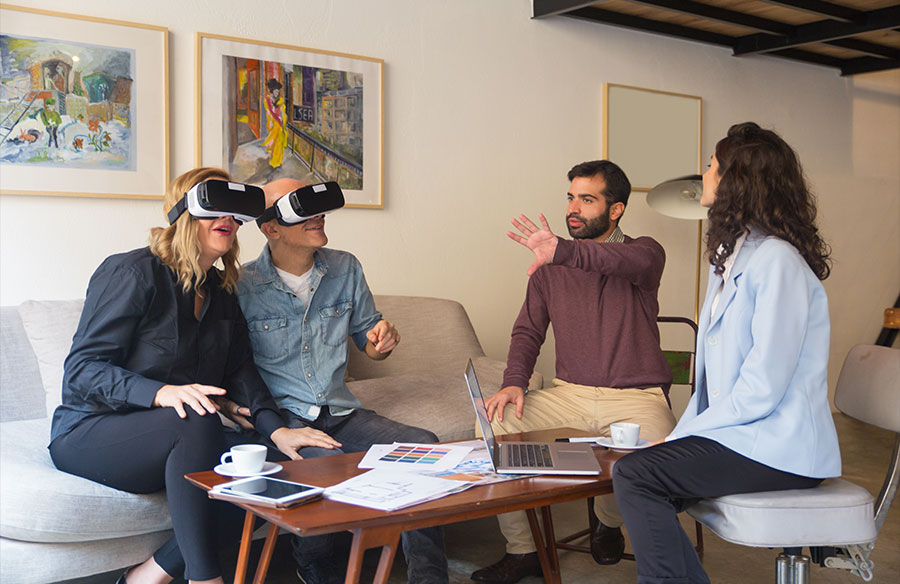
Virtual Reality (VR) and Augmented Reality (AR) are also emerging as essential tools in interior design, and AI is at the heart of this technological evolution. VR allows clients to experience their future spaces in immersive 3D environments before any physical changes are made, while AR can overlay digital objects onto real-world environments, giving designers and clients the ability to visualize design elements in real-time.
AI enhances both VR and AR by making these technologies smarter. For instance, AI can track user movements, preferences, and interactions, adapting the design in real-time based on the feedback it receives. This ability to simulate real-life experiences makes AI a powerful tool for testing different designs and layouts, offering clients a more dynamic and hands-on approach to interior design.
AI and the Future of B2B Interior Design Solutions
While AI is transforming residential interior design, it is also making waves in the commercial and B2B sectors. In 2025, we will see an increasing number of businesses using AI to create workspaces that are more efficient, collaborative, and employee-friendly. AI can analyze employee productivity, collaborate with designers, and even predict which office layouts foster creativity and collaboration. The future of office design will be driven by data that helps optimize space utilization and create environments that enhance overall work performance.
As businesses increasingly invest in AI to design functional and sustainable office environments, it becomes clear that AI will play a pivotal role in shaping how we work and interact with the spaces around us. Moreover, AI companies are developing advanced software that integrates these intelligent design solutions, helping businesses stay ahead of the curve and build workspaces that are both innovative and adaptable to changing needs.
Conclusion
AI is set to revolutionize interior design by 2025, bringing smarter, more sustainable, and more personalized spaces to life. As AI-powered tools continue to evolve, they will empower both designers and clients to reimagine how spaces are designed and interacted with. Whether it’s through enhanced home automation, sustainable design practices, or immersive virtual experiences, AI offers exciting possibilities for the future of architecture and interior design. For both residential and commercial spaces, embracing these changes will not only optimize the functionality of your environment but also push the boundaries of what’s possible in design. As we move forward, it will be exciting to see how AI continues to reshape the spaces where we live and work.







