

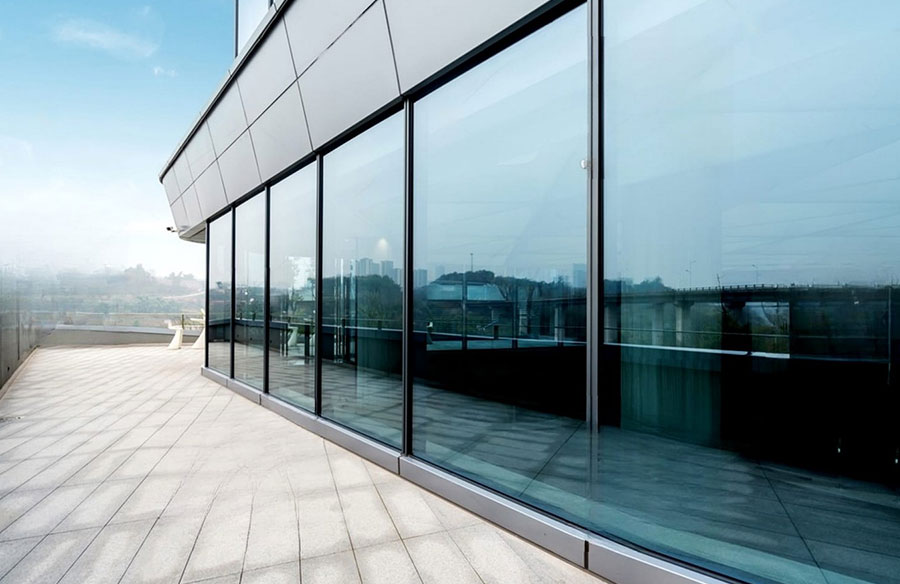
Located in the thriving city of Richmond, British Columbia, overshadowing its nearby cityscape is the Wilson School of Design at Kwantlen Polytechnic University (KPU). In this paper, a proposal for the design of a progressive school is going to be discussed in detail, and it must be noted that its architectural model is not only a reflection of the concept of contemporary progressive education but also a reflection of the author’s concern with the further development of eco-friendly tendencies in the field of construction.
Among the considerations that makes it possible, low-emissivity (Low-E) glass has proven to be a high performing glass solution that eased on the carbon footprint necessary for the building without compromising on comfort.
What is Low-Emissivity (Low-E) Glass?
Low-Emissivity glass is a type of energy-efficient glass with low thermal emissivity allowing little amounts of ultraviolet (UV) and/or infrared light to pass through the glass while at the same time permitting significant amounts of visible light.
It is a miniature layer of metallic oxide on Low-E glass that reflects heat back to the room hence preventing heat ingress in cold seasons and heat egress in hot seasons.
These unique glass products are used to address energy conservation functions, more useful in projects that want to attain sustainable construction recognition like LEED.
A Glimpse into Wilson School of Design’s Vision
The development of the Wilson School of Design was initially framed by visions Kwantlen Polytechnic University has for the school to become a space that fosters creativity, innovation, and sustainability. The challenge therefore fell on the architects, KPMB Architects, to not only design an efficient LEED Gold facility, but also a place that would inspire innovation in learning.
The challenge was to create a structure in which the use of transparent space for learning, relaxation and encounters could be enhanced with natural light, enriching both the internal environment and results of activities.
The Role of Low-E Glass in the Project
The decision to incorporate Low-E glass into the building design work of Wilson School of Design had to do with energy demand and comfort among the users of the building. Here’s how Low-E glass contributed to the project’s success:
1. Enhanced Energy Efficiency
Low-E glass’s biggest advantage is that it saves on energy. Houses with extensive glazed frontage are exposed to tremendous heat incursion during the warm season and heat outflow in the jewel month. Clear glass is a rather insulating material, which means that it lets through a relatively high quantity of heat that in turn increases the demand for installation of heating and cooling systems. Nevertheless, Low-E glass tackles this problem by reflecting Infrared heat back to the building preventing interior temperature fluctuations.
In the case of Wilson School of Design it meant cutting down energy bills and emissions of greenhouse gases. Through enhancing the glass’s thermal features, more efficiency, and effectiveness of the building’s HVAC M&E systems would be achieved since less energy would be consumed, therefore lowering the carbon footprint age of the building.
2. Improved Indoor Comfort and Well-being
Daylighting is crucial in ensuring production and comfort of the learning environments. However, all this results in glare, hotspots, and high indoor temperatures when there is too much of it. low E glass also known as Low emissivity glass assists in controlling the amount of heat and light that enters the facililty. The coating provides a barrier to UV and IR radiation and at the same time admits most of the visible light spectrum.
For students and staff at Wilson School of Design this means getting to work in well lit spaces that offer comfort such that people are not stressed by either scorching heat or glares. The use of Low-E glass has provided the inhabitants a favourable cover that has improved their health and work output.
3. Aesthetic Appeal and Architectural Flexibility
The architects of the Wilson School of Design initially prayed for a glamour of modern industrial with mineral glass aesthetics and the capability to integrate the interior of the building inside the community atmosphere.
Consequently, the use of High-performance Low-E glass made this vision possible without necessarily jeopardizing the energy efficiency aspect. Extended glazing ensures that the clients have clear sights of the landscape and other environmental factors outside yet the internal environment is controlled.
The decision about the location of openings enhances not only the output-the beauty of the building’s appearance but also the input-the interaction with the outside world and consequently, the interior space appears to be much more extensive and inviting or respectively cozier.
Environmental Impact and Sustainability
Sustainability was an integral goal considered when designing the Wilson School of Design. By choosing Low-E glass, the project was able to align with several key sustainability goals:
1. Reducing the Carbon Footprint
These constructions are considered to contribute nearly one third of global emissions, which are largely due to energy use. The Wilson School of Design implemented Low-E glass, decreasing the amount of energy used by the building, thereby decreasing its carbon footprint.
It is responsible for reflecting and at the same time blocking a good amount of solar heat thereby reducing the need to use an air conditioner or heater. This reduction in energy demand leads to the slowing down of the emission of greenhouse gases thus making the building part of the solution to global warming.
2. Optimizing Daylighting for Energy Savings
Low-E glass is very important in enhancement of daylighting which involves utilization of natural light inside a room. As will be described shortly, the reliance on extensive glass facades at the Wilson School of Design means that artificial lighting is not required until the evening. This not only conserves energy, but has also been associated with many health benefits as a result of the need to let natural light into the rooms.
3. Achieving LEED Certification Goals
Low-E glass aided Wilson School of Design in achieving a LEED certification. LEED is a well known green building rating system accreditation that promotes practical and verifiable processes in green building design.
The overall energy conservation and the environmental impact offered by Low-E glass are well in sync with the necessary parameters for earning the LEED certification points and therefore reveals the project’s seriousness in asserting the company’s commitment at a sustainable level.
The Broader Impact of Using Low-E Glass
The Wilson School of Design has tremendous potential, which is evident in how low-e glass has contributed to change the performance of a building. Other than its practicality, Low-E glass in this project has the added value of teaching students, architects and the public about sustainable buildings.
In order to achieve such supplies, educational institutions such as KPU used innovative materials mainly for construction to ensure that future construction projects would look attractive, be functional as well as sustainable. The wilson school of design has successfully incorporated eye-catching architectural designs with some of the best and most efficient energy conservation systems available.
Conclusion
Kwantlen Polytechnic University’s Wilson School of Design demonstrates how sustainable architecture is put into use. low-emissivity (Low-E) glass was effectively used at many places in the building as part of the long-term energy conservation strategy in the building climate control to make the building environment more comfortable for users apart from minimizing destructions of the building and cutting overall impacts on the environment.
This case study is an example, which shows how a reasonable choice of materials may lead to incredible results and make it possible to create beautiful and efficient spaces for living in compliance with sustainable development goals.
For more information about Low-E glass and its uses, please go to the Low-Emissivity glass page of this site.







