

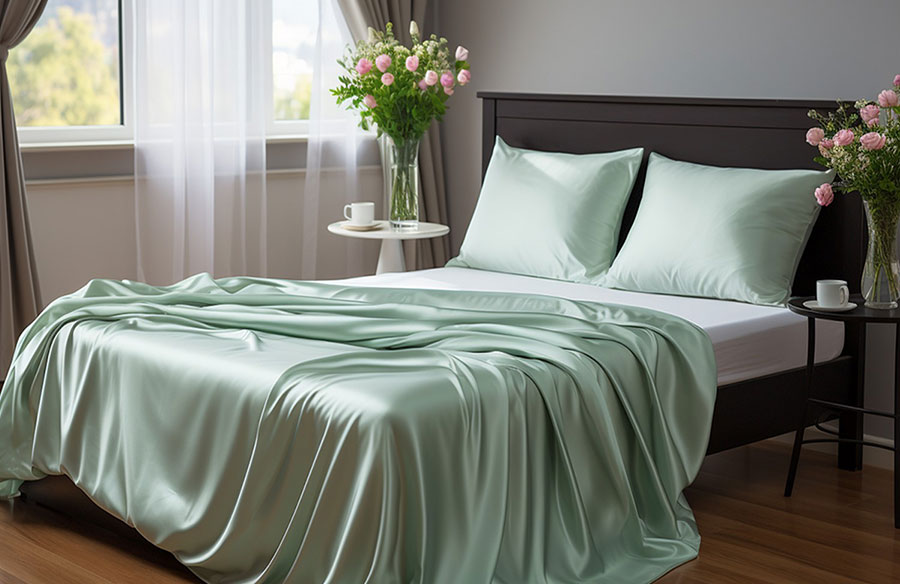
With people being more focused on making their lives healthier and comfort-oriented, the silk bedding industry is on the rise. Silk is a natural protein that is produced by the larvae of a moth. It is the only natural filament fiber known to mankind. A single filament from a single cocoon can measure up to 1000 yards. A filament is a fiber made by the cocoon, and usually, it is so long that it is measured in miles or kilometers.
Silk production makes up less than 0.2% of the global fiber market; even though it is still such a small market, it will be a multi-billion dollar industry in 2024. When you are thinking about the sustainability of silk, you need to be aware of risks that are related to agriculture, such as the growth of mulberry trees on which silkworms survive. On the other hand, animal rights are also a big concern in the production of silk because silkworms are raised with a single thought of making silk, and during the process of making silk, they are eventually killed as well.
So these are some of the major concerns that people talk about when the conversation is about silk being eco-friendly or not? Today, with this blog we are going to debunk the process of making silk bedding, and the benefits of using silk along with the new modern day peace silk manufacturing, so let’s begin!
How Silk Was Made?
Chinese were the first civilizations to grow silkworms and collect silk to use for manufacturing of various products. The Chinese were also the first ones to start with sericulture, the process of raising caterpillars of the domesticated silkworms. For centuries to come China did try their best to keep the manufacturing process of silk hidden from the rest of the world. This allowed them to have a monopoly over the manufacturing of the silk.
The Silk Road was a pre-industrial network of an ancient trade route that linked China to the rest of Europe. Even to this day, the sericulture process of making silk still remains the same. Silkworm larvae are fed mulberry leaves and left to spin their cocoons. After two or three days, the cocoons are then dropped in boiling water or steamed so the pupae can be killed. Once this process is done, silk filament is taken out from the cocoon and woven into fabric.
In all honesty it takes around 2500 silkworms to spin a pound of raw silk. In each cocoon you can find an astonishing mile of silk filament and keep in mind one single thread of silk is made of multiple filaments. Strands that are too thin to be used in the making of a thread are twisted together to form a thicker yarn in a process which is known as throwing.
Benefits Of Using Silk In Your Bedding
Now that we have spilled the truth about the traditional methods of making silk, the next thing you need to know is why people prefer silk bedding over any other fabric.
Well, the simple answer is how it makes you feel, it is one of the nicest and the most luxurious fabrics that one can purchase for themselves.
When silk is used for the manufacturing of bedding materials like silver silk pillowcases it can help in regulating temperature, prevent wrinkles on your skin from aging, relieve you from skin conditions and also contributes to better hair.
Temperature Regulation
Silk bed sheets are an excellent choice for people who are living in warmer areas. Besides this, silk sheets might also ease up the discomfort of hot flushes in menopausal systems for women. It can control moisture and regulate heat in a much more effective manner than any other fabric.
Suitable For Sensitive Skin and Allergies
Silk has antimicrobial properties, which help ease the symptoms of eczema and other silk conditions, making it a great fabric for sensitive skin. Furthermore, silk is hypoallergenic in nature, and the dense structure of the silk threads prevents the accumulation of dust mites and other forms of allergens.
Healthy Skin And Hair
The long and smooth fibers of silk are natural anti-aging products that are filled with amino acids. This particular acid helps in reducing the appearance of wrinkles. Even dermatologists have said that when skin rubs against pure silk bedding like the one produced by Silvera it will slow down the signs of aging and wrinkles.
Modern Ethical Ways In Which Silk Is Made?
There is a new way of collecting and manufacturing silk, it is called peace silk or Ahimsa silk, this form of silk is made without killing or even hurting the silkworm. Instead of boiling cocoons, small incisions are made to allow the moth to exit the cocoon once the metamorphosis is complete.
On the other hand, some people are now shifting towards using bamboo fabric as it is considered to be somewhat close to what silk fabric provides in terms of smoothness, and feel. Apart from this, bamboo is also a natural occurring fiber and it is produced without hurting any animal or even a plant. Bamboo plants are available in abundance in different parts of the world as they can grow in the wild. As a result, there’s no monopoly of one country over the entire industry.
Wrapping Up
The ethical expectations have changed in recent years, but there’s one thing which still remains in us and that is our love towards all things that are shiny and soft.
Silk has remained a staple of luxury and comfort for thousands of years. However, if the manufacturing process of silk does not impart major changes to become more sustainable and safe for silkworms, Woke individuals are surely going to make some changes to their favoritism and choose other fabrics like bamboo, linen, and others because of their eco-friendly nature and safety for animals.
FAQs
Q1) How environmentally friendly is silk manufacturing?
In general terms, silk manufacturing is considered to be sustainable; it is a renewable resource; you can dump it in the ground, and within a few days, it will be gone, depending on how good it is in terms of biodegradability. The manufacturing process of silk uses minimal water in comparison to other fabrics.
Q2) What are some benefits of silk bedding?
There are tons of benefits that one can enjoy when they put up silk bedding in their bedroom; the major ones are written down here:
- First, silk is very low soft in nature, as a result, your hair and your skin will have the minimal amount of friction when they are rubbed against the silk bedding.
- Silk is naturally hypoallergenic, so the surface of the silk is not as conductive as other fabrics when it comes to the growth of bacteria, dust mites, and other allergens.
- With proper care skin bedding can last you decades making you enjoy the benefits of expensive fabric for years to come.
Q3) What is considered to be the most environmentally friendly material for sheets?
Hemp, bamboo, linen, wool, and organic cotton are considered to be some of the best bed sheet materials that keep the environment safe.
Q4) Is Silk 100% biodegradable?
Despite some minor concerns most of the silk production doesn’t harm the environment significantly. On the other hand, silk being a natural fabric is 100% biodegradable, and it does not contribute to any form of land, water or air pollution.
Q5) Are silkworms killed to make silk?
With the latest techniques in the manufacturing of silk, silkworms are not killed, boiled, and dried out for the extraction of silk. Now, there’s a concept of peace silk in which silk farming individuals make a little cut at a certain position of the cocoon in order to extract the silk from the worm without causing any form of harm to them.







