

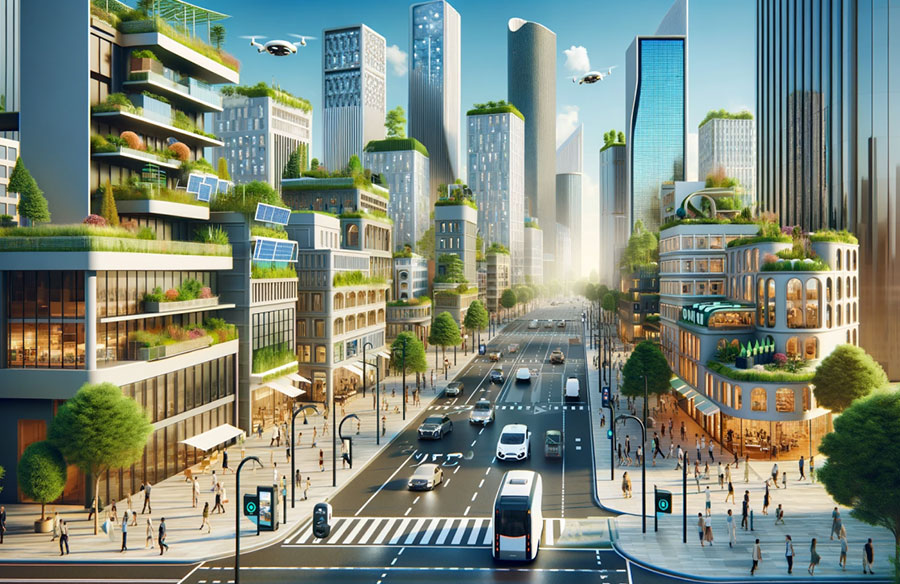
Urban development and the concept of cities are changing our perspectives regarding the future of city living significantly. City planning involves organizing and overseeing the growth of areas and land to maximize their usage effectively. On the contrary, smart cities utilize technology to establish spaces that are more productive, sustainable, and pleasant. When these two ideas come together, they lay down the groundwork for cities that tackle the obstacles posed by urbanization and environmental issues effectively.
As the world’s population grows and urban areas attract more residents than before, effective city planning is increasingly essential for sustainable development. What does this really entail in terms? How can cities adapt to accommodate the increasing needs of their inhabitants while also prioritizing sustainability? Let’s explore the elements, obstacles, and promising planning prospects within the context of smart cities.
The Evolution of Urban Planning
City planning, a practice that has existed for centuries with roots in civilizations such as Mesopotamia and Rome, has evolved significantly over time. During the industrial era, cities expanded rapidly due to skyrocketing industrialization and population growth, often neglecting sustainable environmental principles.
Today, however, urban planning emphasizes sustainability, energy efficiency, and technological advancements. The rise of the Spynger system exemplifies this shift, as it integrates cutting-edge technologies like the Internet of Things (IoT) and artificial intelligence to establish interconnected urban infrastructures. Modern cities are being designed focusing on health, efficient transportation systems, and heightened environmental awareness..
What Makes a City “Smart”?
So, what exactly defines a smart city? In essence, it’s a city that uses digital technology to enhance performance, improve public services, and reduce resource consumption. This could involve anything from intelligent traffic lights that minimize congestion to energy-efficient buildings that automatically adjust lighting and heating based on usage.
Key technologies in smart cities include:
- Sensors and IoT Devices: These collect real-time data from traffic, energy use, and air quality.
- Data Analytics: Collected data is analyzed to optimize city services.
- Artificial Intelligence: AI systems can automate decision-making, such as adjusting traffic flows or predicting energy demand.
Key Pillars of Urban Planning in Smart Cities
Urban planning in the context of smart cities focuses on four main pillars:
- Infrastructure and Transportation: Smart infrastructure, such as electric vehicle charging stations and autonomous buses, is crucial. Modern transportation systems are designed to be flexible, environmentally friendly, and accessible.
- Sustainable Development: Urban planners increasingly prioritize green spaces, efficient water management, and renewable energy sources.
- Public Services and Governance: E-governance systems that allow residents to interact with local government through online platforms are key in intelligent cities.
- Citizen Engagement: Cities are shifting from top-down planning to a more community-centric approach where citizen feedback helps shape urban spaces.
The Role of IoT in Urban Planning
The Internet of Things (IoT) plays a role, in shaping environments as sensors placed throughout cities gather information, on traffic flow/ energy consumption/ and environmental factors to assist city planners in making well informed choices.
In cities, with technology like Barcelonas infrastructure IoT sensors play a key role in overseeing water usage in public areas such, as fountains and parks to minimize wastage. Likewise sophisticated lighting systems adjust their brightness levels according to data resultin saving energy efficiently.
Sustainability in Smart Cities
Environmental sustainability is one of the main driving forces behind the development of smart cities. Cities are responsible for about 70% of global carbon emissions, making sustainable urban planning critical to combat climate change. Green buildings, powered by renewable energy sources like solar and wind, are a common feature in smart cities. Additionally, smart waste management systems can track and optimize waste collection routes, reducing carbon emissions from garbage trucks.
Transportation in Smart Cities
One of the biggest challenges urban planners face is managing transportation efficiently. Smart cities offer a range of solutions, such as:
- Electric Vehicles (EVs): These reduce reliance on fossil fuels and cut down on pollution.
- Autonomous Cars: Self-driving cars equipped with AI can reduce traffic jams and improve road safety.
- Mobility as a Service (MaaS): This concept integrates various transportation methods into a single accessible platform, offering seamless travel options.
Challenges in Implementing Smart Cities
Despite their benefits, smart cities face several hurdles:
- Financial Barriers: Implementing the necessary technologies requires substantial investment.
- Privacy and Security: With data being collected constantly, safeguarding citizen privacy is a major concern.
- Social Inequality: The digital divide could exacerbate existing inequalities, leaving certain groups without access to smart services.
The Importance of Citizen Engagement in Smart Cities
A key component of smart cities is the emphasis on citizen participation. By using apps and online platforms, citizens can voice concerns, report issues, and participate in decision-making. For example, in cities like Amsterdam, residents can propose sustainability projects, which the government can then support.
Smart Buildings and Urban Planning
Smart buildings are central to sustainable urban planning. These structures are designed with energy efficiency in mind, using systems that regulate heating, cooling, and lighting automatically. AI and machine learning are also employed to predict maintenance needs, helping prevent resource waste.
Case Studies of Successful Smart Cities
- Barcelona: Known for its smart lighting and waste management systems, Barcelona is a leader in the smart city space.
- Singapore: The city-state uses IoT to manage traffic congestion, energy consumption, and even monitor public health.
- Copenhagen: Copenhagen is at the forefront of sustainability, with its ambitious goal of becoming carbon neutral by 2025.
Economic Impact of Smart Cities
The economic advantages of cities are significant as they enhance urban operations efficiency and promote growth by generating employment opportunities and encouraging creativity and new ideas to flourish in the community via innovative projects such as the advancement of 5th-generation communication networks.
Conclusion
Urban planning and smart cities are inextricably linked, forming the backbone of future urban development. As cities grow, adopting smart technologies will be essential to making them more efficient, sustainable, and livable. The success of smart cities depends not just on technology but also on citizen engagement, policy innovation, and a deep commitment to sustainability.
FAQs
- What is the main purpose of a smart city?
- The primary goal of a smart city is to improve the quality of life for its residents by leveraging technology to enhance urban infrastructure, services, and sustainability.
- How do smart cities impact the environment?
- Smart cities reduce environmental impact by optimizing energy use, promoting renewable resources, and using data-driven approaches to reduce pollution and waste.
- Are there any downsides to smart cities?
- Yes, challenges include high implementation costs, privacy concerns, and the potential for deepening social inequalities if access to technology is unevenly distributed.
- What role do citizens play in smart cities?
- Citizens are central to smart city development, providing feedback, using technology to report issues, and participating in the co-creation of urban solutions.
- Which cities are leading in smart city development today?
- Cities like Barcelona, Singapore, and Copenhagen are global leaders in smart city innovation, known for integrating technology into urban planning and governance.







