

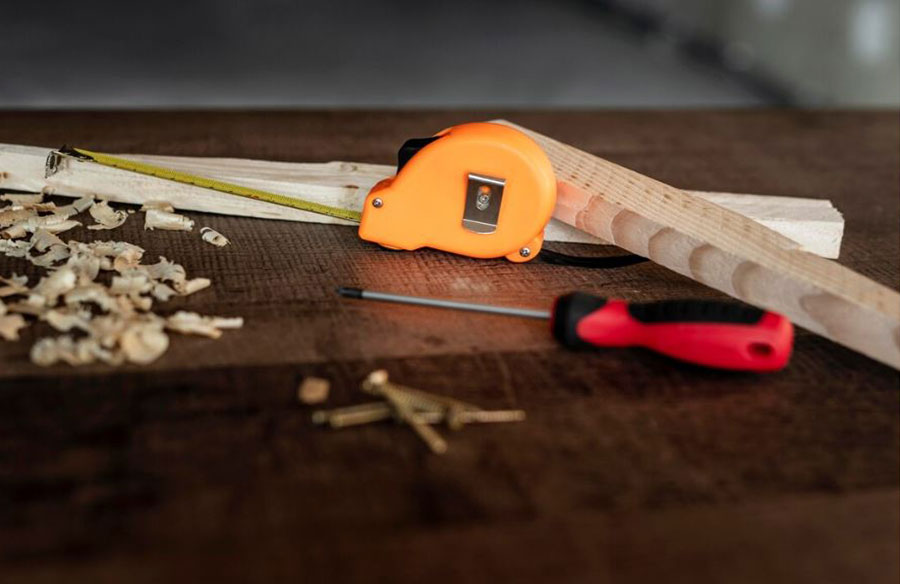
When you move into your own home, most people seek change. This is not because everything is in poor repair but more about making tweaks that fit your lifestyle and putting your stamp on your castle. Power tools are essential for home projects, and even with a house with a smaller footprint, building with them is more efficient than building with regular hand tools.
What tools should you have in your kit to tackle any project? It is easy to overbuy, and while it’s nice to have everything on offer, you are better off buying the right tools that serve you best. Here are the most versatile power tools for tiny homes to succeed.
Corded or Cordless?
This may not be much debate because cordless tools are very convenient. You don’t have to worry about running a power cord to work. However, it would help if you charged the batteries.
Corded tools provide more sustained power and torque, making them better suited to heavier tasks. Cordless tools have superior maneuverability and are ready to use when you are.
For a small home, get cordless tools in a combo kit that uses the same batteries. This kit can be housed in a dedicated box. Milwaukee is great for this as they have essential kits for homeowners and the best-quality tools on the market.
Recommended Power Tools
What brand of power tool should you buy? This is a tough question because everyone has their favourites and sticks to their brands. If you are serious about home projects, it pays to buy versatile, quality tools and share batteries.
The best of these is the Milwaukee brand. Milwaukee tools stand above the crowd for their durability, design and ease of use. Once you get your first Milwaukee, you’ll understand its popularity among many users. Check out the Milwaukee tool store to browse their product catalogue.
Regardless of the brand, your best bet is to buy each tool as needed. Alternatively, purchase a large kit with several tools, which can be a great bargain. Ultimately, you will equip yourself with all the tools you need to be a professional DIYer.
Drill
A drill is a must-have tool for most home projects where you must make holes in different materials. They’re also handy for driving screws. With various torque settings, it prevents screw stripping.
You can easily control the drill’s speed, which is useful when working with plastic, wood, and metal. Many power drills come with a hammer drill setting, or you can get a separate hammer drill besides your regular one.
Circular Saw
Along with drilling, you will need a power tool that cuts, the most common being a circular saw. This hand-held tool allows you to cut through the material instead of feeding it through a table saw and is ideal because of its portability.
You can do precision cutting, which is very safe, and using different blades, you can cut through all kinds of material. This tool is for straight cuts, typically lumber, but you can also use it for plunge cutting.
Impact Driver
While you can use your drill to install screws, an impact driver is better for the task. It gives you high torque and handles any size of screw. Even with a small home, some projects need strength and durability, making this tool ideal.
One great thing about an impact driver is that it does most of the work, reducing strain on your part. It can handle tough materials like wood, metal, and concrete. Many bit attachments are available, so it’s a good idea to get a kit with lots of options.
Mitre Saw
This saw allows for precise cross-cuts, mitre cuts, and angled cuts with a quick adjustment. It’s perfect for building shelves, installing moulding, crafting projects, and other household tasks. Although it’s bigger and pricier, it’s necessary.
Besides these main tools, you may also want a large nail gun for framing and a brad nailer for moulding and trim. Cordless is preferable. A jigsaw lets you create curved cuts and holes. A portable orbital sander is great for smoothing saw cuts and other wood edges and surfaces.
A multi-tool, which comes with different attachments, helps with hard-to-reach and awkward cuts. Routers are useful for uniform edges and intricate wood profiles. A reciprocating saw, which has a unique blade, is ideal for demolition, renovations, and yard work.







