

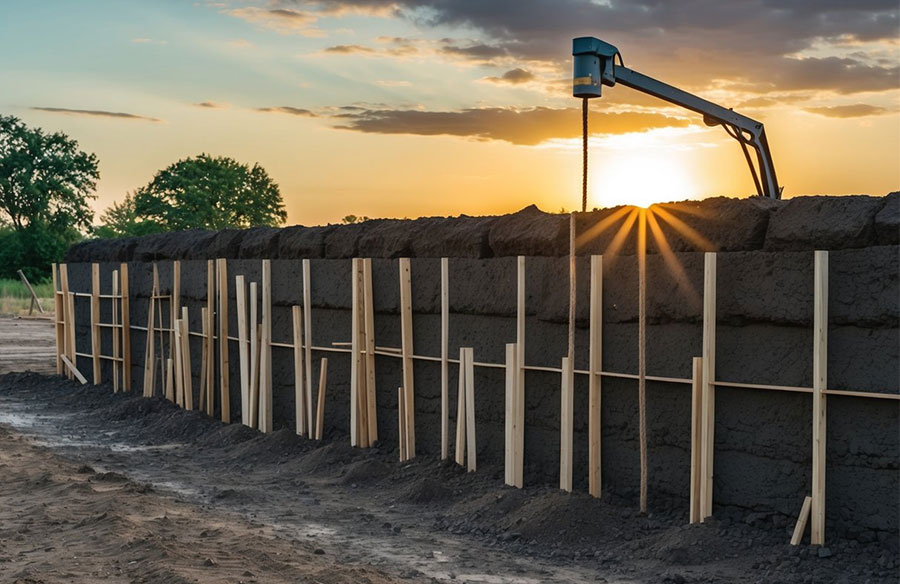
Rammed earth construction has gained popularity due to its sustainability and aesthetic appeal. In building rammed earth walls, a mixture of subsoil, gravel, clay, sand, and sometimes a stabilizer is compacted into formwork to create robust structures. This method requires understanding the climate and location, as it typically thrives in dry environments.
The process starts with creating a specific mixture, generally composed of 30-40% clay soil and 60-70% gravel and sand. Each layer of the mixture, about a foot thick, is added to a formwork and then compacted until solid. Once dried, the formwork is removed, revealing monolithic walls that are both sturdy and beautiful.
Rammed earth’s versatility includes the addition of materials like cement or waterproofing agents for extra strength or weather resistance. Ideal for both modern and traditional designs, these walls offer a unique combination of durability and environmental friendliness. For detailed steps on constructing these walls, ask the experts at Admer Construction Group.
Fundamentals of Rammed Earth Construction
Rammed earth construction involves careful selection of materials and thoughtful design considerations to create strong, durable walls. The subsections below explore the specifics of materials, composition, and key design principles for constructing rammed earth walls effectively.
Materials and Composition
Rammed earth walls are built using a mix of subsoil, gravel, clay, sand, and silt. Typically, the mix contains 30% to 40% clay soil and 60% to 70% gravel, sand, and fines for optimal strength. A stabilizer like lime or cement may be added to enhance durability.
The mixture is moistened and then compacted in layers within wooden forms. This forms dense and solid walls. Natural pigments can be included to offer a variety of aesthetic finishes.
By adhering to the correct proportions and compacting practices, the structural integrity and longevity of rammed earth walls can be significantly improved.
Design Considerations
Designing rammed earth structures requires attention to factors like wall thickness, insulation, and environmental impact. Walls must be thick enough for thermal mass, typically about 18 to 24 inches, to effectively regulate indoor temperatures.
Drainage and weatherproofing are essential to protect the walls from moisture. Properly designed eaves and foundations can mitigate water damage.
Thermal efficiency can be enhanced with integrated insulation. The design should also consider local climate and seismic activity. Due to the natural and reusable materials, rammed earth is a sustainable choice.
Building Process Overview
The construction of rammed earth walls involves several critical steps that ensure structural integrity and durability. From preparing the site and assembling formworks to tamping the soil and curing the walls, each phase demands careful attention.
Site Preparation and Foundation
Before any earth ramming begins, the site needs thorough preparation. This involves clearing any vegetation, debris, or obstacles. The foundation is then laid, which can be made of concrete or compacted gravel. Proper drainage systems are installed to prevent water accumulation around the base.
Ensuring a level and stable foundation is crucial as it supports the weight of the rammed earth walls. Misalignment can lead to structural issues later. Measurements are verified multiple times to guarantee precision.
Forming a solid base also includes treating the foundation with materials that enhance durability. This step often uses lime or other stabilizers that improve drainage and resilience.
Formwork Assembly and Soil Tamping
Formwork assembly is the next step, where wooden or metal frames are constructed to shape the walls. These forms are robust and precisely aligned to maintain consistency in wall thickness.
Once the formwork is in place, layers of soil mixture are added. The mixture typically consists of a blend of gravel, sand, clay, and sometimes a stabilizer like lime. Each layer, usually around 4-6 inches thick, is systematically rammed or compacted.
The ramming process is done using pneumatic rammers or manual tools. This step is critical as it compresses the soil mixture into a dense, cohesive structure, eliminating air gaps which could compromise wall strength.
Wall Curing and Surface Finishing
After the soil has been compacted and the formworks removed, the walls are allowed to cure. Curing is essential as it lets the material settle and gain strength. This period can last several days to weeks, depending on the climate and soil composition.
During curing, it’s vital to protect the walls from harsh weather. Coverings or sealants can be applied to shield the earth from moisture and wind erosion.
Surface finishing involves smoothing the walls and applying treatments like natural oils or waxes to enhance appearance and durability. This step not only improves aesthetics but also increases the wall’s resistance to environmental factors.







