

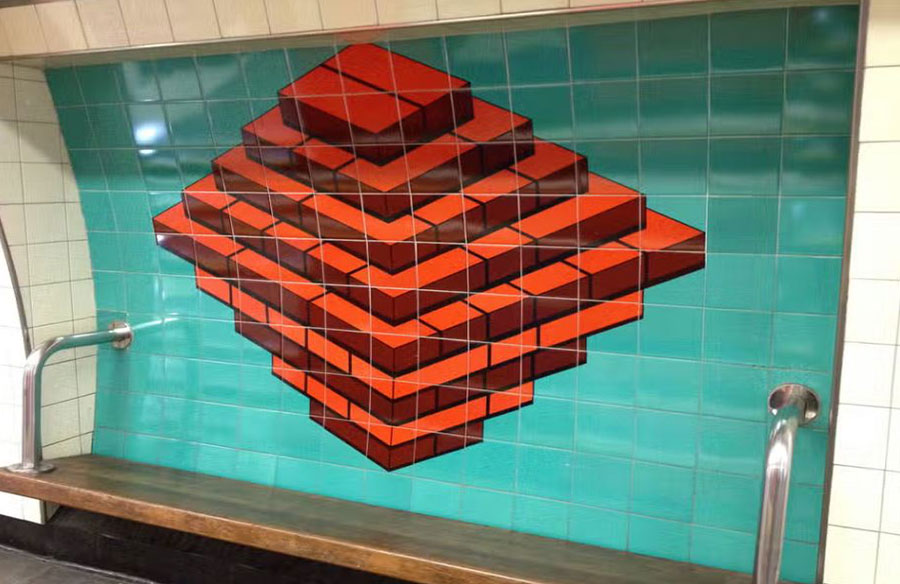
London, a city steeped in history and renowned for its grand architecture, boasts an array of iconic landmarks that tell tales of its illustrious past. Amidst its grand buildings and historic sites the London Underground emerges as a treasure trove of design and artistry.
The intricate mosaics and creative tiling adorning tube stations like Tottenham Court Road and Bethnal Green transform these bustling public spaces into underground art galleries. These masterpieces, brought to life by artists and designers, illustrate the enduring legacy and evolving creativity of tiling in the heart of London.
Durable Tiling For The London Underground
The history of mosaics can be traced back to ancient civilisation, where they were used to protect building exteriors and decorate floors. From cathedrals and palaces, intricate mosaic tiles helped create beautiful artwork and patterns throughout history. This historical context enriches our understanding of how mosaic tiling has evolved into contemporary settings like the London Underground.
Mosaics have stood the test of time as buildings and locations in modern day London still incorporate mosaic tiling, and other tiling, into their designs. Early tube station designs featured plain white tiles, chosen for their ability to brighten the dimly lit tunnels. As the network expanded, so did the creativity in rail expansion and station designs, with each station developing its unique style.
The use of tiles in London’s iconic tube stations is a testament to their practicality and visual appeal. Tiles offer unmatched durability, standing up to the wear and tear of daily foot traffic and the harsh conditions of an underground environment. Their ease of cleaning ensures that stations remain sanitary and visually pleasing despite the constant flow of commuters.
- Tottenham Court Road tube station
Tottenham Court Road tube station is one of the ‘most artistic looking’ tube stations on the London Underground and stands out because of its beautiful mosaic art and white tiles. Over the years, many renovation and restoration projects have taken place to maintain the tiles decorating this station.
The tiling underwent a significant renovation in 2017 to restore and conserve the intricate mosaic artwork completed by artist Eduardo Paolozzi in 1986. As a leading figure in Pop Art, Paolozzi created multiple mosaic designs throughout this underground station, symbolising his interpretation of the local area.
Like many old stations, Tottenham Court Road tube station has had many changes over the years, with Paolozzi’s redecoration project being one of the most famous. Over time the station has had to adapt to meet the demands of the busy London Underground and changes have been made to keep the detailed mosaic art in top condition. These efforts not only preserved the artistic integrity of the station but also revitalised it for future generations, blending creative art with contemporary requirements.
- Bethnal Green tube station
Opened in 1946, Bethnal Green tube station in East London features a timeless tiling design that reflects the Art Deco style of its 1930s construction. The station features ceramic tile work by renowned designer Harold Stabler that captures the attention of commuters to this day. As well as these randomly placed ceramics, the station also has a variety of tiling in cream, black, and red for decoration.
A couple of tiles Stabler designed showcases the London Underground headquarters building and the London Transport roundel, as perfect symbols for the city’s transport system. Other tiles used in the station design include iconic locations such as the Palace of Westminster and Crystal Palace, as well as various coats of arms.
Ceramic tiles used on the Underground transport system make them the most memorable environments due to their patterns, colours, and textures. Tiling helps create aesthetically pleasing platforms, staircases, and tunnels and provides a practical and essential part of their structure. Meticulous work over the years has helped to conserve Bethnal Green’s tiles and help it remain a significant and beautiful piece of London’s underground heritage.
- Regents Park tube station
Regent’s Park tube station, nestled in the heart of London, boasts a distinctive tile design and colour scheme that set it apart from other stations. The station opened in 1906 and features a deep green tile-lined entrance corridor, creating a welcoming and vibrant pathway for commuters. The rich green is complemented by an ornate decorative frieze, adding a touch of elegance to the space.
On the platform, the aesthetic shifts to a warm palette of orange and brown tiles. These tiles create a visually appealing contrast with the white background, highlighting the station’s name in bold lettering. The combination of these earthy tones adds a sense of warmth and historical charm to the platform area, making it not just a transit point but a visually engaging environment. The colourful tiles are visually stunning, durable and easy to maintain, ensuring the station stands the test of time.
As one of the older stations in the Underground network, it requires careful maintenance and preservation to retain its original charm, particularly the distinctive tiling that characterises its unique aesthetic. The tiles contribute to the station’s visual appeal and serve as a tangible link to the early 20th century, making their upkeep essential for preserving the station’s heritage for future generations.







