When it comes to heating your home, the decision between a gas boiler and a furnace is a significant one. Both systems have their advantages and limitations, and understanding these can help you make an informed decision. This article will explore the key differences between boilers and furnaces to assist you in choosing the best option for your home.
Understanding Boilers
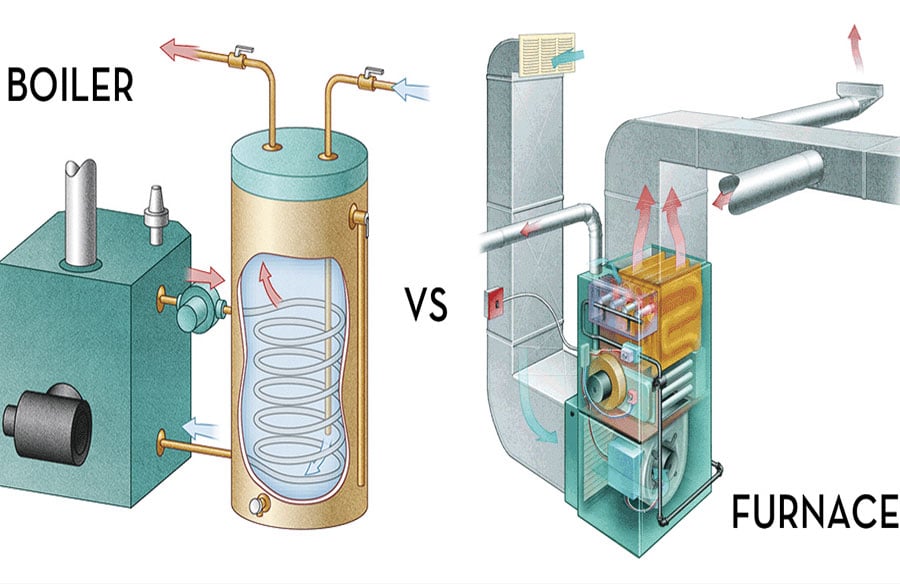
A boiler heats water, providing either hot water or steam for heating. Steam is distributed via pipes to steam radiators, while hot water can be distributed via baseboard radiators or radiant floor systems. Boilers are known for their ability to provide consistent heat without the dust and allergens often associated with forced-air systems.
Advantages of Boilers:
- Even, high-quality heat
- Quieter operation
- Ideal for homes with allergy sufferers
Understanding Furnaces
Furnaces work by blowing heated air through ducts that deliver warm air to rooms throughout the house via air registers or grills. This type of heating system is one of the most common in homes and is especially prevalent in colder climates.
There are also multiple fuel types of furnaces like gas, propane, and electric furnaces.
Advantages of Furnaces:
- Lower initial installation cost
- Quick heating of the space
- Compatibility with central air conditioning systems
1. Energy Efficiency
When it comes to how efficiently heating systems work, let’s take a closer look at boilers and furnaces. Boilers have become quite impressive in this department, with some of the latest models achieving efficiency ratings of 90% or even higher. High-efficiency furnaces can also perform admirably in terms of efficiency. The crucial tip here is to keep an eye out for the ENERGY STAR label when you’re picking out a new system. It’s a surefire way to make sure you’re getting a heating system that’s both energy-efficient and eco-friendly.
2. Cost Considerations
The cost of getting a new heating system installed can vary a lot. Generally, boilers tend to be a bit more expensive upfront compared to furnaces. However, they often make up for this initial cost by saving you money in the long run, thanks to their high efficiency. You should think about not only the money you’ll need to shell out initially but also the ongoing operating expenses. Finding the right balance between upfront costs and future savings is the key to making a smart financial decision that fits your budget.
3. Maintenance and Longevity
Taking care of your heating system is a crucial factor. Furnaces usually require more frequent filter changes, which is a relatively simple task. Boilers, on the other hand, need periodic maintenance to prevent leaks and ensure valves and other components are working properly. When it comes to how long these systems last, both boilers and furnaces can have a good lifespan of 15 to 30 years, as long as they receive proper maintenance. The main lesson here is that investing in maintenance, regardless of the type of heating system you choose, is essential to keep it running smoothly for years to come.
4. Climate and Home Layout
Your choice may also depend on the climate you live in and the layout of your home. Boilers are often favored in colder climates due to their efficient operation and consistent heat distribution. On the other hand, furnaces might be more suitable for homes in milder climates or those already equipped with ductwork.
Conclusion
In conclusion, the choice between a boiler and a furnace depends on various factors, including cost, efficiency, maintenance, climate, and your home’s layout. Consider consulting with a heating professional who can provide personalized advice based on your specific needs and circumstances. Remember, the right choice will ensure a comfortable and warm home environment, as well as potential energy savings in the long run.