Amphibious Housing in Maasbommel – Examples of Flood resistant architecture around the world
In the pursuit of flood-resistant architecture, Amphibious Housing in Maasbommel emerges as a groundbreaking example, showcasing an innovative approach to designing homes that gracefully coexist with the ever-present threat of flooding. This article unravels the architectural ingenuity behind Amphibious Housing in Maasbommel, exploring its design principles, global significance, and statistical resilience metrics that position it at the forefront of flood-resistant solutions.
Architectural Marvel in Maasbommel
Pioneering Flood-Resistant Design
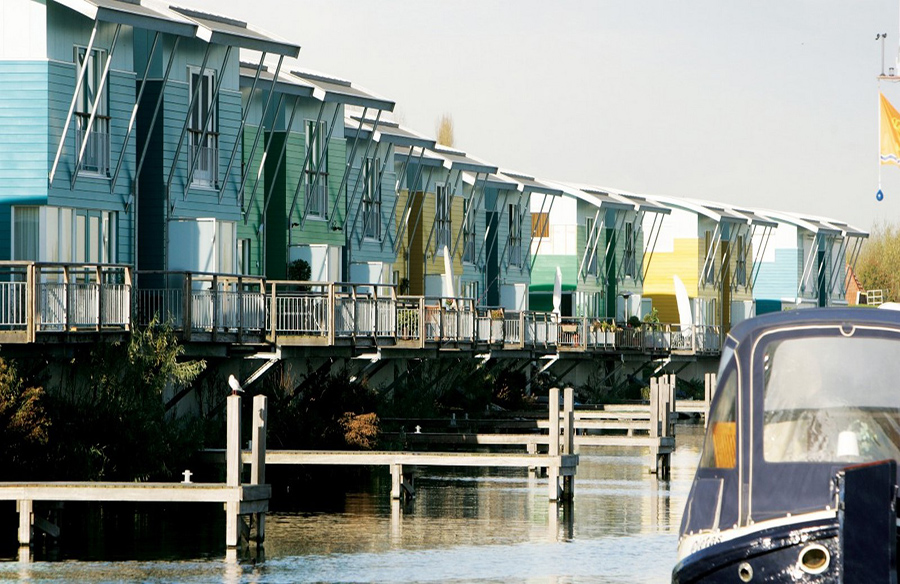
Amphibious Housing in Maasbommel represents a pioneering leap in flood-resistant architecture, defying conventional norms by embracing an adaptive and dynamic design philosophy. Crafted by visionary architects, this housing project redefines the boundaries of living amidst waterways, responding ingeniously to the recurrent challenge of flooding in Maasbommel.
Design Strategies and Flood-Resistant Innovations
Buoyant Foundations: Floating Above the Threat
At the heart of Amphibious Housing in Maasbommel lies the utilization of buoyant foundations, allowing the entire structure to float above water during flood events. This innovative approach ensures that the homes remain above potential flood levels, offering residents a resilient and secure living space. The buoyant foundations serve as a cornerstone in the design, providing adaptability to the unpredictable nature of water.
Guided Piles: Precision in Elevation
Complementing the buoyant foundations are guided piles that facilitate controlled elevation. These piles enable the structures to move vertically along pre-determined paths, ensuring a smooth and controlled response to changing water levels. The guided piles showcase precision in elevation, allowing the Amphibious Housing to seamlessly navigate the challenges presented by fluctuating floodwaters.
Global Impact and Real-World Case Studies
European Riverfronts
The impact of Amphibious Housing in Maasbommel extends across European riverfronts, where flooding is a perennial concern. Real-world case studies in regions like the Rhine and Danube River basins highlight the effectiveness of this flood-resistant design. The project’s success in these areas positions it as a viable solution for communities seeking resilience along major European waterways.
Urban Waterfronts in North America
In North America, particularly in cities with vulnerable waterfronts like New Orleans and Miami, Amphibious Housing offers valuable insights. Realizing the potential of this design, architects and urban planners explore its applicability in mitigating the impact of storm surges and rising sea levels, envisioning a future where coastal communities can thrive despite the looming threat of floods.
Statistical Insights: Flood Resilience Metrics
Buoyancy Efficiency in Flood Mitigation
Statistical data on Amphibious Housing in Maasbommel’s buoyancy efficiency reveals its outstanding ability to mitigate the impact of flooding. The homes’ capacity to stay afloat during flood events demonstrates a robust resilience that significantly reduces the vulnerability of the structures to water-related damage.
Guided Pile Performance Metrics
Metrics related to the performance of guided piles in controlling elevation provide a quantitative measure of their efficiency. Rapid response times and controlled vertical movement underscore the effectiveness of guided piles, contributing to the overall flood resilience of Amphibious Housing in Maasbommel.
Sustainability Integration and Environmental Harmony
Eco-Friendly Materials and Green Initiatives
Amphibious Housing in Maasbommel places a strong emphasis on sustainability, incorporating eco-friendly materials that minimize environmental impact. The project often integrates green initiatives, such as rooftop gardens and rainwater harvesting, fostering a harmonious relationship between the built environment and the natural surroundings.
Wildlife Conservation and Biodiversity Enhancement
The design of Amphibious Housing in Maasbommel embraces wildlife conservation and biodiversity enhancement. By creating spaces that accommodate natural habitats, the project contributes to the preservation of local ecosystems, exemplifying how flood-resistant architecture can coexist with and even enhance the surrounding environment.
Challenges and Ongoing Innovations
Community Resilience Initiatives
Challenges related to community resilience in flood-prone areas necessitate ongoing initiatives. Amphibious Housing in Maasbommel serves as a case study for community engagement, where residents actively participate in preparedness and response initiatives, creating a culture of shared responsibility for flood resilience.
Advancements in Floating Technologies
Ongoing research explores advancements in floating technologies to enhance the buoyancy and adaptability of structures. Amphibious Housing in Maasbommel contributes to these innovations, inspiring the development of more efficient and scalable floating solutions for flood-resistant architecture globally.
Conclusion
Amphibious Housing in Maasbommel stands as a testament to the transformative power of flood-resistant architecture. Its buoyant foundations, guided piles, and commitment to sustainability redefine the possibilities of living in flood-prone regions. As communities worldwide face the escalating challenges of climate change, Amphibious Housing in Maasbommel paves the way for a future where resilience, innovation, and environmental harmony converge to create homes that gracefully navigate the waters of uncertainty.