The Amphibious House by Site Specific – Examples of Flood resistant architecture around the world
In the realm of flood-resistant architecture, the Amphibious House by Site Specific emerges as a beacon of innovation, redefining how structures interact with their environment during flooding events. This article delves into the distinctive features of the Amphibious House, examining its design strategies, global impact, and statistical resilience metrics that position it at the forefront of flood-resistant solutions.
Architectural Vision and Expertise
Architectural Brilliance by Site Specific
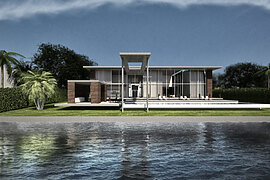
The Amphibious House is a testament to the architectural brilliance of Site Specific, a firm renowned for its commitment to creating structures that not only captivate aesthetically but also transcend environmental challenges. The firm’s expertise lies in crafting residences that harmonize with nature, providing innovative solutions to the ever-growing threats of flooding.
Design Strategies and Flood-Resistant Innovations
Buoyant Foundations for Adaptive Elevation
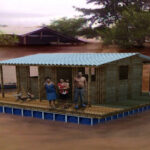
The key to the Amphibious House’s flood-resistant design lies in its buoyant foundations. These foundations allow the entire structure to rise with floodwaters, providing adaptive elevation that ensures the house remains resilient in the face of rising tides. The innovative use of buoyancy sets the Amphibious House apart as a pioneer in flood-resistant architecture.
Mechanical Systems for Controlled Elevation
Complementing the buoyant foundations are sophisticated mechanical systems that enable controlled elevation. This dynamic aspect of the Amphibious House’s design allows for precision in adjusting the structure’s height, providing a fine-tuned response to varying water levels. The integration of mechanical systems showcases a meticulous approach to flood resilience.
Global Impact and Real-World Case Studies
Waterfront Residences in the Netherlands
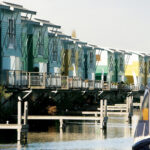
The Amphibious House has made a considerable impact in the Netherlands, a country grappling with the constant threat of flooding due to its extensive coastline. Real-world case studies in waterfront communities, such as those in Rotterdam and Amsterdam, highlight the successful integration of the Amphibious House as a flood-resistant solution that aligns with the country’s water management strategies.
Tropical Coastal Regions in Southeast Asia
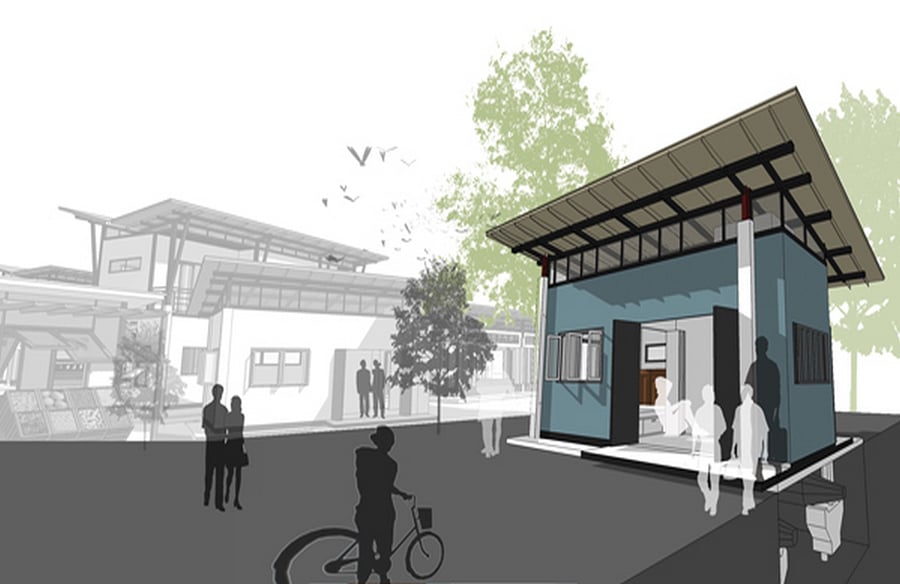
In tropical coastal regions of Southeast Asia, where monsoons and typhoons pose substantial flood risks, the Amphibious House has garnered attention. Countries like Thailand and Indonesia have explored the application of this innovative design to create resilient homes capable of navigating the challenges presented by seasonal flooding.
Statistical Insights: Flood Resilience Metrics
Buoyancy Efficiency in Flood Mitigation
Statistical data on the Amphibious House’s buoyancy efficiency reveals a remarkable ability to mitigate the impact of flooding. The house’s capacity to stay afloat during flood events underscores its effectiveness in providing a secure and habitable space, positioning buoyancy as a crucial element in flood-resistant architecture.
Mechanical System Performance Metrics
Metrics related to the performance of the Amphibious House’s mechanical systems provide quantitative insights into their efficiency and reliability. Rapid response times and controlled elevation metrics showcase the effectiveness of these systems, setting a benchmark for flood-resistant structures worldwide.
Sustainability Integration and Environmental Harmony
Eco-Friendly Materials and Carbon Footprint Reduction
Site Specific places a strong emphasis on sustainability, reflected in the Amphibious House’s use of eco-friendly materials. The integration of materials with low environmental impact aligns with global efforts to reduce carbon footprints in architecture, showcasing a commitment to responsible and environmentally conscious design.
Landscaping for Erosion Control
The Amphibious House often incorporates landscaping strategies that contribute to erosion control. By creating natural buffers and vegetation around the structure, Site Specific aims to enhance the environmental harmony of the residence while providing an additional layer of protection against the impacts of flooding.
Challenges and Ongoing Innovations
Community Adoption and Awareness Initiatives
Challenges related to community adoption of flood-resistant architecture persist. Site Specific engages in ongoing awareness initiatives to educate communities about the benefits and adaptability of the Amphibious House. These initiatives emphasize the importance of community involvement in enhancing flood resilience.
Advancements in Buoyancy Technologies
Ongoing research explores advancements in buoyancy technologies to further enhance the efficiency of flood-resistant structures. Site Specific continues to be at the forefront of such innovations, contributing to the evolution of buoyant foundations as a cornerstone in flood resilience.
Conclusion
The Amphibious House by Site Specific stands as a pinnacle of flood-resistant architecture, blending innovative design with cutting-edge engineering. Its buoyant foundations, controlled elevation systems, and sustainability integration redefine the possibilities of flood-resistant living. As communities worldwide confront the escalating challenges of climate change, the Amphibious House charts a course towards a future where architectural ingenuity and environmental resilience go hand in hand.